




Third Round of GreenPower EV Bus Pilot Project Starts
Four more West Virginia counties are getting demonstrations of GreenPower Motor Company's all-electric Type D BEAST and Type A Nano BEAST school buses.


McDowell County (West Virginia) Schools takes delivery of a GreenPower Type D BEAST all-electric school bus for the third phase of the pilot project. In the photo, left to right, are: Adam Grygiel, transportation director; Board of Education President Mike Callaway; Georgia West, BOE vice president; Assistant Superintendent Amanda Peyton; and Mark Nestlen, GreenPower Motor vice president.
Photo: GreenPower Motor Co.
The third round of GreenPower Motor Company's West Virginia pilot project has kicked off in Boone, McDowell, Raleigh, and Wyoming counties.
"Round 3 of the West Virginia electric school bus pilot project that GreenPower is conducting with the state of West Virginia continues to be a true real-world, all-electric school bus application," said Fraser Atkinson, GreenPower CEO and chairman. "The data collected is helping school districts understand more about the deployment of electric school buses, charging infrastructures, training and other critical elements as those schools look to include electric school buses in their fleets on a permanent basis."
The preliminary data and results from rounds 1 and 2 of the pilot project show that the GreenPower BEAST and Nano BEAST are performing as expected with an overall performance rating of excellent and a battery consumption ranging from 1.1 to 1.5 miles per each percent of state of charge. The pilots show that when fully utilizing level 2 chargers, the BEAST and Nano BEAST provide a school district a range of 200 to 250 miles per day.
The third round of the pilot project will focus on more rural roads, colder temperatures, and snowy conditions to show how the buses handle winter conditions.
"Demonstrations in real-world scenarios are critical for both GreenPower and school districts looking to implement electric vehicles into their existing fleets," said Atkinson. "As the pilot project continues, the BEAST and Nano BEAST will be used on different terrains and weather conditions on both city and rural routes to allow the results to be holistic of the overall performance that can be expected in differing environments."
The Type D bus is deployed in Boone, McDowell, and Raleigh counties, while Wyoming County received the Type A.
"We are looking forward to piloting GreenPower's all-electric school bus in McDowell County for the next 6 weeks, reshaping the way students get to and from school as part of Round 3 of the state pilot project," said Carolyn Falin, superintendent of McDowell County Schools. "Providing the best education to our students is our number one priority. We are excited to learn more about how we could possibly incorporate electric buses into our transportation fleet."
"Wyoming County Schools is proud to be one of several school districts in the state to use an electric school bus in its fleet," said Deirdre Cline, superintendent of Wyoming County Schools. "Our commitment to our students is to provide them with the best education and give them the opportunity to learn and grow, not just as students, but as members of our community. We are excited to participate in this program with GreenPower and look forward to making a ride on an electric school bus a part of our students' daily lives."
"We are happy for Raleigh County Schools to partner with GreenPower Motor Company and the state of West Virginia to pilot electric school buses," said David Price, superintendent of Raleigh County Schools. "We look forward to exploring the benefits of this program."
"We are excited for our students to have the opportunity to experience riding an all-electric school bus from GreenPower Motor Company," said Matt Riggs, superintendent of Boone County Public Schools. "Our participation through this pilot project for the next six weeks will allow us to assess how to best incorporate all-electric buses into our fleet."
More Alternative Fuels
Bipartisan Bill Seeks to Extend Clean School Bus Program Through 2031
The proposed legislation would renew federal support for cleaner school buses as districts navigate funding uncertainty, rising fuel and infrastructure costs, and fleet replacement needs.
Read More →
Alt-Fuel Moves: Electric Bus Rollouts, Bidirectional Charging & Propane Growth
See which fleets are adding electric and propane school buses as districts and operators invest in charging infrastructure, bidirectional technology, and alternative-fuel expansion.
Read More →
Nobody Told Diesel Prices They Were Supposed to Come Down
With diesel prices surging, school bus fleets have new reason to stress-test fuel costs, consider diversification, and calculate what each route really costs to operate.
Read More →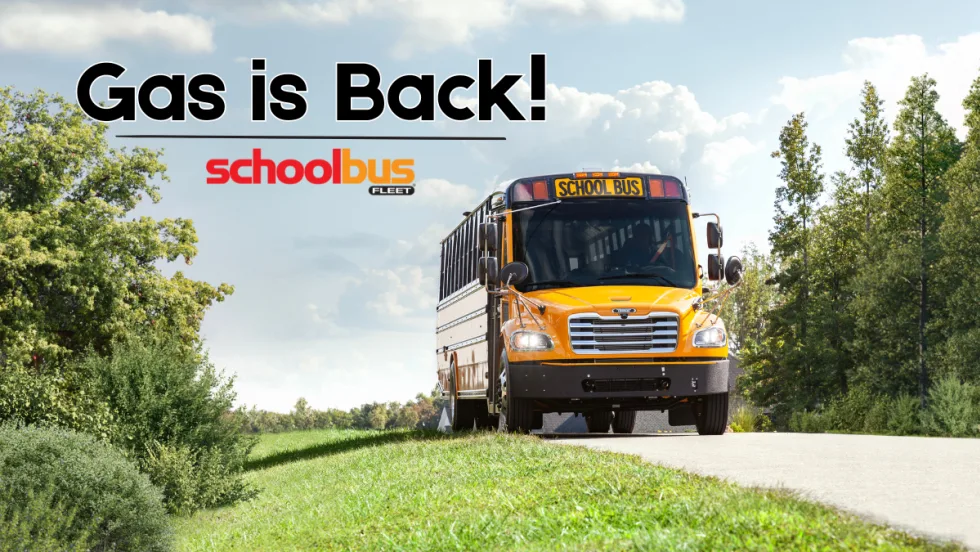
Why Gasoline School Buses Are Making a Comeback
Gasoline is gaining ground in full-size school buses. See how today’s options stack up against diesel on cost, maintenance, emissions, performance, and more.
Read More →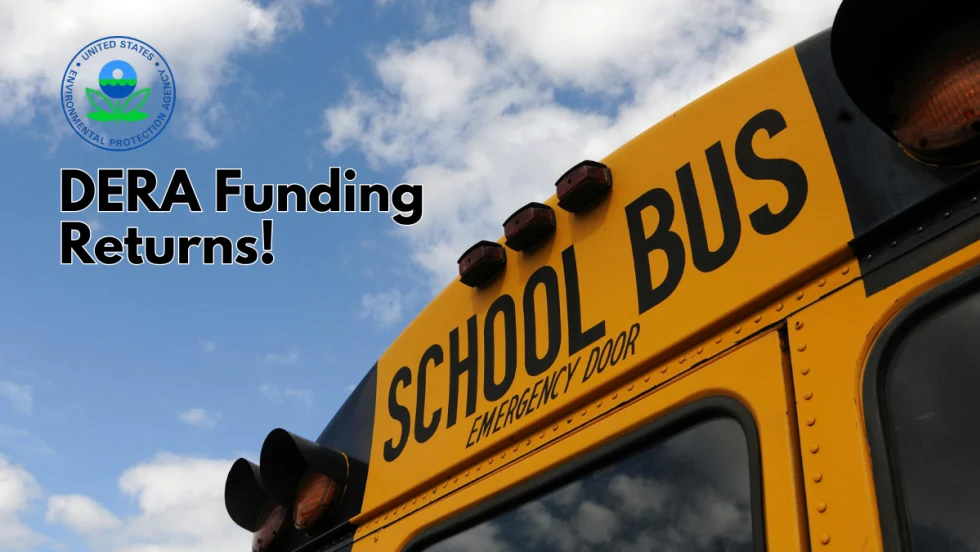
EPA Opens $180M DERA Funding Round for Diesel Upgrades
The 2026 Diesel Emissions Reduction Act program seeks applications from eligible organizations to accelerate the retirement of legacy diesel vehicles.
Read More →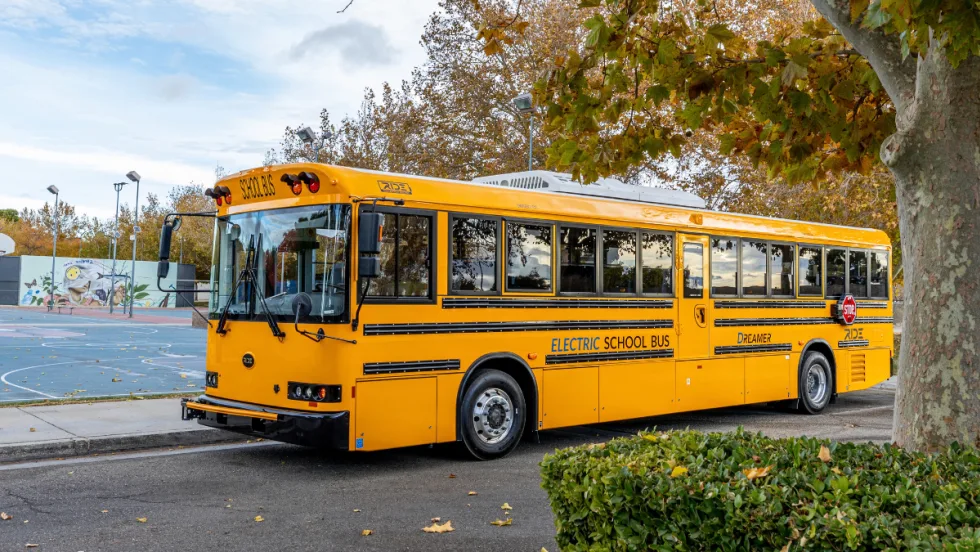
The Secret Life of an Electric School Bus Battery
Batteries change throughout years of daily routes, but degradation doesn’t necessarily mean the end. Here’s what operators should know about performance, safety, and second life.
Read More →
CALSTART and Forth Combine to Form Catalyst Mobility
The new name represents a renewed vision for the nonprofit focused on advancing clean, equitable, and affordable transportation solutions that move people and goods.
Read More →
Alt-Fuel Moves: New Buses, Charging Hubs & Real-World EV Testing
Propane and electric school bus deployments continue to grow as districts add new vehicles, expand charging infrastructure, and gather more real-world operating data.
Read More →
Fewer Electric School Bus Models Reshape the U.S. Market
WRI’s latest buyer’s guide points to a consolidating electric school bus market, but fewer options may reflect a maturing industry rather than fewer meaningful choices for school bus operators.
Read More →
The Fuel Budget You Can Actually Predict: How Propane Autogas Keeps Money in the Classroom
Learn how propane autogas helps school districts manage fuel costs with predictable pricing, lower maintenance, and reduced emissions from former transportation director Joel Stutheit.
Read More →