




Publications provide information on diesel retrofit equipment
Technical bulletins with facts about diesel oxidation catalysts and diesel particulate filters, as well as installation, operation and maintenance tips, are available on the National Clean Diesel Campaign section of the EPA Website.

WASHINGTON, D.C. — New publications on diesel retrofit equipment are available on the National Clean Diesel Campaign (NCDC) section of the EPA Website.
The technical bulletins are designed to support NCDC grant recipients, sub-recipients and fleet managers who are using diesel oxidation catalysts (DOC) or diesel particulate filters (DPF).
The publications on both types of retrofit technology include general information as well as installation, operation and maintenance tips. For instance, the bulletins on diesel oxidation catalysts indicate that they are effective in reducing particulate matter emissions 20 to 40 percent. They may also reduce hydrocarbons by 40 to 75 percent, and carbon monoxide by 10 to 60 percent.
Moreover, a DOC must be mounted within a set distance of the exhaust manifold, as specified by the manufacturer. Exhaust pipe insulation may be used to retain heat when a DOC is mounted a long distance from the turbo charger.
The materials on diesel particulate filters note that they are verified for use with ultra low sulfur diesel fuel and that fuel additives should not be used unless approved by a DPF manufacturer.
In addition, an exhaust backpressure monitoring and driver notification system must be installed with every DPF, and the notification system must be installed where it is visible to the driver during normal vehicle operation.
For more information and to access the publications, click here.
More Alternative Fuels

EPA Opens $180M DERA Funding Round for Diesel Upgrades
The 2026 Diesel Emissions Reduction Act program seeks applications from eligible organizations to accelerate the retirement of legacy diesel vehicles.
Read More →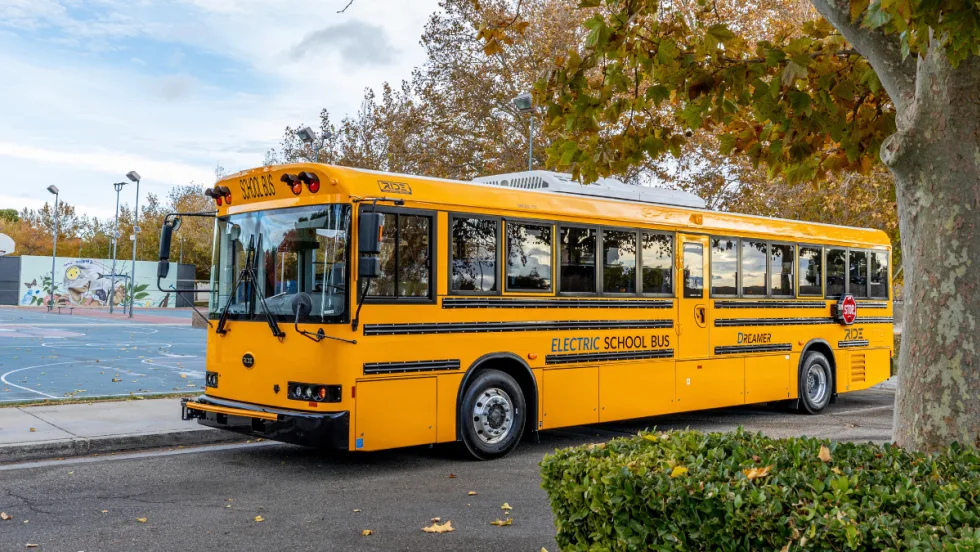
The Secret Life of an Electric School Bus Battery
Batteries change throughout years of daily routes, but degradation doesn’t necessarily mean the end. Here’s what operators should know about performance, safety, and second life.
Read More →
CALSTART and Forth Combine to Form Catalyst Mobility
The new name represents a renewed vision for the nonprofit focused on advancing clean, equitable, and affordable transportation solutions that move people and goods.
Read More →
Alt-Fuel Moves: New Buses, Charging Hubs & Real-World EV Testing
Propane and electric school bus deployments continue to grow as districts add new vehicles, expand charging infrastructure, and gather more real-world operating data.
Read More →
Fewer Electric School Bus Models Reshape the U.S. Market
WRI’s latest buyer’s guide points to a consolidating electric school bus market, but fewer options may reflect a maturing industry rather than fewer meaningful choices for school bus operators.
Read More →
The Fuel Budget You Can Actually Predict: How Propane Autogas Keeps Money in the Classroom
Learn how propane autogas helps school districts manage fuel costs with predictable pricing, lower maintenance, and reduced emissions from former transportation director Joel Stutheit.
Read More →
Hendrickson, Driventic Introduce New Electric Powertrain for School Buses
ELECTRAAX, the electrified, lightweight drive axle offers integrated ePowertrain efficiency and modular flexibility for Class 6–7 school bus use.
Read More →
The Mobility House Joins PowerFlex in Fleet Electrification Deal
The acquisition combines intelligent charging software, bidirectional charging expertise, and fleet electrification services to support the growing adoption of electric school buses across North America.
Read More →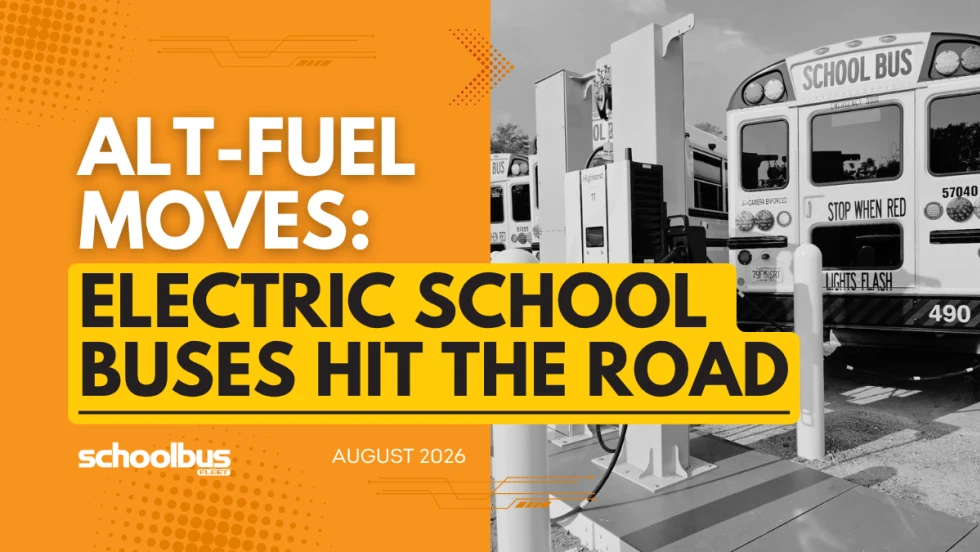
Alt-Fuel Moves: Electric School Bus Investments Hit the Road
See which districts across the U.S. are putting electric school buses into service, expanding charging infrastructure, and planning the next phase of fleet electrification.
Read More →
With Fuel Volatility Ahead, School Districts Turn to Propane
While diesel prices peaked above $5 this spring, districts with propane autogas-powered fleets paid under $2 per gallon, according to PERC.
Read More →