




Oregon School District Rolls Out Electric School Bus
The LionC bus at Bend-La Pine Schools can travel up to 125 miles when fully charged.

Bend-La Pine acquired this LionC electric school bus The district acquired the electric bus through Pacific Power’s electric mobility grant program, in conjunction with the Oregon Clean Fuels Program administered by the state Department of Environmental Quality.
Photo: Bend-La Pine Schools
The first electric school bus for Bend-La Pine Schools hitting the streets of Central Oregon.
The district acquired the electric bus through Pacific Power’s electric mobility grant program, in conjunction with the Oregon Clean Fuels Program administered by the state Department of Environmental Quality.
The bus eliminates tailpipe emissions, reduces noise, and saves the district money on fuel costs.
“We are proud to join the move toward clean transportation,” Bend-La Pine Superintendent Steven Cook said. “This is good for our community and our students, and it will result in cost savings over time.”
The school district collaborated with The Environmental Center in Bend in applying for the electric bus funding, according to a press release from the district.
“This is a really good example of how we were able to share our electric vehicle and infrastructure experience to support an amazing partner like Bend-La Pine Schools,” the center’s Transportation and Climate Advocacy Manager, Neil Baunsgard, said. “We look forward to sharing the learnings that we gain from the first electric school bus east of the Cascades with other school districts, and involving students in being a part of our transportation future.”
The $157,500 grant went toward the purchase of the LionC bus, manufactured by Lion Electric of Quebec, Canada. It uses a 250-kilowatt electric motor with lithium-ion batteries, with a top speed of 60 mph. Fully charged, the bus can travel up to 125 miles. There’s room for 71 students on board.
Bend-La Pine Schools has 127 buses in its fleet. Just over half are powered by propane, a cleaner-burning and less expensive fuel than diesel or gas.
Editor's Note: A previous version of this story said this was only the second electric school bus in Oregon. That was incorrect. The story has been revised.
More Alternative Fuels
Bipartisan Bill Seeks to Extend Clean School Bus Program Through 2031
The proposed legislation would renew federal support for cleaner school buses as districts navigate funding uncertainty, rising fuel and infrastructure costs, and fleet replacement needs.
Read More →
Alt-Fuel Moves: Electric Bus Rollouts, Bidirectional Charging & Propane Growth
See which fleets are adding electric and propane school buses as districts and operators invest in charging infrastructure, bidirectional technology, and alternative-fuel expansion.
Read More →
Nobody Told Diesel Prices They Were Supposed to Come Down
With diesel prices surging, school bus fleets have new reason to stress-test fuel costs, consider diversification, and calculate what each route really costs to operate.
Read More →
Why Gasoline School Buses Are Making a Comeback
Gasoline is gaining ground in full-size school buses. See how today’s options stack up against diesel on cost, maintenance, emissions, performance, and more.
Read More →
EPA Opens $180M DERA Funding Round for Diesel Upgrades
The 2026 Diesel Emissions Reduction Act program seeks applications from eligible organizations to accelerate the retirement of legacy diesel vehicles.
Read More →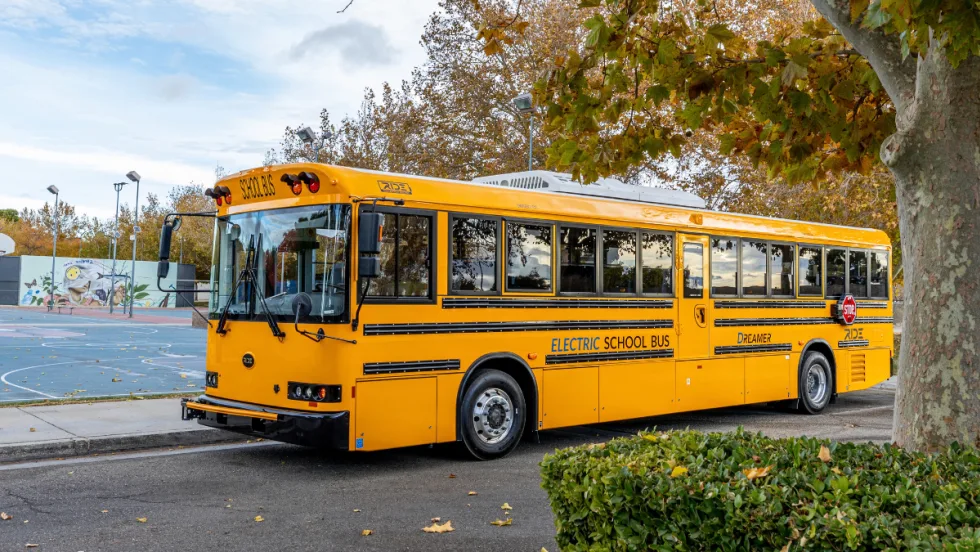
The Secret Life of an Electric School Bus Battery
Batteries change throughout years of daily routes, but degradation doesn’t necessarily mean the end. Here’s what operators should know about performance, safety, and second life.
Read More →
CALSTART and Forth Combine to Form Catalyst Mobility
The new name represents a renewed vision for the nonprofit focused on advancing clean, equitable, and affordable transportation solutions that move people and goods.
Read More →
Alt-Fuel Moves: New Buses, Charging Hubs & Real-World EV Testing
Propane and electric school bus deployments continue to grow as districts add new vehicles, expand charging infrastructure, and gather more real-world operating data.
Read More →
Fewer Electric School Bus Models Reshape the U.S. Market
WRI’s latest buyer’s guide points to a consolidating electric school bus market, but fewer options may reflect a maturing industry rather than fewer meaningful choices for school bus operators.
Read More →
The Fuel Budget You Can Actually Predict: How Propane Autogas Keeps Money in the Classroom
Learn how propane autogas helps school districts manage fuel costs with predictable pricing, lower maintenance, and reduced emissions from former transportation director Joel Stutheit.
Read More →