




NTSB: Students Killed in Houston Crash Were Not Wearing Lap Belts
Investigators find that when a Houston ISD school bus was struck by a car and fell from an overpass last year, the four teens on the bus were not buckled up, and the two who died in the crash were ejected.

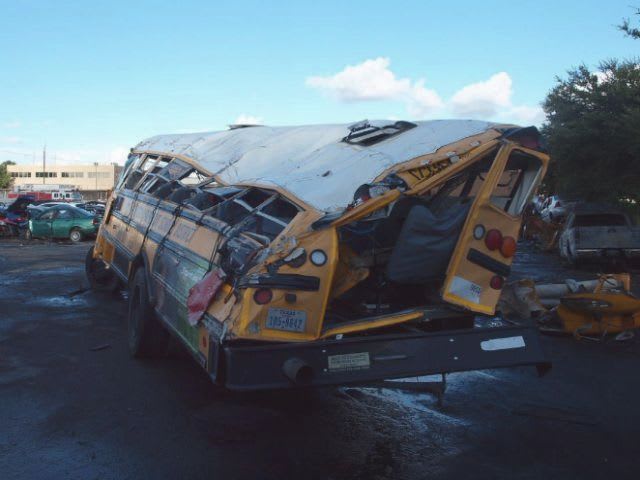
Investigators found that when a Houston ISD bus was struck by a car and fell from an overpass last year, the four teens on the bus were not buckled up, and the two who died in the crash were ejected. Photos courtesy NTSB
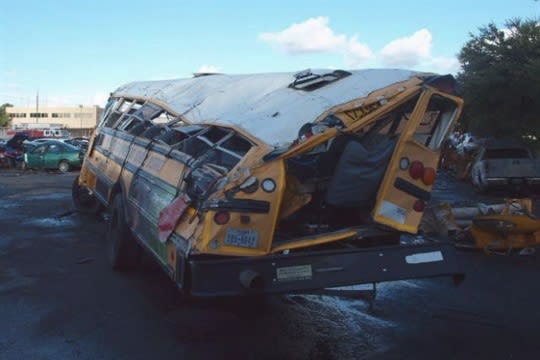
Investigators found that when a Houston ISD bus was struck by a car and fell from an overpass last year, the four teens on the bus were not buckled up, and the two who died in the crash were ejected. Photos courtesy NTSB
HOUSTON — The four students on board the school bus that fell from an overpass here last year were not wearing their lap belts, and the two who died in the crash were ejected from the bus, federal investigators have found.
The National Transportation Safety Board (NTSB) investigated the Sept. 15 crash that involved a Houston Independent School District (ISD) bus, and the agency recently released reports and other materials in its accident docket.
NTSB found that the 47-passenger 2009 International school bus was traveling on a freeway at an estimated 55 mph when a Buick LeSabre car, traveling at an estimated 69 mph, departed from its lane to the right and collided with the school bus around the left front wheel.
According to NTSB, the school bus then moved to the right, impacted a bridge rail at an angle of about 28 degrees, overrode the concrete portion of the bridge rail, and breached the metal railing along the top of the concrete parapet — leaving an approximately 30-foot-long opening in the metal rail.
The bus then dropped about 21 feet and landed on the road below, coming to rest on its left side. The Buick remained on the freeway overpass.
Two of the students on the school bus were killed, and the other two students as well as the school bus driver were seriously injured. The Buick driver was not injured.
Each passenger seat on the Houston ISD school bus was equipped with lap-only belts, while the driver’s seat had a three-point belt. According to NTSB, the four students on the bus, who were all sitting near the back, were not wearing their lap belts at the time of the crash. The school bus driver was wearing her three-point belt.
NTSB found that two of the students, females ages 14 and 17, were ejected from the bus. One of those students died at the scene, and the other was declared dead at a hospital.
The two students who remained on the bus in the crash — a male and a female, both 17 — sustained serious injuries.
Houston ISD gave NTSB investigators a copy of its seating policy, which reportedly read, “The District’s rules for transportation in District buses or other vehicles shall include a requirement that all riders remain seated and, if available, wear three-point seat belts.”
On June 9, the Houston ISD school board updated its seat belt policy. Now students who ride school buses with three-point seat belts are required to wear them, while students on buses with lap-only belts are encouraged — but not required — to wear them.
A Houston ISD spokeswoman referred SBF to a press release about the policy update but did not answer a question about why the policy does not require students to wear lap belts.
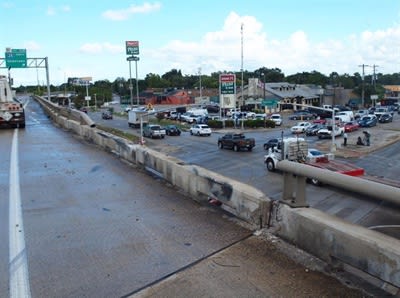
According to NTSB, the bus impacted a bridge rail, overrode the concrete portion, and breached the metal railing along the top — leaving an opening in the metal rail.
Meanwhile, the investigation of the Houston crash also focused on the bridge railing. According to NTSB, the Texas Department of Transportation found that there had been a previous severe impact to the rail in the same spot where the Houston ISD school bus surmounted it. That previous impact caused significant damage, and it was poorly repaired, according to NTSB.
“The combination of compromised galvanizing, poor quality spall repair material, and contaminants ponding around the anchor bolts within the slotted holes resulted in severe corrosion and section loss in the exact location that the HISD school bus hit on September 15, 2015,” according to NTSB’s highway factors report.
NTSB spokesman Terry Williams told SBF that the agency is working on a final report about the Houston school bus crash and expects to be done with it in about a month. Williams said that he could not yet discuss any recommendations or analysis of seat belt factors that will be included in the final report.
For more information about NTSB’s findings on the Houston crash, see the accident docket.
More Safety

Doing More With Less: How Transportation Directors Can Prioritize Safety Amid Budget Uncertainty
With diesel prices soaring and nearly one-third of transportation directors expecting budget cuts, maintaining student safety has never been more challenging. Download this guide to learn how leading districts are prioritizing risk, funding critical safety technology, and building stronger budget cases with data.
Read More →
How To Build a More Secure School Bus Yard During and After Hours
As thefts and overnight security threats continue, school transportation leaders are combining stronger operational practices with AI-enabled surveillance to better protect buses, facilities, and staff.
Read More →
FMCSA Names New Chief Safety Officer: What School Bus Operators Should Know
Steve Dowling is set to lead the federal agency's efforts to advance commercial motor vehicle safety and reduce crashes, fatalities, and injuries on the nation's roadways.
Read More →
New Study Finds School Zone Speed Safety Cameras Cut Speeding Violations 97%
A Florida university's research demonstrates that Verra Mobility's automated enforcement changes driver behavior and significantly improves school zone safety.
Read More →
What Changed in DOT’s New National Roadway Safety Strategy?
The federal agency's new plan shifts its focus to safer people, roads and vehicles, with a new three-pronged approach instead of five. One outlined action even addresses a key industry concern around illegal school bus passing.
Read More →
Are Autonomous Vehicles Ready to Safely Navigate School Bus Stops?
NHTSA is accelerating autonomous vehicle deployment through new safety standards and commercial approvals. See why school transportation leaders are watching.
Read More →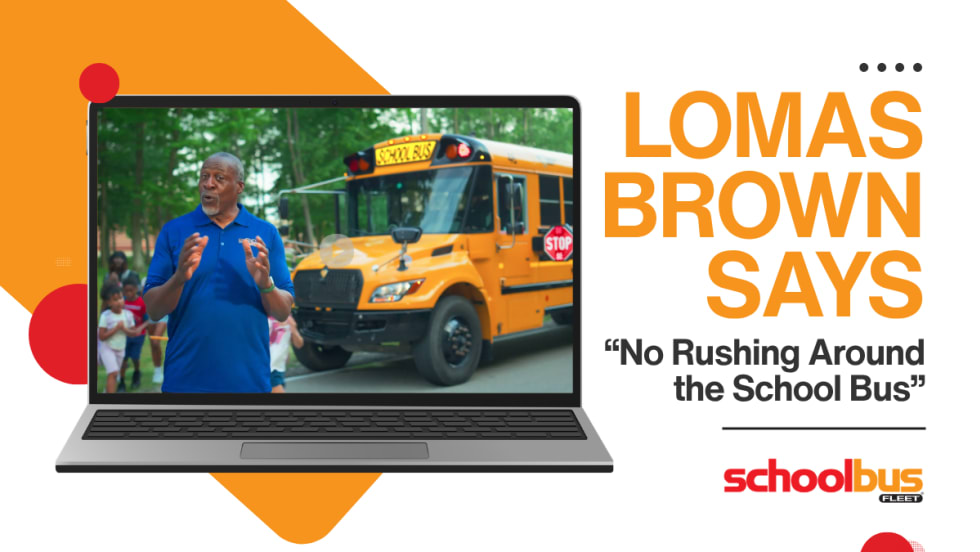
NFL Star Lomas Brown Kicks Off New Illegal School Bus Passing PSA
Just in time for the back-to-school season, the former Detroit Lions offensive tackle took time to record a video encouraging motorists to slow down around school buses.
Read More →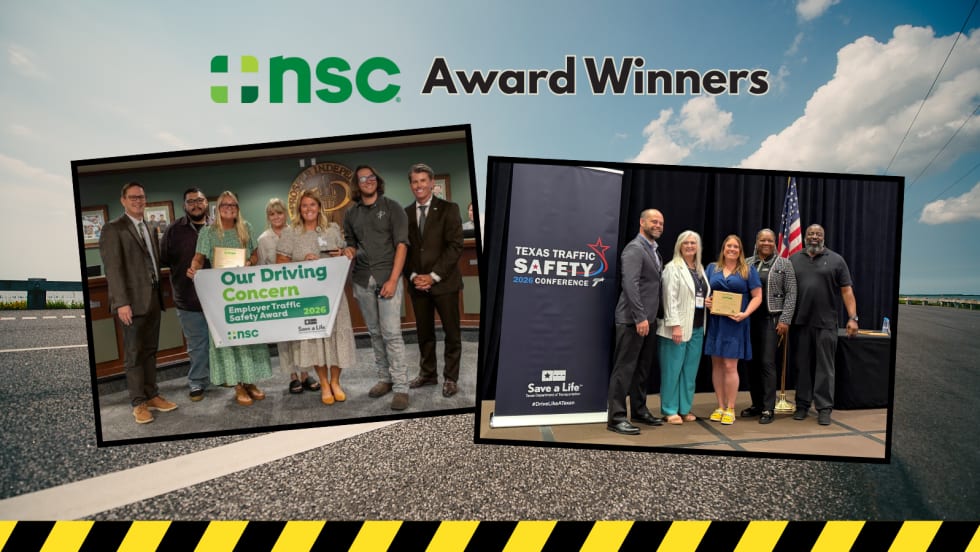
How Two Texas Districts Built Award-Winning Safety Programs
Learn how Prosper ISD and Rockwall ISD earned National Safety Council honors through hands-on training, safety culture, and strategies that reduced transportation incidents.
Read More →
NHTSA Releases 10-Year Review of Fatal School Bus Crashes
The latest federal analysis reinforces the safety of school buses while identifying where school-age pedestrians and other motorists remain most at risk.
Read More →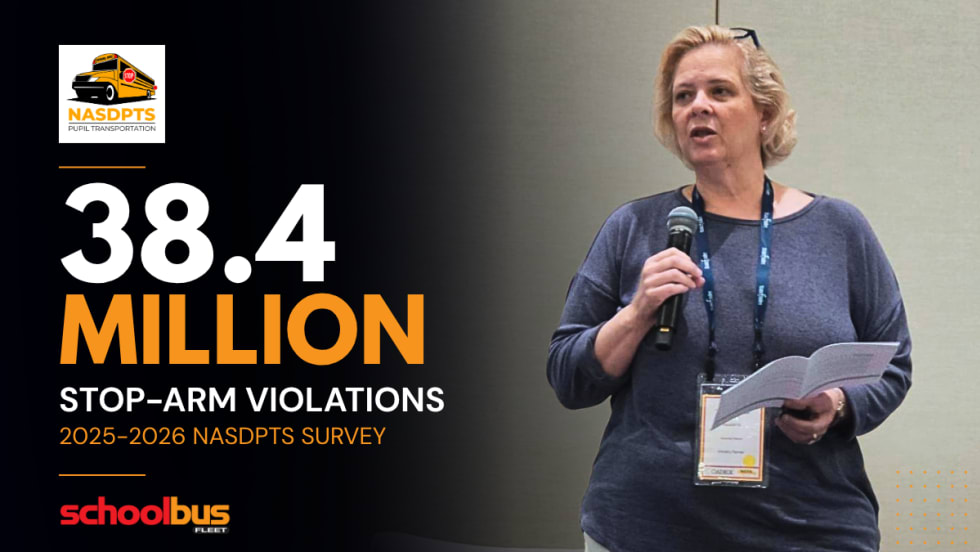
2026 NASDPTS Survey: Data Shows Further Reduction of Illegal Passing
New data is in! School bus stop-arm passings are down to 38.4 million violations per year, about a 2.3% decrease from last school year — but passings on the right side of the bus are higher than ever.
Read More →