




Don't Miss: Illegal School-Bus Passing: More Communication Key to Stemming Crisis
NHTSA Launches School Bus Safety Campaign
The federal agency wants motorists to remember that children's lives are on the line when a school bus stop-arm is extended. The new campaign launched just days before National School Bus Safety Week.
by SBF Staff
October 12, 2022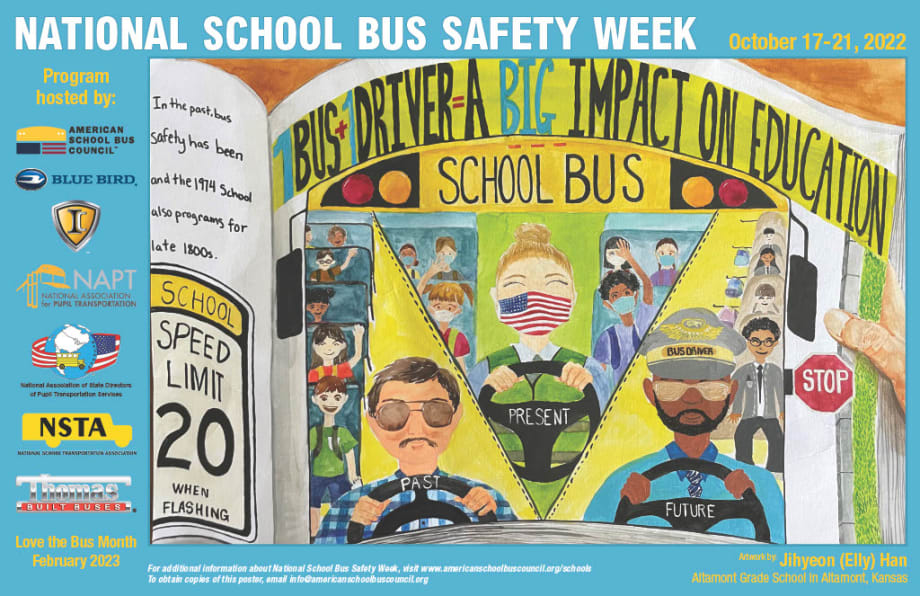
The NHTSA reminds drivers that children are at greatest risk not while riding the school bus, but while boarding or disembarking.
Image: Jihyeon (Elly) Han, Altamont Grade School in Altamont, Kansas.
3 min to read
The National Highway Traffic Safety Administration (NHTSA) is trying to educate motorists about the dangers of illegally passing stopped school buses with a new national paid media campaign that's running through Oct. 31.
The campaign, funded by the Bipartisan Infrastructure Law, comes as the country prepares to recognize National School Bus Safety Week, Oct. 17-21.
"Passing a stopped school bus is against the law and could have fatal consequences. Nothing is worth the risk," said Ann Carlson, acting NHTSA administrator. "Children's lives are on the line - every driver needs to stop when a school bus stop arm is extended."
Facts About Illegal School-Bus Passing
Every state has laws requiring motorists to stop when those stop arms are extended, because children are at greater risk boarding or disembarking from a school bus rather than riding in one. According to the NHTSA, between 2010 and 2019, there were 1.6 times more fatalities among pedestrians than occupants of school transportation vehicles.
The National Association of State Directors of Pupil Transportation Services (NASDPTS) released their annual illegal-passing survey in September and reported that more than 51,000 vehicles illegally passed stopped school buses on a single day during the 2021-2022 school year.
Other facts the NHTSA wants motorists to remember:
Motorists must always come to a complete stop when a school bus stop-arm is extended and the red lights are flashing. The overall best practice: always stop if there's a school bus.
From 2011 to 2020, 1,125 people of all ages died in fatal school transportation-related crashes - an average of 113 fatalities per year.
The loading/unloading area is called the "danger zone," which refers to any side of the bus where a child may not be seen by the bus driver, including 10 feet in front of the bus, 10 feet on either side of the bus, and behind the school bus.
School Transportation Fatalities by the Numbers
In June 2022, the NHTSA released a traffic safety fact sheet covering school transportation-related crashes and found that, among school bus occupants killed between 2011 and 2020, 18% were 5 to 10 years old and 61% were 19 and older. Among pedestrians killed? Children 5 to 10 comprised 24% of the fatalities, while 53% were 19 and older.
More than half - 52% - of the school-age pedestrians killed in such crashes between 2011 and 2020 were between 5 and 10. More of those victims died between 7 and 8 a.m. and between 3 and 4 p.m. than any other time of day. More than one-fifth - 21% - of all school-age pedestrians killed were struck by a school transportation vehicle going straight.
To help avoid these tragedies, the NHTSA recommends:
Never pass on the right side of the bus where children enter or exit.
Don't drive while distracted.
Obey all traffic signs and signals.
More Safety

How to Build a Better School Bus Driver Training Program
Is it time to strengthen your driver training? Here’s how to pick the right talent and improve recruitment, retention, and safety. This video is brought to you by IC Bus.
Read More →
Recent School Bus Accidents Leave 2 Dead, 2 Injured
Four school bus crashes in Florida, Illinois, and Georgia highlight risks in transportation lots, at bus stops, and during student loading and unloading.
Read More →
Sponsored•September 8, 2026
When Every Second Matters, Clarity Keeps Routes Moving
From routine delays to urgent incidents, strong communication practices help drivers, dispatchers, schools, and families respond with confidence.
Read More →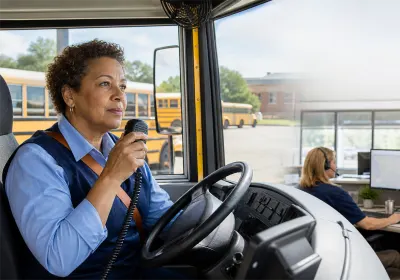

What Happens When a School Bus Catches Fire — and What Can Help
School bus fires are rare but can be devastating. Learn how advances in fire suppression and asset protection help fleets detect fires earlier, reduce damage, and improve safety.
Read More →
Geotab Launches Tool to Help Fleets Investigate Road Incidents
Geotab Investigations combines telematics data, video, documents, and other evidence to help fleets reconstruct incidents, resolve claims, and determine what happened.
Read More →
Texas Sixth Grader Wins 2026 National School Bus Safety Poster Contest
Sai Darshana Yekolu of Moseley Middle School in Prosper, Texas, was named the newest winner for her artwork, bringing the theme of “Safe Rides, Everyday Heroes” to life.
Read More →
Sponsored•August 27, 2026
Doing More With Less: How Transportation Directors Can Prioritize Safety Amid Budget Uncertainty
With diesel prices soaring and nearly one-third of transportation directors expecting budget cuts, maintaining student safety has never been more challenging. Download this guide to learn how leading districts are prioritizing risk, funding critical safety technology, and building stronger budget cases with data.
Read More →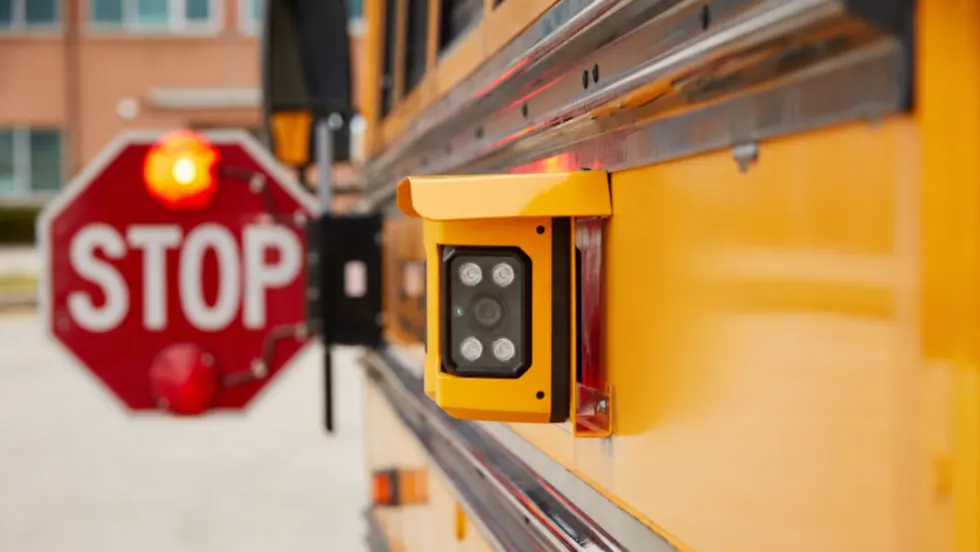
Walton County Schools Adds Gatekeeper Stop-Arm Enforcement System
The Florida district will deploy Gatekeeper’s updated Student Protector technology, which now incorporates AI to improve video evidence.
Read More →
How To Build a More Secure School Bus Yard During and After Hours
As thefts and overnight security threats continue, school transportation leaders are combining stronger operational practices with AI-enabled surveillance to better protect buses, facilities, and staff.
Read More →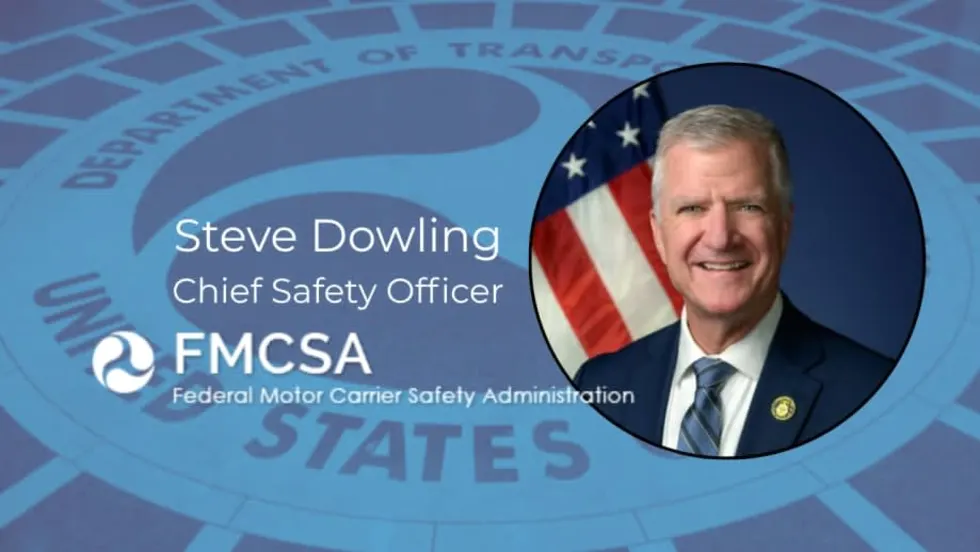
FMCSA Names New Chief Safety Officer: What School Bus Operators Should Know
Steve Dowling is set to lead the federal agency's efforts to advance commercial motor vehicle safety and reduce crashes, fatalities, and injuries on the nation's roadways.
Read More →