





Everyone Aboard? U.S. School Bus Dealerships Offer Insights in Their Vehicle Market
New York Rolls Out Roadmap for Electric School Bus Transition
The resources provided by state energy leaders are expected to help school districts and bus operators move away from fossil-fuel powered vehicles while reducing transportation emissions.
September 16, 2023
New York Gov. Kathy Hochul unveiled the new roadmap and guides to help school transportation fleets in New York start the transition to zero-emission vehicles by 2035.
Image: Canva
5 min to read
New York Gov. Kathy Hochul announced new resources to help school districts and bus operators in her state transition to zero-emission school bus fleets.
She introduced the New York State Electric School Bus Roadmap and the Electric School Bus Guidebook. The guidebook focuses on benefits of zero-emission buses, the procurement process, and charging stations.
“As New York State continues to lead the way in the fight against climate change, we must address the ways that fossil-fuel powered transportation directly affects our families and communities with emissions from school buses at the top of that list,” Hochul said, according to a news release. “Providing the tools for school districts to swap out diesel and gas school buses with zero-emission bus fleets will help students and their communities across the state breathe cleaner air and enjoy a healthier way of life.”
These resources support the Climate Leadership and Community Protection Act goal to reduce greenhouse gas emissions 85% by 2050 and the state’s requirements that all new school buses sold in the state must be zero-emission by 2027 and all school buses on the road be zero-emission by 2035.
The roadmap outlines costs, challenges, and recommendations that can be implemented by the state and its partner utilities, manufacturers, and operators.
Following the Clean School Bus Roadmap
The report, prepared by the New York State Energy Research and Development Authority (NYSERDA), posits that replacing one diesel bus with electric is equivalent to taking four cars off the road. It summarizes costs of school bus electrification, covers funding mechanisms and financing options, and policies the state might consider to facilitate the transition.
“Currently, the upfront cost of electric school buses is more expensive than traditional diesel and gasoline-powered vehicles,” the roadmap stated. “However, the total cost of ownership for electric school buses, due to lower fuel and maintenance costs, is expected to reach parity with internal combustion engine school buses around 2027.”
New York voters passed the Environmental Bond Act, setting aside $500 million in funding to help with the transition of the state’s 45,000 school buses.
“When the funding is used to lower the purchase cost of ESBs, alongside existing state and federal programs, in many cases the total cost of ownership of ESBs is already below diesel and gasoline buses,” according to the report.
The roadmap is focused on the next three to five years. By 2027, the report estimates, fleet operators in New York could buy as many as 3,000 electric school buses, or about 4-5 buses per school district, and nearly multiply by 10 the state’s current 310 ESBs.
“Three thousand ESBs is a target that would enable all districts and contractors to gain sufficient experience with ESBs ahead of the all-emission purchase mandate in 2027 and is a realistic assumption based on historical purchasing patterns,” the report states.
The roadmap acknowledges that updating factories and supply chains won’t be immediate, preventing a rapid transition to a 100% electric fleet.
The estimated cost to transition 3,000 vehicles to electric, including chargers, is about $780 million.
Doreen M. Harris, president and CEO of NYSERDA, said: “Our roadmap and guidebook will provide school districts and bus operators with the latest information to enhance their fleets with zero-emission buses through proper planning, purchasing, and financing. Many schools have sustainability goals and want to invest in solutions like clean transportation, particularly in underserved areas – providing healthier neighborhoods for more children and families to live, work, and go to school in.”
Options for Electric School Buses
According to a survey conducted for the roadmap, New York school districts have 18 distinct ESB models from 11 manufacturers from which to choose. The most prevalent school bus type among the electric options: C, with a 66% market share, although Type A smaller buses are gaining popularity at 24%.
Available Type A manufacturers in New York:
Blue Bird (MicroBird).
Collins.
BYD (EV only).
GreenPower (EV only).
Lion (EV only).
Motiv (EV only).
Lightning e-Motors (EV only).
Phoenix Motor Cars (EV only).
Available Type C manufacturers in New York:
Blue Bird.
IC Bus.
Thomas Built Buses.
Lion (EV only).
Available Type D manufacturers in New York:
Blue Bird.
BYD (EV only).
GreenPower (EV only).
Lion (EV only).
The roadmap also explored the option to “repower” a former ICE school bus with an electric powertrain. Rather than spending as much as $400,000 for a new electric school bus, a fleet operator might spend between $50,000 and $100,000 to repower an ICE bus.
“As of April 2023, the repower market for ESBs is quite small, with fewer than 10 repowered school buses in service across the United States,” the report states. “The price of repowers is approximately 40% lower than new ESBs. This price differential could make repowers a viable option for operators who are not awarded federal or state grants or rebates.”
Only one manufacturer, Unique Electric Solutions (UES), offers repowers for all school bus types in New York. No manufacturers directly sell repowered vehicles. SEA Electric partnered with Midwest Transit to repower 10,000 buses.
“Market growth is potentially constrained by restrictions in the EPA Clean School Bus Program, because the program currently excludes funding of repowers and requires scrappage of old ICE buses,” the report states.
“When New York State passed its first-in-the-nation school bus electrification mandate last year, we were pleased to see a strong emphasis on technical assistance,” said Sue Gander, director of the World Resources Institute’s Electric School Bus Initiative. “Electric school buses involve a learning curve, but with the release of the Electric School Bus Roadmap and Guidebook for school districts and bus operators, NYSERDA is putting important tools in the hands of those leading the electric school bus charge across the state.”
More Alternative Fuels

CALSTART and Forth Combine to Form Catalyst Mobility
The new name represents a renewed vision for the nonprofit focused on advancing clean, equitable, and affordable transportation solutions that move people and goods.
Read More →
Alt-Fuel Moves: New Buses, Charging Hubs & Real-World EV Testing
Propane and electric school bus deployments continue to grow as districts add new vehicles, expand charging infrastructure, and gather more real-world operating data.
Read More →
Fewer Electric School Bus Models Reshape the U.S. Market
WRI’s latest buyer’s guide points to a consolidating electric school bus market, but fewer options may reflect a maturing industry rather than fewer meaningful choices for school bus operators.
Read More →
The Fuel Budget You Can Actually Predict: How Propane Autogas Keeps Money in the Classroom
Learn how propane autogas helps school districts manage fuel costs with predictable pricing, lower maintenance, and reduced emissions from former transportation director Joel Stutheit.
Read More →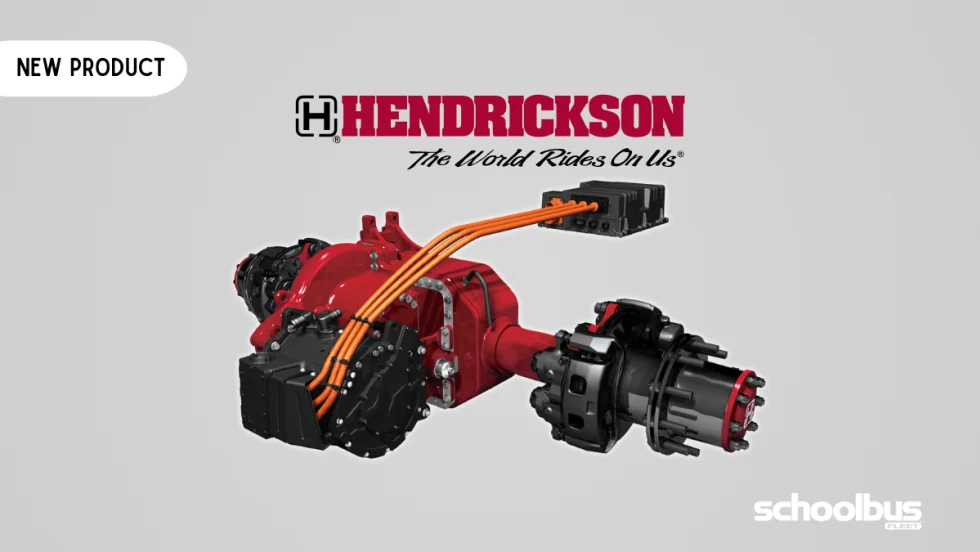
Hendrickson, Driventic Introduce New Electric Powertrain for School Buses
ELECTRAAX, the electrified, lightweight drive axle offers integrated ePowertrain efficiency and modular flexibility for Class 6–7 school bus use.
Read More →
The Mobility House Joins PowerFlex in Fleet Electrification Deal
The acquisition combines intelligent charging software, bidirectional charging expertise, and fleet electrification services to support the growing adoption of electric school buses across North America.
Read More →
Alt-Fuel Moves: Electric School Bus Investments Hit the Road
See which districts across the U.S. are putting electric school buses into service, expanding charging infrastructure, and planning the next phase of fleet electrification.
Read More →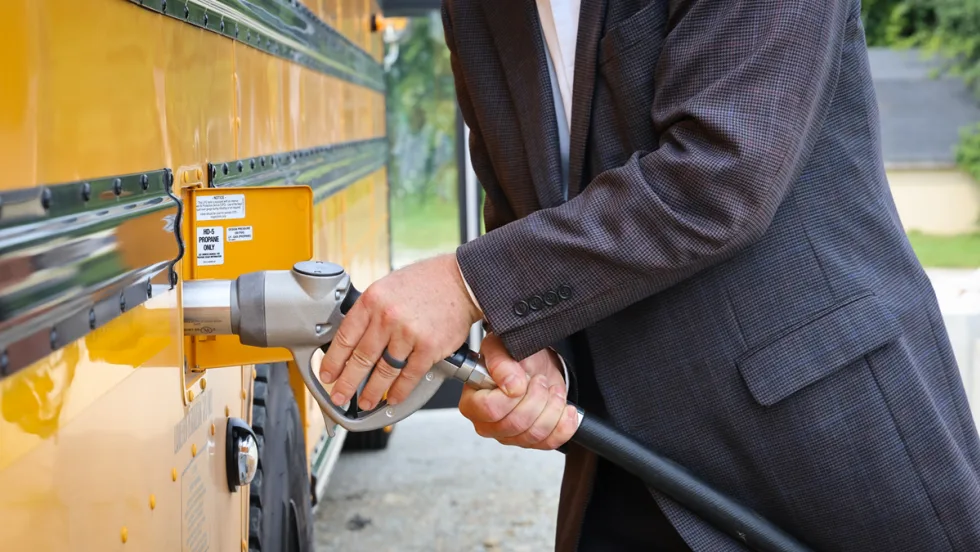
With Fuel Volatility Ahead, School Districts Turn to Propane
While diesel prices peaked above $5 this spring, districts with propane autogas-powered fleets paid under $2 per gallon, according to PERC.
Read More →
EPA Unveils Proposed Changes to 2027 Heavy-Duty Engine Rules
The federal agency has proposed changes to next year’s targets that would eliminate DEF derates, ease warranty requirements, and retain current NOx emissions standards.
Read More →
Alt-Fuel Moves: EV Charging & Infrastructure Projects Gain Momentum
The latest developments include new funding, charging infrastructure, utility investments, and fleet technologies designed to support the transition to electric school buses nationwide.
Read More →