




Registration Open for National Nonprofit's Zero Emission Bus Conference
New York Contractor Unveils its First Repowered, Road-Ready Electric School Bus
Logan Bus Co.’s Type C is part of a larger bus repowering project that includes Amply Power, which provides charging support, and Unique Electric Solutions, which converts the diesel vehicles to electric.

Nicole Schlosser・Former Executive Editor
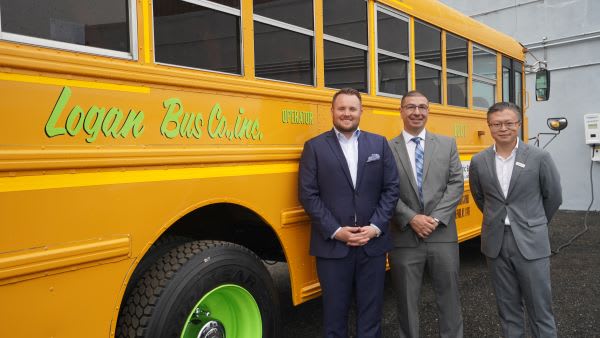
New York City-based Logan Bus Co.’s Type C electric bus is part of a larger bus repowering project that includes Amply Power and Unique Electric Solutions (UES). Shown here from left: Corey Muirhead, executive vice president of Logan Bus Co.; Joe Ambrosio, CEO of UES; and Vic Shao, CEO of Amply Power.
Photo courtesy Amply Power
4 min to read
Local elected officials and project partners gathered on Thursday at a ribbon-cutting ceremony to celebrate the deployment of the first Type C electric school bus in New York City, run by Logan Bus Co.
As previously reported, the electric school bus is part of a larger repowering project involving a handful of the contractor’s buses. It is a collaborative effort between Logan Bus, Amply Power, and Unique Electric Solutions (UES). The project also features a Charging-as-a-Service support model and vehicle-to-grid (V2G) integration.
The project’s elements offer a scalable solution for electric school bus fleets because of the cost savings advantage of charge management services, repowering existing vehicles, and grid services, according to a news release from Amply Power on the event.
Amply Power handles charging support, and offers Corey Muirhead, Logan Bus Co.’s executive vice president, a real-time view of his electric bus fleet with its Omega platform.
“We recognized the need for a service model that took the technical guesswork out of electrification,” said Vic Shao, CEO of Amply Power, in the news release.
Project partner UES has helped Logan Bus kick off its transition to electric by converting five of its existing Type C diesel buses to electric, starting in 2020.
"School bus fleets want to move towards electric buses; however, the upfront costs can be an obstacle," said Joe Ambrosio, CEO of UES, in the news release. "Fleets like Logan Bus have another option. Repowering their existing vehicles by replacing the old diesel drivetrain with a new electric propulsion system can bring all the benefits of electric power, including reduced operating costs and zero emissions, for a fraction of the price. It's a faster, cheaper, and easier way to get electric buses on the road now.”
Brooklyn Borough President and New York City mayoral candidate Eric Adams was on hand for the ceremony, where attendees watched a demonstration of the new school bus being charged.
Adams said that the new electric school buses involved in the project will help New York City in its efforts to “meet its climate goals and reduce air pollution.”
“I have long supported putting more electric vehicles on the roads, and these kinds of innovative public-private partnerships are critical to scaling up our electric fleet,” he added. “We must couple these deployments with aggressive investments to build an extensive electric vehicle charging network throughout the city, taking advantage of existing city infrastructure.”
“Today’s announcement from Logan Bus builds on New York City’s efforts to make our school bus fleet greener and more sustainable, and I congratulate them on this big step forward,” said Schools Chancellor Meisha Porter. “Our city is leading the way to combat climate change as we work to leave an environment that’s cleaner and healthier for all our children.”
Logan Bus’s fleet of 2,500 school buses provides service for New York City’s Department of Education and is the first company serving the city’s schools to debut an all-electric school bus, Muirhead, who is also the president of the New York School Bus Contractors Association, said in the news release.
“This project is critical to demonstrating the economic feasibility of transitioning to electric vehicles, something our elected officials and parent body have been advocating for,” he added.
Muirhead told School Bus Fleet that Logan Bus’s repowered bus will be put into service for testing over the summer, and students will climb aboard once the 2021-22 school year starts in September.
When asked about the choice to repower versus purchase his fleet’s first electric buses, Muirhead said his goal was to maximize the number of vehicles Logan Bus could electrify in the most cost-effective way. With the help of UES and Amply, Logan secured the funds to do that in the form of a $1 million grant from New York State Energy and Research Development Authority (NYSERDA) for the project.
“We wanted to show NYSERDA we were very serious about the repowers, and that’s why we applied for five buses,” Muirhead explained. “I was able to do five repowers for what would be the cost of one brand-new bus and infrastructure costs. I’m very proud of this.”
Running a large fleet requires, especially given the ambitious federal plans for fleets to go fully electric by 2030, looking into all methods of electrification, he added.
“I feel a combination of new [buses] and repowers can get a fleet there faster,” Muirhead said.
In fact, Logan Bus’s next steps include both more repowering and purchases of new electric school buses, and, Muirhead says, he hopes to eventually have the nation’s first all-electric school bus yard.
Meanwhile, the repowering project’s team will monitor the NYSERDA and the U.S. EPA’s Diesel Emissions Reduction Act grant programs for funding and will work with key stakeholders for more potential financial support.
More Alternative Fuels

CALSTART and Forth Combine to Form Catalyst Mobility
The new name represents a renewed vision for the nonprofit focused on advancing clean, equitable, and affordable transportation solutions that move people and goods.
Read More →
Alt-Fuel Moves: New Buses, Charging Hubs & Real-World EV Testing
Propane and electric school bus deployments continue to grow as districts add new vehicles, expand charging infrastructure, and gather more real-world operating data.
Read More →
Fewer Electric School Bus Models Reshape the U.S. Market
WRI’s latest buyer’s guide points to a consolidating electric school bus market, but fewer options may reflect a maturing industry rather than fewer meaningful choices for school bus operators.
Read More →
The Fuel Budget You Can Actually Predict: How Propane Autogas Keeps Money in the Classroom
Learn how propane autogas helps school districts manage fuel costs with predictable pricing, lower maintenance, and reduced emissions from former transportation director Joel Stutheit.
Read More →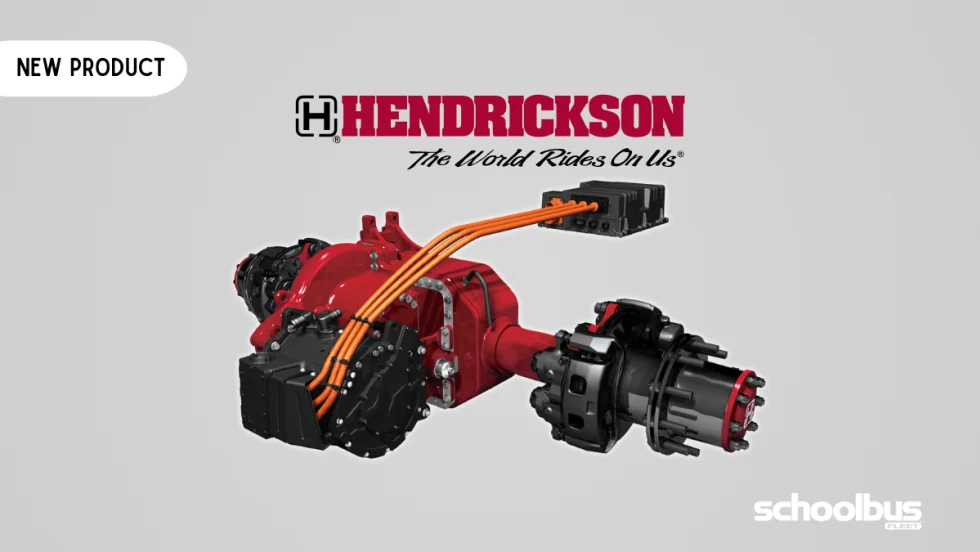
Hendrickson, Driventic Introduce New Electric Powertrain for School Buses
ELECTRAAX, the electrified, lightweight drive axle offers integrated ePowertrain efficiency and modular flexibility for Class 6–7 school bus use.
Read More →
The Mobility House Joins PowerFlex in Fleet Electrification Deal
The acquisition combines intelligent charging software, bidirectional charging expertise, and fleet electrification services to support the growing adoption of electric school buses across North America.
Read More →
Alt-Fuel Moves: Electric School Bus Investments Hit the Road
See which districts across the U.S. are putting electric school buses into service, expanding charging infrastructure, and planning the next phase of fleet electrification.
Read More →
With Fuel Volatility Ahead, School Districts Turn to Propane
While diesel prices peaked above $5 this spring, districts with propane autogas-powered fleets paid under $2 per gallon, according to PERC.
Read More →
EPA Unveils Proposed Changes to 2027 Heavy-Duty Engine Rules
The federal agency has proposed changes to next year’s targets that would eliminate DEF derates, ease warranty requirements, and retain current NOx emissions standards.
Read More →
Alt-Fuel Moves: EV Charging & Infrastructure Projects Gain Momentum
The latest developments include new funding, charging infrastructure, utility investments, and fleet technologies designed to support the transition to electric school buses nationwide.
Read More →