


Get Answers: 21 Questions About Clean School Bus Program Funding
New York City Plans 25 New Electric School Buses
New York City School Bus Umbrella Services has chosen The Mobility House and its advanced charging technology to drive the expansion of its electric school bus fleet.
December 22, 2023
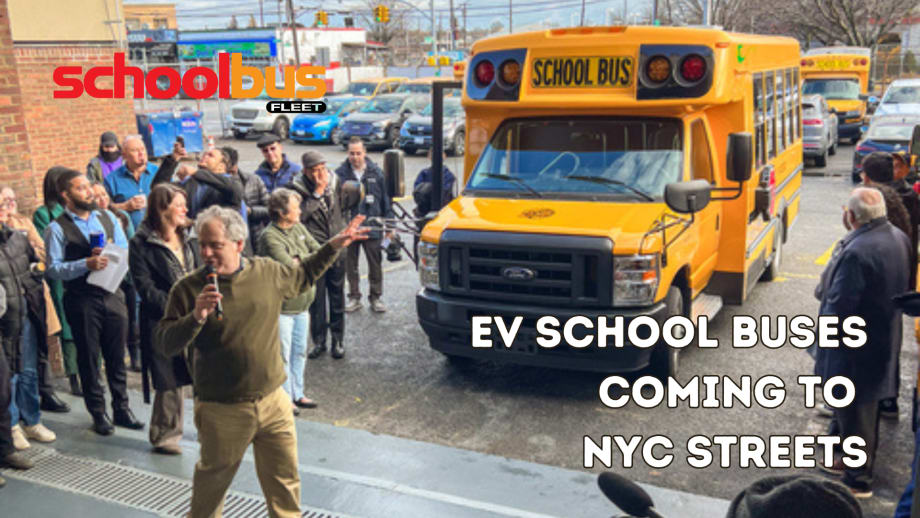
Matt Berlin, CEO of NYCSBUS, speaks on the project during an announcement event at the Zerega depot site.
Image: NYLCV/Canva
2 min to read
New York City School Bus Umbrella Services (NYCSBUS) has announced the approval of charging infrastructure and automated load management (ALM) to support 25 electric school buses, the majority of which will be deployed in the Bronx.
The Mobility House, an electric vehicle charging and energy solutions company, was part of the team that won $8 million from NYSERDA New York Clean Transportation Prizes program in 2022 for bi-directional charging infrastructure. Separately, NYCSBUS won an award from the EPA’s Clean School Bus program for 25 electric buses, which accelerated the need for charging infrastructure.
“We are excited to work with The Mobility House, thanks to generous funding from NYSERDA, to serve as the blueprint for how to rapidly scale school bus electrification in New York to meet the state’s ambitious goals,” said Matt Berlin, CEO of NYCSBUS. “The Mobility House is the most proven charge management provider in this space, and we appreciate their partnership in planning and implementing charging infrastructure to drive towards the electric future.”
The Mobility House's ChargePilot charge management software has been pivotal in empowering NYCSBUS to optimize its electric bus fleet's charging operations and a critical tool to ensure that charging infrastructure deployments are flexible enough to match shifting vehicle order and delivery timelines. With the use of data-driven analysis and the application of automated load management (ALM) technology, NYCSBUS can now charge up to 17 buses at the Zerega site with 268 kW of nameplate charger capacity while staying under the maximum load limit of 80 kW prescribed by the utility provider. Prior to implementing ALM, the limit was capped at seven buses for the site. This represents more than a twofold increase in charging capability, demonstrating the software's effectiveness in optimizing available capacity and easing the implementation of electric buses.
The remaining 11 chargers to support the remaining buses awarded under the EPA grant will be installed at NYCSBUS sites in Brooklyn, Queens, and Staten Island, minimizing disruptions to NYCSBUS electrification plans.
“It is an honor to partner with NYCSBUS and NYSERDA in accelerating the state’s transition to cleaner transportation. Our global charge management expertise with some of the world’s largest electric fleets will help set the standard for scalable, intelligent electric infrastructure across New York,” said The Mobility House U.S. Managing Director Gregor Hintler.
NYCSBUS is thrilled about this project and is looking forward to the positive impact it will have on the Bronx community. With the help of TMH, NYSERDA’s New York Clean Transportation Prizes and the EPA Clean School Bus Program NYCSBUS is now able to provide clean, efficient transportation to students in the Bronx.
More Alternative Fuels
Bipartisan Bill Seeks to Extend Clean School Bus Program Through 2031
The proposed legislation would renew federal support for cleaner school buses as districts navigate funding uncertainty, rising fuel and infrastructure costs, and fleet replacement needs.
Read More →
Alt-Fuel Moves: Electric Bus Rollouts, Bidirectional Charging & Propane Growth
See which fleets are adding electric and propane school buses as districts and operators invest in charging infrastructure, bidirectional technology, and alternative-fuel expansion.
Read More →
Nobody Told Diesel Prices They Were Supposed to Come Down
With diesel prices surging, school bus fleets have new reason to stress-test fuel costs, consider diversification, and calculate what each route really costs to operate.
Read More →
Why Gasoline School Buses Are Making a Comeback
Gasoline is gaining ground in full-size school buses. See how today’s options stack up against diesel on cost, maintenance, emissions, performance, and more.
Read More →
EPA Opens $180M DERA Funding Round for Diesel Upgrades
The 2026 Diesel Emissions Reduction Act program seeks applications from eligible organizations to accelerate the retirement of legacy diesel vehicles.
Read More →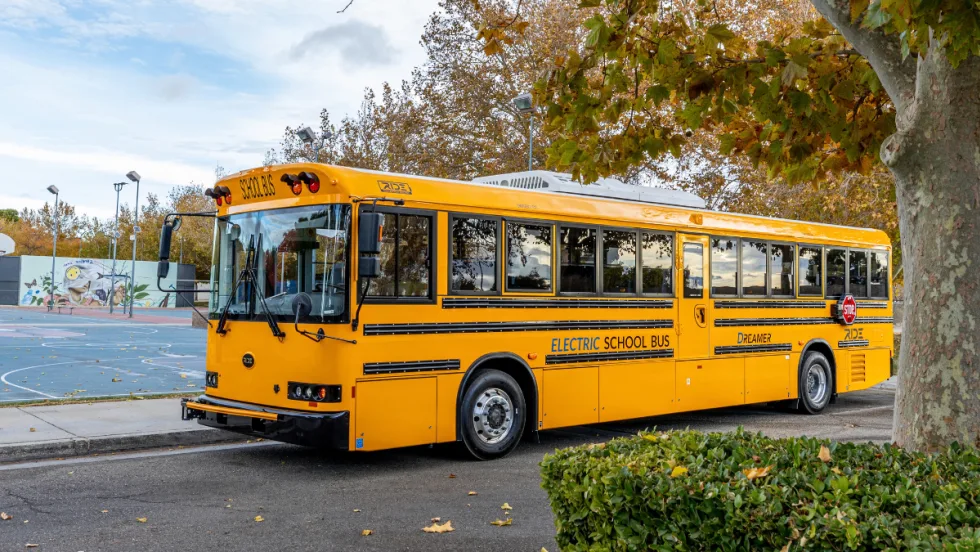
The Secret Life of an Electric School Bus Battery
Batteries change throughout years of daily routes, but degradation doesn’t necessarily mean the end. Here’s what operators should know about performance, safety, and second life.
Read More →
CALSTART and Forth Combine to Form Catalyst Mobility
The new name represents a renewed vision for the nonprofit focused on advancing clean, equitable, and affordable transportation solutions that move people and goods.
Read More →
Alt-Fuel Moves: New Buses, Charging Hubs & Real-World EV Testing
Propane and electric school bus deployments continue to grow as districts add new vehicles, expand charging infrastructure, and gather more real-world operating data.
Read More →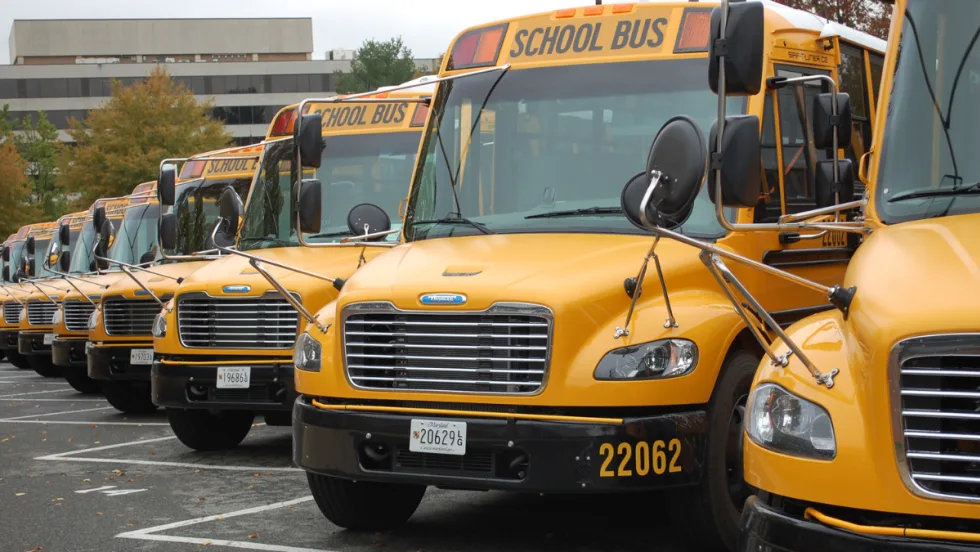
Fewer Electric School Bus Models Reshape the U.S. Market
WRI’s latest buyer’s guide points to a consolidating electric school bus market, but fewer options may reflect a maturing industry rather than fewer meaningful choices for school bus operators.
Read More →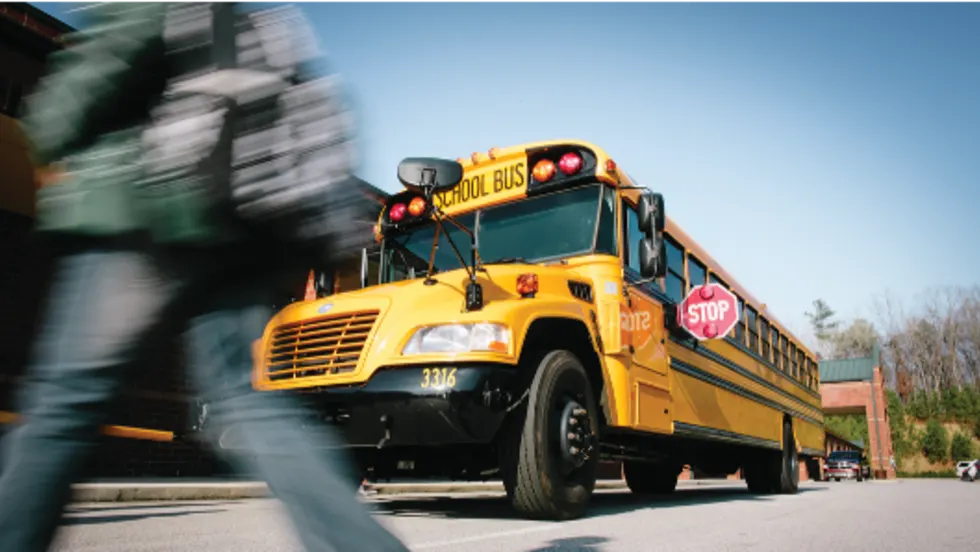
The Fuel Budget You Can Actually Predict: How Propane Autogas Keeps Money in the Classroom
Learn how propane autogas helps school districts manage fuel costs with predictable pricing, lower maintenance, and reduced emissions from former transportation director Joel Stutheit.
Read More →