


5 Questions: Gerald "Stretch" Blackard on Life with a Sub-Zero Electric Bus
New Jersey Senate Approves Electric Bus Legislation
The bill, primarily sponsored by State Sen. Patrick J. Diegnan Jr., would fund the purchase of new electric school buses and charging infrastructure for three years in at least 18 school districts.
by SBF Staff
December 29, 2021
4 min to read
The New Jersey State Senate this week approved legislation that would require the state Department of Environmental Protection (NJDEP) to develop and implement an electric school bus program.
The bill, sponsored primarily by State Sen. Patrick J. Diegnan Jr., D-Middlesex, would fund the purchase of new electric buses and the charging infrastructure needed for at least 18 school districts over the next three years. At least half those districts are expected to be in a "low-income, urban, or environmental justice community" as defined in state law.
The Senate approved the measure 35-3, with two members not voting.
On a typical school day, more than 800,000 New Jersey students ride to and from school on one of the state's 15,000 diesel school buses.
"School buses are known to emit greenhouse gases and carcinogens, both of which contribute to climate change and threaten exposed individuals with elevated lifetime risks of developing cancer, asthma, and heart disease," Diegnan said in a news release. "As a state, we have goals to significantly lower our carbon emissions and become a greener place to live. Transitioning from the conventional diesel-fueled buses to those with zero-emissions will significantly decrease our state's pollution levels."
In a joint op-ed for NJ.com, Diegnan and Hayley Berliner, a clean energy advocate and member of Environment New Jersey, noted that mass adoption of electric school bus technology comes with challenges.
The sticker price of a new electric school bus can be nearly triple that of a new diesel bus, making it difficult for school districts to afford making an immediate transition.
Still, electric school buses are believed to be cheaper to own over the life of the vehicles than diesel alternatives due to a combination of lower fuel and maintenance costs and because vehicle-to-grid capabilities would allow school districts to sell electric buses’ stored energy back to the utility.
A University of Delaware study estimates one electric school bus could save a district about $230,000 over its 14-year lifespan.
Many districts rely on buses to transport students to sporting events, band competitions, and field trips. Such buses, which require places to charge when going on longer drives, would benefit from utilities installing fast-charging stations both for school districts and along the state’s major corridors.
Diegnan’s legislation requires the NJDEP to develop and implement a three-year electric school bus program, designed to determine the operational reliability and cost effectiveness of replacing diesel-powered school buses with electric school buses for daily transportation of students.
The bill requires the NJDEP to select no less than six school districts and school bus contractors annually for participation in the program, so that during the third year of the program, no less than a total of 18 school districts or school bus contractors have been selected.
The NJDEP is to design a transparent outreach and application process to facilitate the selection of districts and bus contractors. The NJDEP is to use its best efforts to select an equal number of grantees from the state’s northern, central, and southern regions.
The NJDEP is to award grants to districts or bus contractors selected to participate in the program to purchase or lease electric school buses and to purchase or lease and install electric school bus charging infrastructure.
According to the bill, $45 million is to be made available for grants provided under the program. The NJDEP is to provide $15 million in grants for each year of the three-year program. The DEP may use available monies to provide grants from the Societal Benefits Charge revenues and the “Global Warming Solutions Fund.”
The bill requires the districts or bus contractors selected to participate in the program to submit reports to the NJDEP detailing the cost to operate electric school buses, including electric school bus maintenance records and transponder data, and details of any reliability issues related to the operation of the buses.
The NJDEP is to establish a committee, chaired by a representative of the NJDEP, which also includes a representative of the state’s Board of Public Utilities (BPU) and Economic Development Authority (EDA).
The committee is to meet monthly to review the reports and recommend solutions to any issue raised in a quarterly report submitted by a program participant.
The committee is to require a recipient of any grant under any state agency-administered program for the provision of an electric school bus and electric school bus charging infrastructure to submit any additional information and data to the committee to complement any data received by the committee from program participants.
The bill requires the NJDEP, in collaboration with the BPU and the EDA, to submit reports to the governor and legislature within six months following the conclusion of the program.
More Alternative Fuels
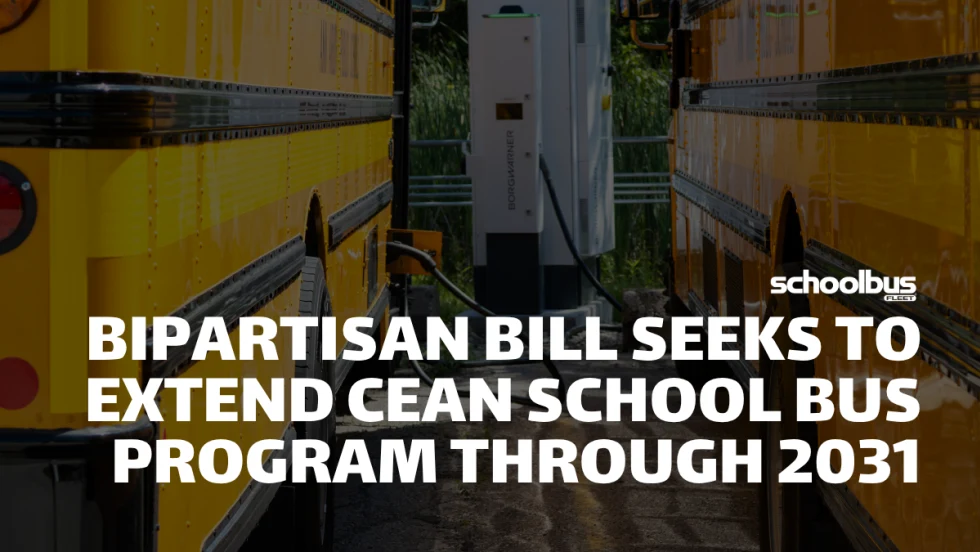
Bipartisan Bill Seeks to Extend Clean School Bus Program Through 2031
The proposed legislation would renew federal support for cleaner school buses as districts navigate funding uncertainty, rising fuel and infrastructure costs, and fleet replacement needs.
Read More →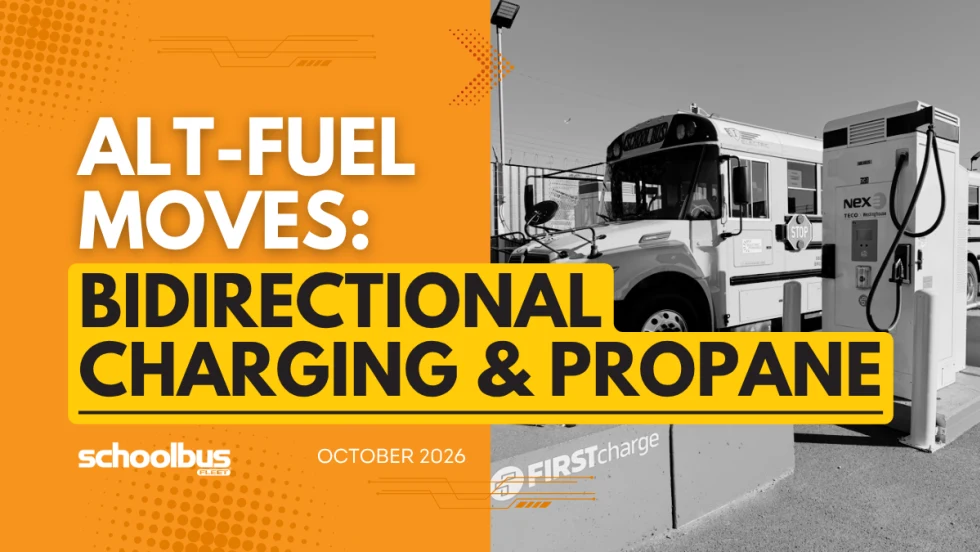
Alt-Fuel Moves: Electric Bus Rollouts, Bidirectional Charging & Propane Growth
See which fleets are adding electric and propane school buses as districts and operators invest in charging infrastructure, bidirectional technology, and alternative-fuel expansion.
Read More →
Nobody Told Diesel Prices They Were Supposed to Come Down
With diesel prices surging, school bus fleets have new reason to stress-test fuel costs, consider diversification, and calculate what each route really costs to operate.
Read More →
Why Gasoline School Buses Are Making a Comeback
Gasoline is gaining ground in full-size school buses. See how today’s options stack up against diesel on cost, maintenance, emissions, performance, and more.
Read More →
EPA Opens $180M DERA Funding Round for Diesel Upgrades
The 2026 Diesel Emissions Reduction Act program seeks applications from eligible organizations to accelerate the retirement of legacy diesel vehicles.
Read More →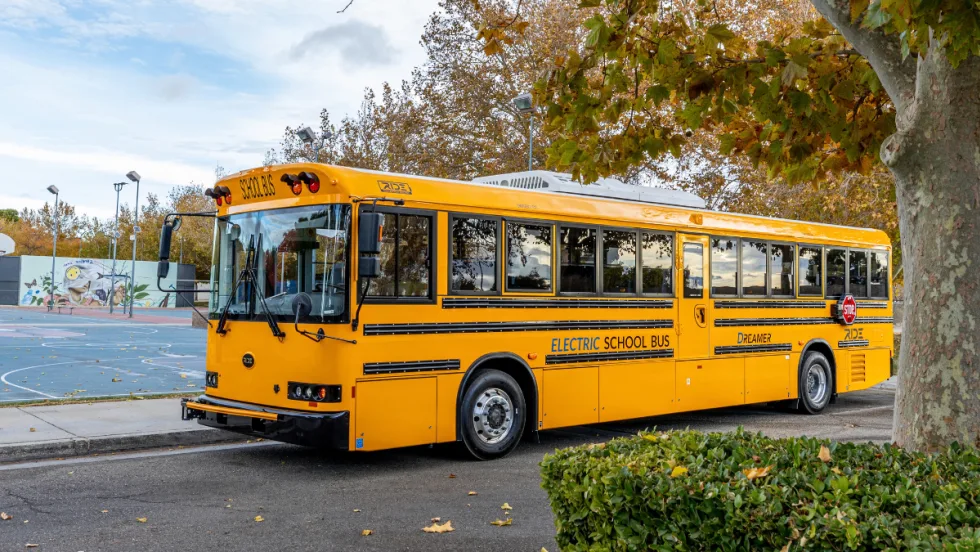
The Secret Life of an Electric School Bus Battery
Batteries change throughout years of daily routes, but degradation doesn’t necessarily mean the end. Here’s what operators should know about performance, safety, and second life.
Read More →
CALSTART and Forth Combine to Form Catalyst Mobility
The new name represents a renewed vision for the nonprofit focused on advancing clean, equitable, and affordable transportation solutions that move people and goods.
Read More →
Alt-Fuel Moves: New Buses, Charging Hubs & Real-World EV Testing
Propane and electric school bus deployments continue to grow as districts add new vehicles, expand charging infrastructure, and gather more real-world operating data.
Read More →
Fewer Electric School Bus Models Reshape the U.S. Market
WRI’s latest buyer’s guide points to a consolidating electric school bus market, but fewer options may reflect a maturing industry rather than fewer meaningful choices for school bus operators.
Read More →
The Fuel Budget You Can Actually Predict: How Propane Autogas Keeps Money in the Classroom
Learn how propane autogas helps school districts manage fuel costs with predictable pricing, lower maintenance, and reduced emissions from former transportation director Joel Stutheit.
Read More →