




Navistar and In-Charge Energy Offer Carbon-Neutral EV Charging
In-Charge Energy's software platform automates collection of electric vehicle charging information and calculates the carbon impact of fueling.
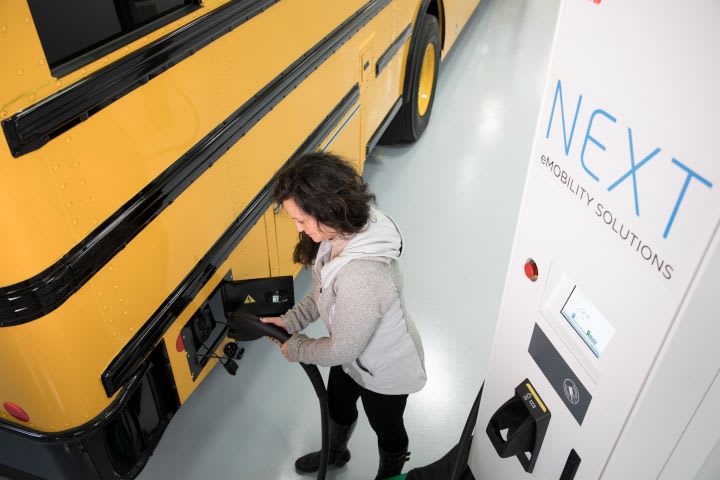
Using Low Carbon Fuel Standard (LCFS) credits or Carbon-Free Credits, customers can offset a fleet's carbon emissions.
Photo courtesy Navistar
NaviStar, manufacturer of IC Bus school buses and International brand commercial trucks and engines, is working with In-Charge Energy to power electric vehicle fleet customers with carbon-neutral electricity through their turnkey EV charging infrastructure.
“As an increasing number of customers are exploring, investing in, and adopting electric powertrains for buses and trucks, they have questions about where the electricity comes from,” said Jason Gies, Navistar’s vice president of eMobility business development. “Through this offering, we can proudly tell our customers and their community stakeholders that their entire fleet can be entirely clean energy, no matter where the fleet operates.”
In-Charge Energy’s fleet-focused In-Control software platform automates the process of collecting EV-charging energy information and with a single click calculates the carbon impact of fueling. The company has entered into contracts for Renewable Energy Credits (RECs) to convert energy consumed by fleets to 100 percent renewable sources.
In California, Oregon, and British Columbia, Canada, most companies can earn Low Carbon Fuel Standard (LCFS) credits when they charge their vehicles. The partnership of Navistar and In-Charge allows fleet managers to focus on managing fleets while In-Control manages the LCFS credit generation and credits on energy markets for cash.
In other parts of the United States and Canada, In-Charge customers have the option to buy In-Charge Carbon-Free Credits, which offsets a fleet’s carbon emissions. With these credits, In-Charge and Navistar customers can buy verified clean, renewable energy to reduce the environmental impact of their electricity use for EV charging, with the goal of complete carbon neutrality.
“We have assembled the most experienced team in North America for fleet electrification, and the team is making it easier for fleets to maximize the cost savings and environmental benefits of electrification,” said Terry O’Day, chief operating officer for In-Charge Energy. “We’re in this business to improve our footprint and make fleets successful.”
According to the U.S. Environmental Protection Agency, the nation’s largest source of all greenhouse gas emissions is transportation. The largest sources of transportation-related carbon emissions come from passenger cars, medium- and heavy-duty trucks, and light-duty trucks, including sport utility vehicles, pickup trucks, and minivans, accounting for more than half the emissions from the transportation sector.
More Alternative Fuels

CALSTART and Forth Combine to Form Catalyst Mobility
The new name represents a renewed vision for the nonprofit focused on advancing clean, equitable, and affordable transportation solutions that move people and goods.
Read More →
Alt-Fuel Moves: New Buses, Charging Hubs & Real-World EV Testing
Propane and electric school bus deployments continue to grow as districts add new vehicles, expand charging infrastructure, and gather more real-world operating data.
Read More →
Fewer Electric School Bus Models Reshape the U.S. Market
WRI’s latest buyer’s guide points to a consolidating electric school bus market, but fewer options may reflect a maturing industry rather than fewer meaningful choices for school bus operators.
Read More →
The Fuel Budget You Can Actually Predict: How Propane Autogas Keeps Money in the Classroom
Learn how propane autogas helps school districts manage fuel costs with predictable pricing, lower maintenance, and reduced emissions from former transportation director Joel Stutheit.
Read More →
Hendrickson, Driventic Introduce New Electric Powertrain for School Buses
ELECTRAAX, the electrified, lightweight drive axle offers integrated ePowertrain efficiency and modular flexibility for Class 6–7 school bus use.
Read More →
The Mobility House Joins PowerFlex in Fleet Electrification Deal
The acquisition combines intelligent charging software, bidirectional charging expertise, and fleet electrification services to support the growing adoption of electric school buses across North America.
Read More →
Alt-Fuel Moves: Electric School Bus Investments Hit the Road
See which districts across the U.S. are putting electric school buses into service, expanding charging infrastructure, and planning the next phase of fleet electrification.
Read More →
With Fuel Volatility Ahead, School Districts Turn to Propane
While diesel prices peaked above $5 this spring, districts with propane autogas-powered fleets paid under $2 per gallon, according to PERC.
Read More →
EPA Unveils Proposed Changes to 2027 Heavy-Duty Engine Rules
The federal agency has proposed changes to next year’s targets that would eliminate DEF derates, ease warranty requirements, and retain current NOx emissions standards.
Read More →
Alt-Fuel Moves: EV Charging & Infrastructure Projects Gain Momentum
The latest developments include new funding, charging infrastructure, utility investments, and fleet technologies designed to support the transition to electric school buses nationwide.
Read More →