




N.Y. Dealers Call for Flexibility in Replacing School Buses With VW Funds
The New York State Bus Distributors Association recommends including all viable clean-engine technologies in a replacement program.

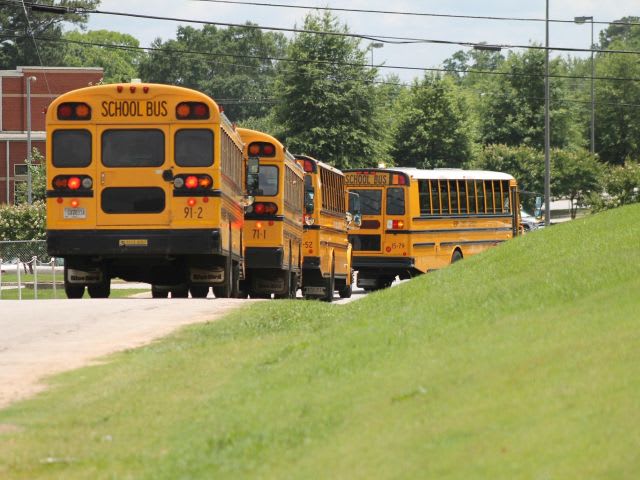
The New York State Bus Distributors Association is recommending that the state include all viable clean-engine technologies in a school bus replacement program. File photo by JD Hardin
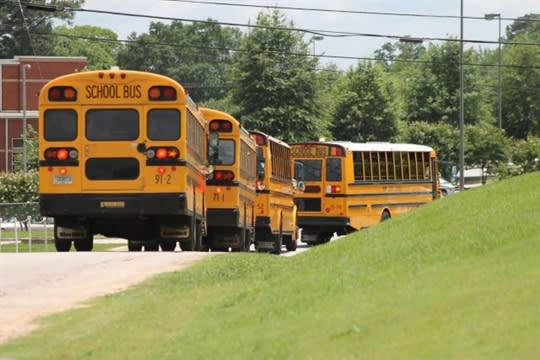
The New York State Bus Distributors Association is recommending that the state include all viable clean-engine technologies in a school bus replacement program. File photo by JD Hardin
LATHAM, N.Y. — A group of New York bus dealers is calling for a broader application of the state’s Volkswagen (VW) mitigation funds in replacing older school buses.
The New York State Bus Distributors Association (NYSBDA) issued a recommendation that the state use some of its VW settlement funding for a school bus replacement program that allows “all current viable engine and fuel technologies that meet or exceed the U.S. Environmental Protection Agency’s (EPA’s) 2010 emission standards.” Those would include clean diesel, propane, natural gas (CNG and LNG), and electric school buses.
New York hasn’t yet released its VW beneficiary mitigation plan, but the state has indicated that it will include the replacement of old, high-emitting school buses, among other vehicles. State officials have said that, in all categories, they will prioritize replacement of diesel vehicles with electric vehicles.
In all, the VW Environmental Mitigation Trust will provide states with a total of nearly $3 billion for projects to cut nitrogen oxide from large vehicles. New York’s share of the funding is $127.7 million.
“Our association wholeheartedly supports Governor Cuomo and the New York State Department of Environmental Conservation’s ongoing efforts to reduce harmful emissions and improve the air quality for all New Yorkers,” NYSBDA President Paul Daniels said. “We are recommending New York state use the Volkswagen settlement funds to establish a school bus replacement program that includes the use of all viable clean-engine and power technologies, including clean diesel, propane, CNG, LNG, and electric.”
Another state group, the New York Association for Pupil Transportation (NYAPT), conveyed a similar message after Cuomo addressed the VW funding in his State of the State policy book at the beginning of the year. NYAPT said in a statement in January that it would work with state agencies “to allow flexibility for districts and operators to employ clean technologies that meet their needs.”
Meanwhile, in a letter sent to the New York State Department of Environmental Conservation, the NYSBDA also recommended that the state embrace a school bus replacement program that mirrors the federal Diesel Emissions Reduction Act (DERA) program.
“Today’s modern combustion engines and alternative fuels produce near-zero emissions and are extremely efficient and environmentally friendly,” said Daniels, the NYSBDA president. “Given that all school buses made after 2010 must meet, or exceed, the EPA’s strictest emissions standards, it makes sense to include them as part of New York’s diesel emissions reduction program.”
Here are additional recommendations and information from the NYSBDA:
• The association recommends that the replacement program include all active school buses with engine model years prior to 2007.
• NYSBDA believes that the program should be statewide and not limited to certain areas.
• The association believes that $20 million of New York’s VW settlement allocation should be committed to a DERA-like school bus replacement program over a maximum of three years.
• NYSBDA estimates that by including clean diesel, propane, CNG, LNG, and electric, the emissions reduction program will remove about 1,000 older school buses from New York’s roads.
• The association recommends using the DERA reimbursement amounts — ranging from $15,000 to $25,000 per school bus.
• NYSBDA supports the position that school districts and contractors be equally eligible to participate in a school bus replacement program.
• NYSBDA recognizes that the VW settlement terms do not allow for the use of gasoline engines for emissions reduction programs.
More Alternative Fuels

CALSTART and Forth Combine to Form Catalyst Mobility
The new name represents a renewed vision for the nonprofit focused on advancing clean, equitable, and affordable transportation solutions that move people and goods.
Read More →
Alt-Fuel Moves: New Buses, Charging Hubs & Real-World EV Testing
Propane and electric school bus deployments continue to grow as districts add new vehicles, expand charging infrastructure, and gather more real-world operating data.
Read More →
Fewer Electric School Bus Models Reshape the U.S. Market
WRI’s latest buyer’s guide points to a consolidating electric school bus market, but fewer options may reflect a maturing industry rather than fewer meaningful choices for school bus operators.
Read More →
The Fuel Budget You Can Actually Predict: How Propane Autogas Keeps Money in the Classroom
Learn how propane autogas helps school districts manage fuel costs with predictable pricing, lower maintenance, and reduced emissions from former transportation director Joel Stutheit.
Read More →
Hendrickson, Driventic Introduce New Electric Powertrain for School Buses
ELECTRAAX, the electrified, lightweight drive axle offers integrated ePowertrain efficiency and modular flexibility for Class 6–7 school bus use.
Read More →
The Mobility House Joins PowerFlex in Fleet Electrification Deal
The acquisition combines intelligent charging software, bidirectional charging expertise, and fleet electrification services to support the growing adoption of electric school buses across North America.
Read More →
Alt-Fuel Moves: Electric School Bus Investments Hit the Road
See which districts across the U.S. are putting electric school buses into service, expanding charging infrastructure, and planning the next phase of fleet electrification.
Read More →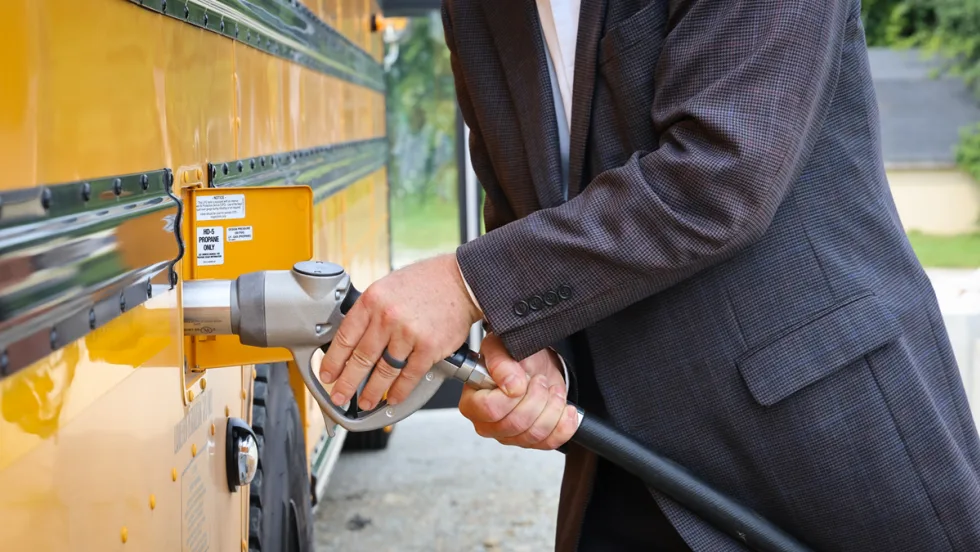
With Fuel Volatility Ahead, School Districts Turn to Propane
While diesel prices peaked above $5 this spring, districts with propane autogas-powered fleets paid under $2 per gallon, according to PERC.
Read More →
EPA Unveils Proposed Changes to 2027 Heavy-Duty Engine Rules
The federal agency has proposed changes to next year’s targets that would eliminate DEF derates, ease warranty requirements, and retain current NOx emissions standards.
Read More →
Alt-Fuel Moves: EV Charging & Infrastructure Projects Gain Momentum
The latest developments include new funding, charging infrastructure, utility investments, and fleet technologies designed to support the transition to electric school buses nationwide.
Read More →