




Lightning eMotors Expands Manufacturing Plant, Boosts Production Capacity
Lightning eMotors Announces Expanded Partnership with Forest River
The expanded partnership will accelerate the repowering of Forest River shuttle buses and passenger vans across the U.S.
by Staff
March 29, 2022
Lightning eMotors has been repowering gasoline and diesel vehicles since 2009.
Photo: Lightning eMotors
2 min to read
Lightning eMotors announced it has expanded its partnership with Forest River to offer a factory-certified all-electric repower program for shuttle buses and passenger vans.
Forest River is a Berkshire Hathaway Company that manufactures shuttle buses, recreational vehicles, cargo trailers, utility trailers, and pontoon boats.
There are currently more than 50,000 Forest River shuttle buses and passenger vans across the U.S. and Canada that are eligible for this program.
“There have been attempts by smaller and early-stage EV technology companies to repower gasoline and diesel buses to electric, but fleets have been hesitant to invest in these third-party, unauthorized and unproven solutions,” said Tim Reeser, Lightning eMotors CEO. “With the Forest River and Lightning eMotors’ factory-certified repower program fleets can be assured they will get a proven and reliable solution backed by two established companies that will stand behind the offering and support the vehicles through their second life.”
The Forest River factory-certified powertrains and installation will be backed by a five-year, 100,000-mile warranty.
Additionally, Lightning Energy will provide Forest River dealers and customers with customized charging and microgrid energy solutions, including Lightning’s Mobile Battery Vehicle Charging solutions.
This expanded agreement comes after Lightning and Forest River announced in 2021 an $850 million, multi-year strategic partnership to build up to 7,500 zero-emission Class 4 and Class 5 buses.
"We expect that our new repower program with Lightning will be welcomed by our dealers because it is being introduced as the commercial bus industry continues to grapple with a production shortage caused by supply chain issues in the broader automotive market,” said David Wright, Forest River Bus president. “Lightning’s zero-emission powertrain provides our customers with an updated powertrain that is not only more sustainable and more efficient than the gasoline engine that is being replaced, but also provides the latest safety and driver technology on a platform that is serviceable and highly customized for their needs.”
Lightning eMotors has been repowering gasoline and diesel vehicles since 2009.
“Commercial vehicles have been repowered since their inception — as most are highly specialized and their chassis and bodies outlast their powertrains. Even electric commercial vehicles will need to be repowered in the future,” said Kash Sethi, chief revenue officer for Lightning eMotors. “This certified repower program is not only cost-effective but provides a reliable and sustainable solution for many shuttle buses and passenger vans on the road today, providing the vehicles with years of additional life while reducing emissions in our communities.”
Originally posted on Metro
More Alternative Fuels
Bipartisan Bill Seeks to Extend Clean School Bus Program Through 2031
The proposed legislation would renew federal support for cleaner school buses as districts navigate funding uncertainty, rising fuel and infrastructure costs, and fleet replacement needs.
Read More →
Alt-Fuel Moves: Electric Bus Rollouts, Bidirectional Charging & Propane Growth
See which fleets are adding electric and propane school buses as districts and operators invest in charging infrastructure, bidirectional technology, and alternative-fuel expansion.
Read More →
Nobody Told Diesel Prices They Were Supposed to Come Down
With diesel prices surging, school bus fleets have new reason to stress-test fuel costs, consider diversification, and calculate what each route really costs to operate.
Read More →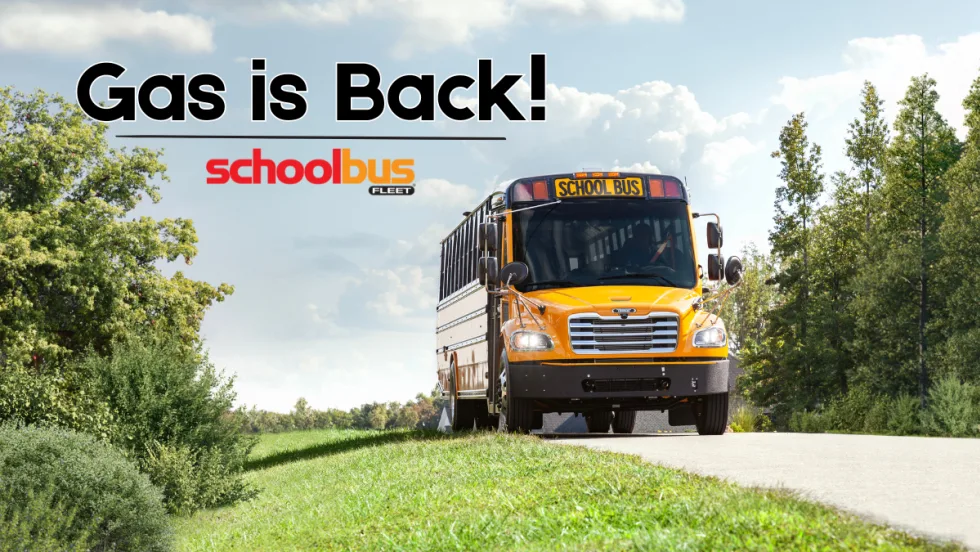
Why Gasoline School Buses Are Making a Comeback
Gasoline is gaining ground in full-size school buses. See how today’s options stack up against diesel on cost, maintenance, emissions, performance, and more.
Read More →
EPA Opens $180M DERA Funding Round for Diesel Upgrades
The 2026 Diesel Emissions Reduction Act program seeks applications from eligible organizations to accelerate the retirement of legacy diesel vehicles.
Read More →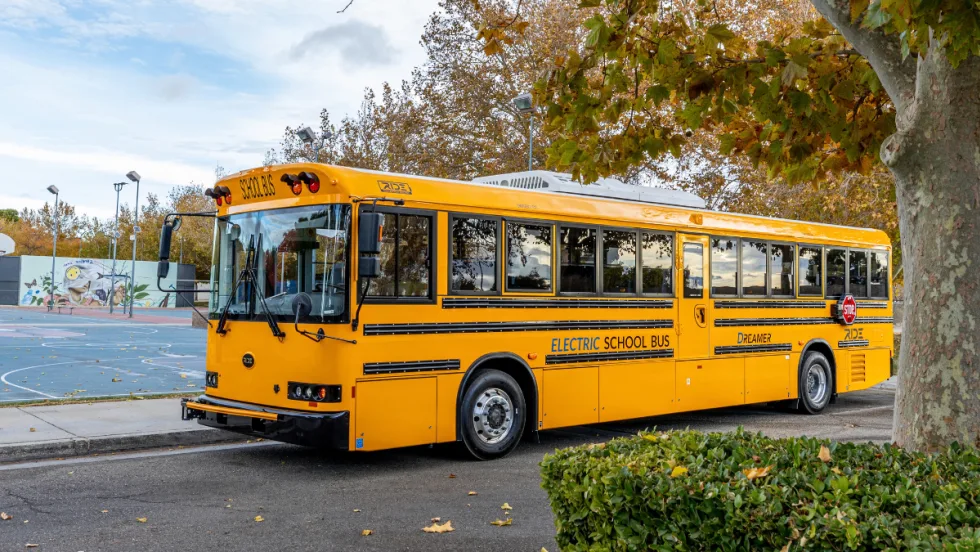
The Secret Life of an Electric School Bus Battery
Batteries change throughout years of daily routes, but degradation doesn’t necessarily mean the end. Here’s what operators should know about performance, safety, and second life.
Read More →
CALSTART and Forth Combine to Form Catalyst Mobility
The new name represents a renewed vision for the nonprofit focused on advancing clean, equitable, and affordable transportation solutions that move people and goods.
Read More →
Alt-Fuel Moves: New Buses, Charging Hubs & Real-World EV Testing
Propane and electric school bus deployments continue to grow as districts add new vehicles, expand charging infrastructure, and gather more real-world operating data.
Read More →
Fewer Electric School Bus Models Reshape the U.S. Market
WRI’s latest buyer’s guide points to a consolidating electric school bus market, but fewer options may reflect a maturing industry rather than fewer meaningful choices for school bus operators.
Read More →
The Fuel Budget You Can Actually Predict: How Propane Autogas Keeps Money in the Classroom
Learn how propane autogas helps school districts manage fuel costs with predictable pricing, lower maintenance, and reduced emissions from former transportation director Joel Stutheit.
Read More →