




‘Invisible Bus’ Presentation Spotlights School Bus Safety for Gas Company Drivers
Invited to address truck drivers and other staff at Intermountain Gas Co., an Idaho student transportation expert explains the importance of stopping for school buses.


RD Huntley’s talk illustrated why school buses should not be “invisible” to other motorists. He works for Cascade Student Transportation, which services West Ada School District in Meridian, Idaho.
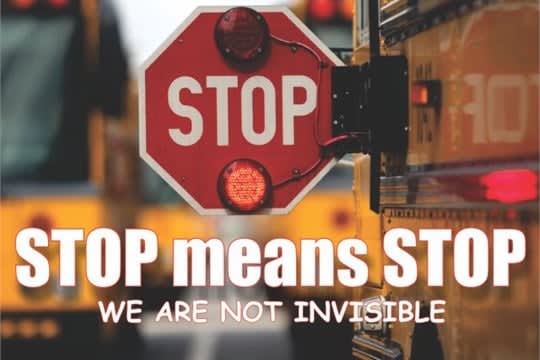
RD Huntley’s talk illustrated why school buses should not be “invisible” to other motorists. He works for Cascade Student Transportation, which services West Ada School District in Meridian, Idaho.
BOISE, Idaho — Gas company employees here learned about the importance of stopping for school buses in a recent presentation titled “The Invisible Bus.”
Miranda Carson, transportation liaison for Meridian-based West Ada School District, said that natural gas distributor Intermountain Gas Co. invited the district to conduct a community safety discussion at the company’s general office safety meeting on Aug. 21.
Carson said that Intermountain Gas Co.’s employees include drivers of company trucks and privately owned vehicles. RD Huntley, student management coordinator for Cascade Student Transportation, took on the task of presenting to the gas company employees. Cascade Student Transportation, which is a division of Student Transportation Inc., provides school bus service for West Ada School District.
Huntley explained the meaning behind his presentation’s intriguing title, “The Invisible Bus.”
“‘Invisible’ because vehicles continue to ignore flashing lights, stop arms, and stop signs,” Huntley said. “I brought the ‘Invisible Bus’ into focus.”
As an example of the stop-arm running issue, a nationwide survey coordinated by the National Association of State Directors of Pupil Transportation Services this year found that nearly 84,000 vehicles illegally passed school buses in one day.
In his presentation at Intermountain Gas Co., Huntley explained Idaho’s law on when vehicles need to stop for school buses. He also shared an illustration showing the different purposes of the yellow lights, red lights, and hazard lights on a school bus.
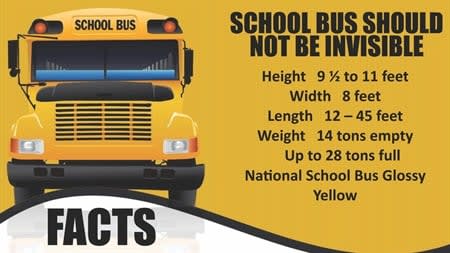
In one of his slides, Huntley listed typical dimensions, weight ratings, and the “National School Bus Glossy Yellow” color specification of school buses.
And — with a slide stating that the “School bus should not be invisible” — Huntley listed typical dimensions, weight ratings, and the “National School Bus Glossy Yellow” color specification of school buses.
The presentation was well-received by the Intermountain Gas Co. team. Carson, the West Ada School District transportation liaison, said that two people from the gas company thanked the district for sending Huntley and gave him glowing reviews.
As one of them put it, “RD combined a great blend of facts and humor to keep us engaged during his presentation.”
Another gas company correspondent said that several employees had complimented the session, and that Huntley “did a terrific presentation on school bus safety, and did a great job outlining issues involved in busing children to and from school.”
Cascade Student Transportation operates 210 route buses for West Ada School District. West Ada is ranked No. 89 in SBF’s Top 100 School District Fleets list for 2018, which appears in the October issue of the magazine.
More Safety

How to Build a Better School Bus Driver Training Program
Is it time to strengthen your driver training? Here’s how to pick the right talent and improve recruitment, retention, and safety. This video is brought to you by IC Bus.
Read More →
Recent School Bus Accidents Leave 2 Dead, 2 Injured
Four school bus crashes in Florida, Illinois, and Georgia highlight risks in transportation lots, at bus stops, and during student loading and unloading.
Read More →
When Every Second Matters, Clarity Keeps Routes Moving
From routine delays to urgent incidents, strong communication practices help drivers, dispatchers, schools, and families respond with confidence.
Read More →

What Happens When a School Bus Catches Fire — and What Can Help
School bus fires are rare but can be devastating. Learn how advances in fire suppression and asset protection help fleets detect fires earlier, reduce damage, and improve safety.
Read More →
Geotab Launches Tool to Help Fleets Investigate Road Incidents
Geotab Investigations combines telematics data, video, documents, and other evidence to help fleets reconstruct incidents, resolve claims, and determine what happened.
Read More →
Texas Sixth Grader Wins 2026 National School Bus Safety Poster Contest
Sai Darshana Yekolu of Moseley Middle School in Prosper, Texas, was named the newest winner for her artwork, bringing the theme of “Safe Rides, Everyday Heroes” to life.
Read More →
Doing More With Less: How Transportation Directors Can Prioritize Safety Amid Budget Uncertainty
With diesel prices soaring and nearly one-third of transportation directors expecting budget cuts, maintaining student safety has never been more challenging. Download this guide to learn how leading districts are prioritizing risk, funding critical safety technology, and building stronger budget cases with data.
Read More →
Walton County Schools Adds Gatekeeper Stop-Arm Enforcement System
The Florida district will deploy Gatekeeper’s updated Student Protector technology, which now incorporates AI to improve video evidence.
Read More →
How To Build a More Secure School Bus Yard During and After Hours
As thefts and overnight security threats continue, school transportation leaders are combining stronger operational practices with AI-enabled surveillance to better protect buses, facilities, and staff.
Read More →
FMCSA Names New Chief Safety Officer: What School Bus Operators Should Know
Steve Dowling is set to lead the federal agency's efforts to advance commercial motor vehicle safety and reduce crashes, fatalities, and injuries on the nation's roadways.
Read More →