





Check Out: Blueprint Lays Out Transportation Decarbonization Plan
Guam Schools Getting $9.9M in Clean School Bus Funds
The Biden-Harris Administration announced that rebate funds from the first-round of the Clean School Bus Program will help Guam's Department of Education purchase 25 battery-electric school buses.
January 21, 2023

Guam currently generates about 13% of its electricity from renewable energy.
Image: Guam Department of Education
3 min to read
About $9.9 million from the Bipartisan Infrastructure Law will go to the Guam Department of Education to help fund 25 new battery-electric school buses in the U.S. territory.
“This Bipartisan Infrastructure Law funded grant will accelerate Guam’s transition to electric school buses, ensuring a brighter, healthier future for its children,” said EPA Pacific Southwest Regional Administrator Martha Guzman. “EPA is making an unprecedented investment in our children’s future by reducing climate pollution, and ensuring clean, breathable air.”
“As proud recipients of the EPA Clean School Bus Program, we are thankful for the Biden-Harris Administration’s transformative vision with the Bipartisan Infrastructure Law and for EPA Administrator (Michael) Regan’s leadership to ensure speedy and equitable issuance of awards that will enhance Guam’s regional efforts in reversing the effects of climate change,” said Guam Governor Lou Leon Guerrero. “In 2019, Lieutenant Governor Josh Tenorio and I created the Climate Change Resiliency Commission on Guam, which was geared toward developing an integrated strategy to build resiliency against the adverse effects of climate change and reduce contributing factors such as greenhouse gas emissions. Thousands of our island’s school children will benefit from the cleaner fleet this award will provide, granting us a tremendous opportunity to fortify our capacity for climate change resiliency through improved air quality and reduced air emissions."
The Guam Department of Education met one or more of the EPA’s prioritization criteria for low income, high need, rural, or tribal schools. The funding will be used to purchase both zero-emission battery-electric buses and charging infrastructure.
This investment will reduce greenhouse gas emissions, save money for Guam’s schools, protect children’s health, drive demand for American-made batteries and vehicles, boost domestic manufacturing, and create good-paying jobs.
Guam’s Department of Public Works owns and operates the territory’s school buses and will assist with the deployment of the 25 new battery-electric school buses.
Guam currently generates approximately 13% of its electricity from renewable energy and has plans to increase that to 50% by 2035 and 100% by 2045. The Guam Power Authority will be responsible for providing the electricity to power these electric school buses.
In 2022, EPA announced the availability of $500 million for its Clean School Bus Program. Given overwhelming demand from school districts across the country, including in low-income communities, tribal nations, and U.S. territories, EPA nearly doubled the amount of funding that will be awarded to $965 million. The rebate application period closed in August 2022 after an outstanding response from school districts seeking to purchase electric and low-emission school buses.
At this time, the agency has selected 403 applications totaling $948 million to support the purchase of 2,571 buses, 95% of which will be battery electric. EPA will distribute awards to school districts in all 50 states and Washington D.C., along with several federally recognized Tribes and U.S. territories. School districts identified as priority areas serving low-income, rural, and/or tribal students make up 99% of the projects that were selected for funding.
Those school districts who received an award can now proceed with purchasing new buses and eligible infrastructure. Selectees will need to submit Payment Request Forms with purchase orders demonstrating they have ordered new buses and eligible infrastructure. EPA is also partnering with the U.S. Department of Energy and Department of Transportation to provide school districts with robust technical assistance to ensure effective implementation.
These awards are the first $1 billion of a five-year, $5 billion program created by the Bipartisan Infrastructure Law. EPA also is currently designing the next rounds of program funding to launch in the coming months, which will include an ambitious grant competition. Through future rounds of funding, EPA will make available another $1 billion for clean school buses in Fiscal Year 2023. EPA encourages school districts not selected in the first round of rebates – and those that did not apply this funding cycle – to participate in future rounds.
More Alternative Fuels
Bipartisan Bill Seeks to Extend Clean School Bus Program Through 2031
The proposed legislation would renew federal support for cleaner school buses as districts navigate funding uncertainty, rising fuel and infrastructure costs, and fleet replacement needs.
Read More →
Alt-Fuel Moves: Electric Bus Rollouts, Bidirectional Charging & Propane Growth
See which fleets are adding electric and propane school buses as districts and operators invest in charging infrastructure, bidirectional technology, and alternative-fuel expansion.
Read More →
Nobody Told Diesel Prices They Were Supposed to Come Down
With diesel prices surging, school bus fleets have new reason to stress-test fuel costs, consider diversification, and calculate what each route really costs to operate.
Read More →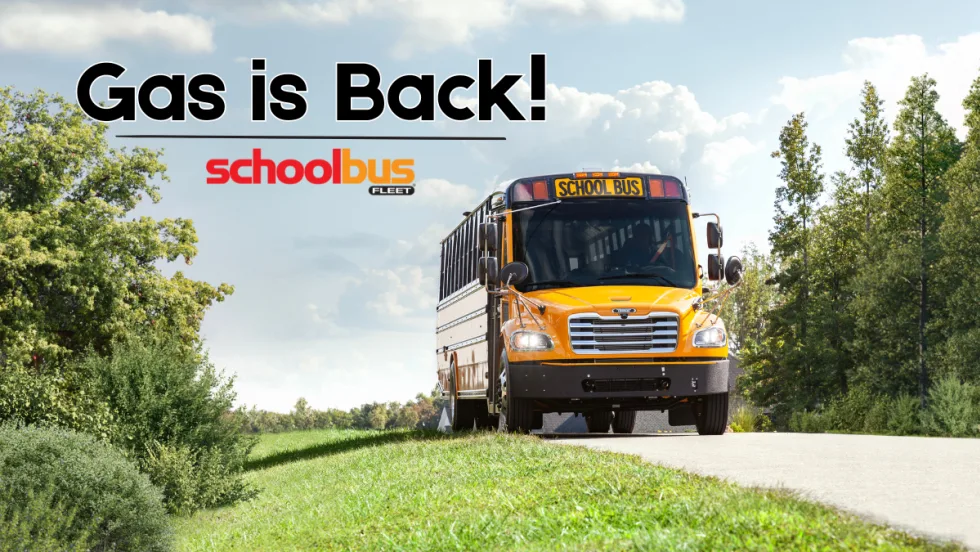
Why Gasoline School Buses Are Making a Comeback
Gasoline is gaining ground in full-size school buses. See how today’s options stack up against diesel on cost, maintenance, emissions, performance, and more.
Read More →
EPA Opens $180M DERA Funding Round for Diesel Upgrades
The 2026 Diesel Emissions Reduction Act program seeks applications from eligible organizations to accelerate the retirement of legacy diesel vehicles.
Read More →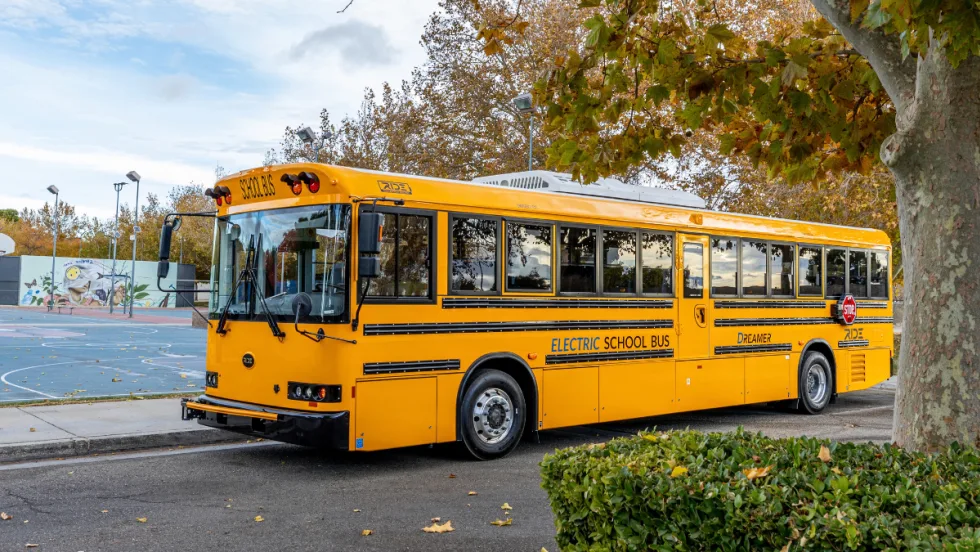
The Secret Life of an Electric School Bus Battery
Batteries change throughout years of daily routes, but degradation doesn’t necessarily mean the end. Here’s what operators should know about performance, safety, and second life.
Read More →
CALSTART and Forth Combine to Form Catalyst Mobility
The new name represents a renewed vision for the nonprofit focused on advancing clean, equitable, and affordable transportation solutions that move people and goods.
Read More →
Alt-Fuel Moves: New Buses, Charging Hubs & Real-World EV Testing
Propane and electric school bus deployments continue to grow as districts add new vehicles, expand charging infrastructure, and gather more real-world operating data.
Read More →
Fewer Electric School Bus Models Reshape the U.S. Market
WRI’s latest buyer’s guide points to a consolidating electric school bus market, but fewer options may reflect a maturing industry rather than fewer meaningful choices for school bus operators.
Read More →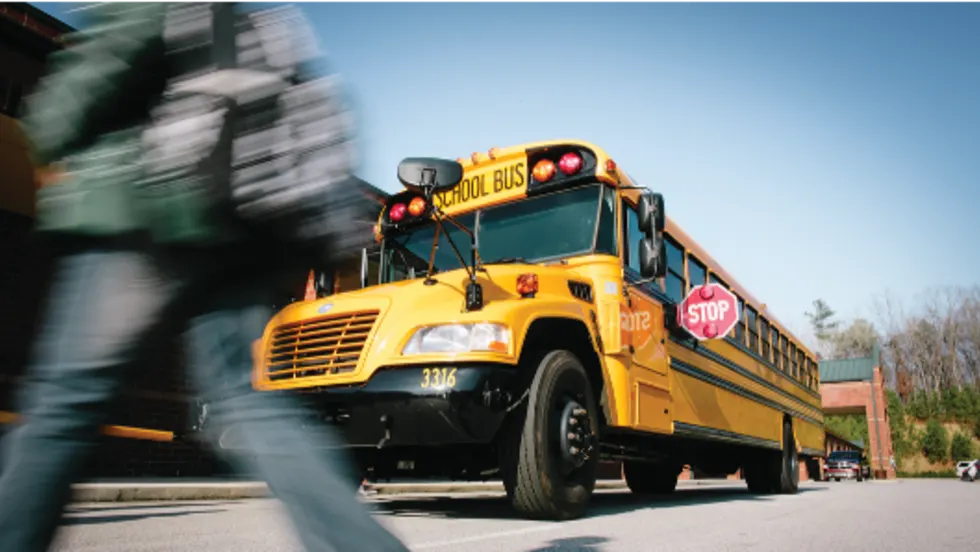
The Fuel Budget You Can Actually Predict: How Propane Autogas Keeps Money in the Classroom
Learn how propane autogas helps school districts manage fuel costs with predictable pricing, lower maintenance, and reduced emissions from former transportation director Joel Stutheit.
Read More →