



Electronic Stability Control Now Standard on IC School Buses
New CE and RE Series diesel buses with air brakes feature ESC and collision mitigation technology as standard. ESC will be available for IC's propane and gasoline buses with air brakes in 2019.

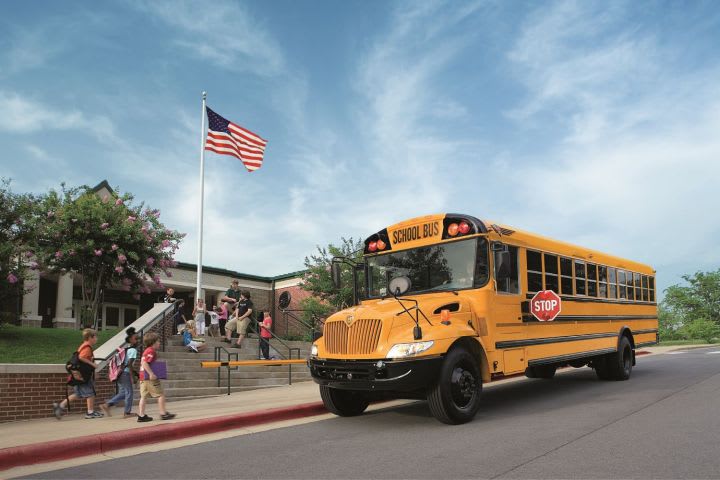
IC Bus CE Series (pictured) and RE Series diesel buses with air brakes now feature electronic stability control and collision mitigation technology as standard.
IC Bus CE Series (pictured) and RE Series diesel buses with air brakes now feature electronic stability control and collision mitigation technology as standard.
LISLE, Ill. — IC Bus announced on Tuesday that it is making electronic stability control (ESC) and collision mitigation technology standard on its school buses.
The school bus manufacturer’s new CE Series and RE Series diesel buses with air brakes now feature the safety technologies. ESC will be available for IC buses with hydraulic brakes in the spring of 2019.
Additionally, ESC will be available for IC propane and gasoline buses with air brakes in the spring of 2019.
The advanced technologies used in these systems support the driver with added information and intelligence, so drivers can sense situations quickly and completely and make informed decisions, including intervening to avoid a loss of control or a crash. The new systems also provide safety features that school bus drivers may have in their own cars as well as in commercial trucks, which may have a positive impact in recruiting and retaining drivers, according to IC Bus.
“With electronic stability control and collision mitigation, the safest mode of transportation just got even better,” said Trish Reed, vice president and general manager of IC Bus. “IC Bus is able to bring these advanced technologies to customers in a cost-effective manner, while delivering added peace of mind to school districts, school bus contractors, students, and their parents.”
IC Bus’ collision mitigation technology will offer active as well as passive safety features, according to the school bus manufacturer. The passive features give alerts to the driver to let them know they may need to take action, and the active features can help prevent or mitigate a crash by taking an action such as de-throttling the engine and applying the brakes, Reed explained.
The Bendix Wingman Advanced collision mitigation system is standard on all CE Series and RE Series models with air brakes. The Bendix Wingman Fusion driver assistance system is also an option on CE Series buses. The Bendix ESP full stability system is standard in CE Series and RE Series models with air brakes.
Reed noted that making these systems standard was a carefully considered decision made independently from recommendations regarding ESC and collision mitigation technologies recently issued by the National Transportation Safety Board (NTSB). As previously reported, based on its findings on fatal crashes in 2016 in Chattanooga, Tennessee, and Baltimore, Maryland, the agency recommended that the National Highway Traffic Safety Administration (NHTSA) mandate that new school buses be equipped with collision avoidance systems, and reiterated a past recommendation that NHTSA require that stability control systems be installed on newly manufactured commercial vehicles weighing more than 10,000 pounds.
IC Bus began considering the move to making ESC and collision mitigation technologies standard about two years ago, and began working on a product development program with Bendix. After the Chattanooga crash, the school bus manufacturer began looking more seriously into the safety technologies.
“We wanted to mitigate a potential accident like that,” Reed said in an interview.
Meanwhile, as IC Bus continued to work with Bendix on development, NHTSA made ESC systems a requirement on large trucks and some buses beginning in 2017 (school buses are exempt from the requirement). Navistar, IC’s parent company, was making ESC standard on its trucks, and collision mitigation on its LT Series trucks, Reed said.
“The scale of offering it from the truck side and seamlessly bringing it over to the bus side made it easier for us to make that decision and move it forward,” she added.
The company also sought to bring its buses within financial reach of its customers even with the additional technologies, making them part of the standard price of the school bus.
“At the end of the day, we know it is the right thing to do for the industry and our customers,” Reed said.
More Management

Zum Reaches 19 States With New York Expansion
The addition of the Empire State to the student transportation company's roster marks a growing expansion in the Northeast as it scales its tech and school bus services.
Read More →
First Student Updates Its Parent App
First View connects both yellow bus and alternative transportation, giving families one platform to track student trips for the new school year, with 15 languages supported.
Read More →
The Back-to-School Checklist Every Director Should Complete Before the First Bell
Help your transportation team start the school year strong with these tips for contingency planning, communication, fleet visibility, technology, and trip management.
Read More →
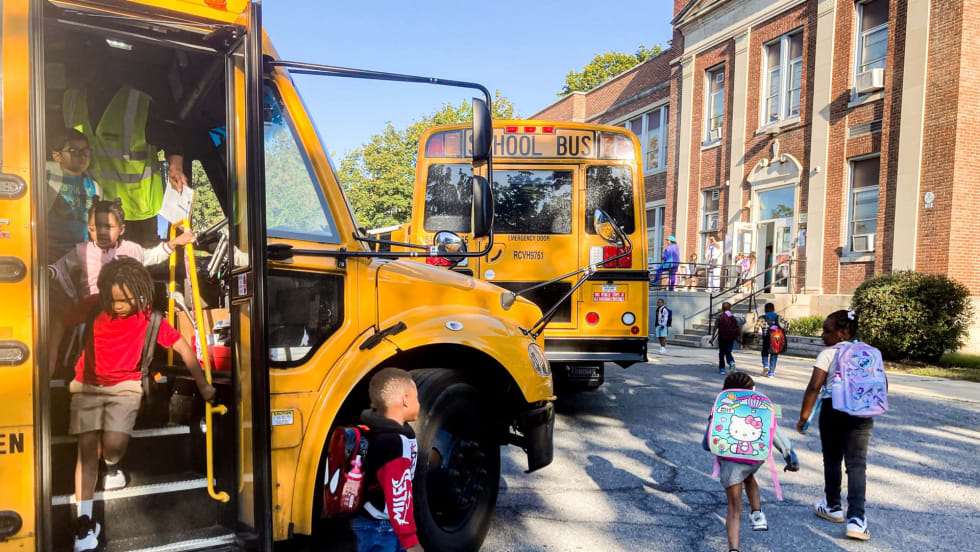
How a New York District Cut Nearly $1M in Transportation Costs While Expanding Bus Access
A data-driven overhaul with BusRight reduced Poughkeepsie City School District's planned routes from 26 to 17 while extending school bus service to about 1,200 additional students.
Read More →
Budgets Down, Enrollment Shifting: What the Data Says Districts Should Watch
School transportation departments face two converging challenges this year: tightening budgets and shifting enrollment. Most districts still address these issues separately, but the assumption that either trend will simplify operations is proving incorrect.
Read More →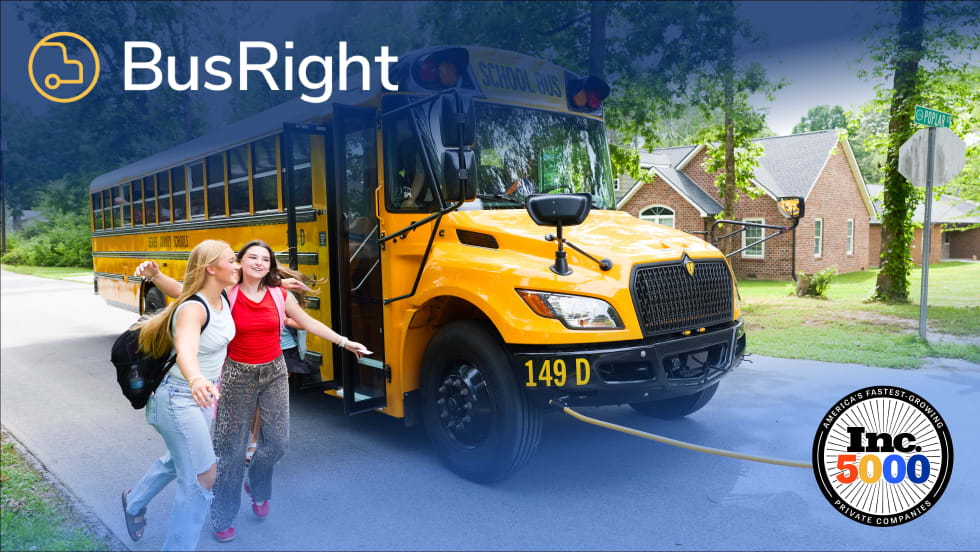
These 8 School Transportation Companies Made the 2026 Inc. 5000 List
Find out which school transportation contractors, technology providers, and suppliers ranked among America’s fastest-growing private companies.
Read More →
The Link Between Emotional Intelligence and School Bus Safety
How can emotional intelligence help transportation pros navigate stress, manage change, and build stronger relationships? Listen to find out.
Read More →
What Emotional Intelligence Has to Do With School Bus Safety
In this video, discover how emotional intelligence can help transportation leaders and drivers navigate stress, manage change, and build stronger relationships. The Route is sponsored by IC Bus.
Read More →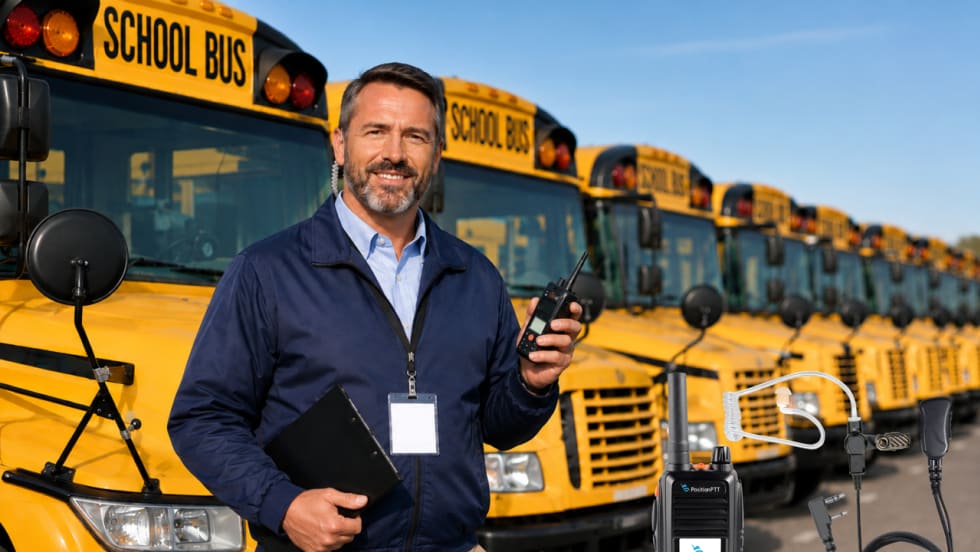
Beyond Two-Way Radios: School Bus Communications Evolve With Push-to-Talk Over Cellular
PRYME Radio and PositionPTT join forces to advance hands-free radio use and reduce distracted driving. See how PoC compares with traditional radios on range, cost, safety, and connectivity.
Read More →
Have School Districts Adapted to Bus Driver Shortages or Simply Accepted Less Service?
According to a recent report from HopSkipDrive, many districts appear to have recalibrated what "normal" transportation service looks like.
Read More →