




Budgets Down, Enrollment Shifting: What the Data Says Districts Should Watch
School transportation departments face two converging challenges this year: tightening budgets and shifting enrollment. Most districts still address these issues separately, but the assumption that either trend will simplify operations is proving incorrect.

Budget and enrollment conversations should involve transportation, not occur separately.
iStock
- School transportation departments are encountering dual challenges: limited budgets and changing enrollment patterns.
- Many districts tend to address budget and enrollment issues independently, without integrating their strategies.
- The expectation that these trends will streamline operations is proving to be inaccurate.
*Summarized by AI
School transportation departments face two converging challenges this year: tightening budgets and shifting enrollment. Most districts still address these issues separately, but the assumption that either trend will simplify operations is proving incorrect.
In March 2026, EverDriven surveyed nearly 200 transportation directors and district administrators nationwide. The findings show that departments are managing both pressures simultaneously, with student attendance often reflecting the strain before it is linked to transportation.
The Budget Picture
Nearly one in three directors (32%) expect budget decreases next year, primarily due to factors outside their departments. Sixty-two percent cite district-wide cuts, and half point to reduced state and federal funding. Another 26% anticipate flat budgets, which, given rising fuel, maintenance, and driver compensation costs, effectively means a reduction in real terms.
Enrollment Shifts Are Not the Relief Valve They Appear to Be
In addition to budget pressures, enrollment is also changing. Forty-four percent of directors expect growth, 23% expect decline, and 53% attribute these shifts to residential and demographic changes. While declining enrollment might suggest fewer buses and simpler routes, this is rarely the case in practice.
Declining enrollment reduces funding but does not significantly decrease transportation complexity. Costs do not decrease proportionally with student numbers, and remaining students often have greater transportation needs. Twenty-five percent of directors identified serving students with disabilities and medically fragile students as a top priority, while 23% highlighted McKinney-Vento populations as a main concern. These students have the least flexible transportation requirements and are often most at risk when budgets shrink.
Where the Squeeze Shows Up First
Budget and enrollment pressures often first appear in attendance data, sometimes later than districts would prefer. When transportation departments miss pickups, consolidate routes unexpectedly, or change transportation plans mid-year without staff input, families may lack backup options. A missed ride can lead to a missed day, and repeated absences are much harder to address than a single late pickup.
District leadership can easily overlook this connection when budget and enrollment discussions occur separately from student services. Transportation is not just a budget item; it is a key tool for supporting student attendance. Therefore, transportation and student services teams should collaborate and confirm alignment in the planning stages, before it’s too late.
A Framework for Managing the Squeeze Before It Becomes an Attendance Problem
Districts do not need to wait for the next budget cycle or enrollment update to address these challenges. Three questions can help leadership teams begin now: Is transportation performance measured by whether students actually arrive, not just whether routes run on paper? Are transportation staff included in student-level decisions, such as IEP placements or McKinney-Vento reassignments, before the district makes commitments to families? Does the district have a shared, documented process for handling exceptions when conditions change quickly? These questions form the basis ofEverDriven's Leadership Discussion Guide, available for districts seeking a more comprehensive framework.
For transportation directors facing tighter budgets and shifting enrollment, shared answers to these questions distinguish proactive system-building from reactive problem-solving.
Budgets will continue to tighten in some areas and ease in others. Enrollment will keep shifting for reasons beyond any transportation department's control. Neither trend needs to result in missed school days, but only if the connection between transportation, budget, enrollment, and attendance is made deliberately and early.
This article reflects the views of EverDriven and does not necessarily represent the views of School Bus For Bobit Business Media.
Quick Answers
The main challenges are tightening budgets and shifting enrollment, which are impacting operations.
*Summarized by AI
More Management
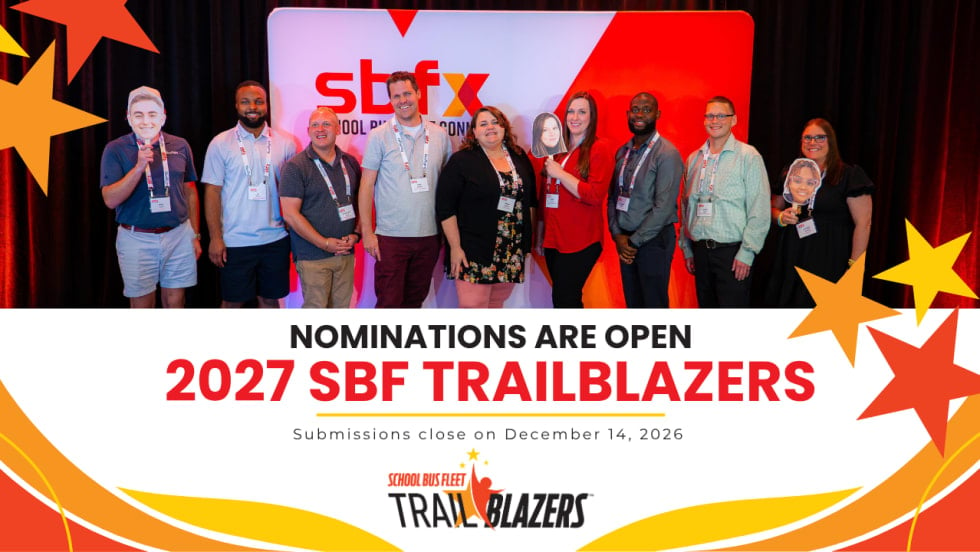
Nominate Rising School Transportation Pros Under 40!
We’re searching for the next generation of leaders making an impact across the K-12 student transportation industry to recognize as SBF’s 2027 Trailblazers. Nominations are open now!
Read More →
Changing Lanes: BusWhere, EverDriven, InterMotive, Summit School Services, Switzer-Carty & Thomas Built Buses
Check out who's been hired, promoted, and appointed to leadership positions at various school transportation suppliers, contractors, and manufacturers.
Read More →
The Most Expensive Thing You Do Before Selling a School Bus: Wait
When should you sell an aging school bus? Learn how maintenance, mileage, corrosion, specifications, and timing can affect resale value long before the auction.
Read More →
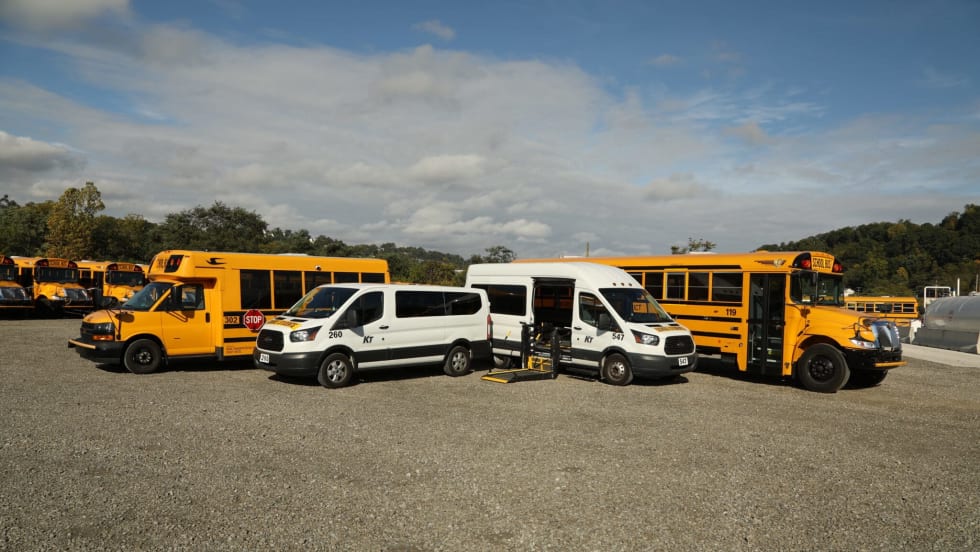
American Student Transportation Partners Acquires AJ Myers and Sons
A new deal brings a 75-year Pennsylvania student transportation provider into one of the nation’s largest private school bus contracting groups.
Read More →
What I Brought Home From SBFX: Relationships, Leadership, and Preparing What's Next
Who could lead your transportation operation tomorrow if you couldn't? Bernando Brown explores succession planning, mentorship, and preparing emerging leaders to step up.
Read More →
Inside School Bus Fleet ConneX 2026: Industry Leaders Connect in Scottsdale [Photos]
See highlights from SBFX 2026 in Arizona, where school bus operators and suppliers gathered for meetings, education, networking, awards, and more.
Read More →
School Transportation’s Biggest Pressures and Opportunities: SBFX Attendees Weigh In
School bus operators point to rising costs, staffing, and vehicle prices as immediate pressures while identifying technology, training, and routing as opportunities for growth.
Read More →
STA Acquires Sunrise Transportation
Student Transportation of America expands in Illinois and Connecticut through Sunrise's fleet of nearly 1,000 vehicles.
Read More →
EPA Opens $180M DERA Funding Round for Diesel Upgrades
The 2026 Diesel Emissions Reduction Act program seeks applications from eligible organizations to accelerate the retirement of legacy diesel vehicles.
Read More →
HopSkipDrive’s CareEngine Targets the ‘Exceptions’ in Student Transportation
The new platform works alongside districts’ existing transportation management systems to coordinate specialized rides, automate last-minute changes, and turn ride data into operational improvements.
Read More →