





Miss This? Message Received: Best Practices for Effective Radio Communication
Beyond Two-Way Radios: School Bus Communications Evolve With Push-to-Talk Over Cellular
PRYME Radio and PositionPTT join forces to advance hands-free radio use and reduce distracted driving. See how PoC compares with traditional radios on range, cost, safety, and connectivity.
August 13, 2026
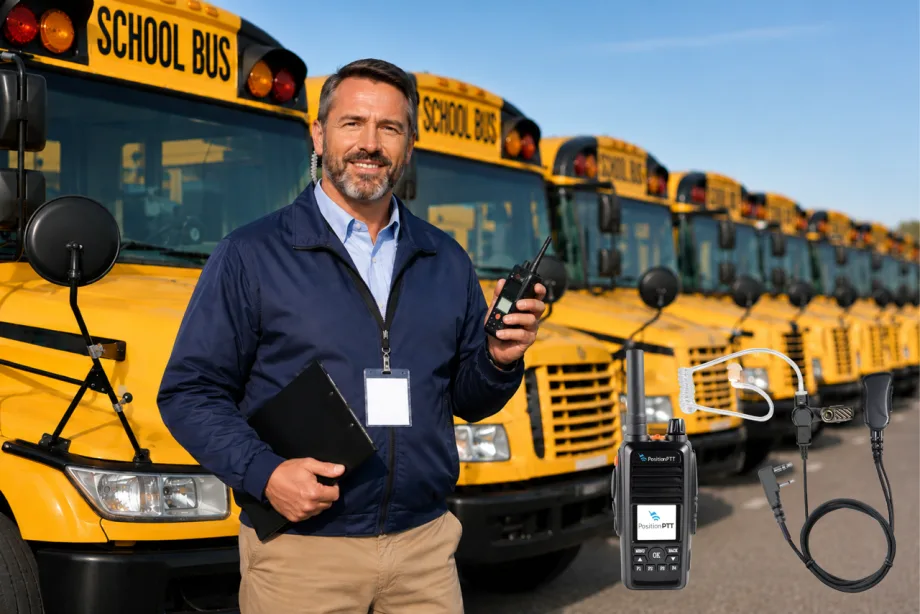
New push-to-talk over cellular radios are made to maintain signals even if a school bus crosses out of repeater range, meaning dispatch can stay connected to drivers when they might need it most.
Credit:
PRYME Audio Accessories
4 min to read
- The collaboration between PRYME Radio and PositionPTT aims to enhance hands-free radio usage and minimize distracted driving in school bus communications.
- Push-to-Talk Over Cellular (PoC) is evaluated against traditional radios in terms of range, cost, safety, and connectivity.
- The evolution from two-way radios to PoC technologies highlights a shift in school bus communication systems toward improved safety and efficiency.
*Summarized by AI
Is it time for traditional two-way radios used in school bus operations to step aside? A new hands-free solution seeks to offer more flexibility while removing barriers and frustrations sometimes experienced with older systems.
Expanding Hands-Free Options for School Bus Drivers
PRYME Radio Products, which makes audio accessories for two-way radios and push-to-talk (PTT) communications, just announced an expanded strategic partnership with PositionPTT, a provider of nationwide push-to-talk over cellular (PoC) solutions.
The partnership pairs PositionPTT's PoC radios, smartphone application, and dispatch platform with PRYME's headsets, speaker mics, and PTT switches to meet Department of Transportation (DOT) requirements and enable employees to communicate hands-free without interrupting critical tasks.
PositionPTT delivers PoC communications over T-Mobile and AT&T nationwide cellular networks using an ecosystem of handheld and in-vehicle radios, mobile application, and desktop dispatch software. With GPS location tracking, central dispatch capabilities, and plug-and-play deployment, the system offers an alternative to traditional two-way radio infrastructure while allowing organizations to connect regardless of device type.
"PRYME has been a trusted partner for over six years,” Bill Trout, president and owner of PositionPTT, said. “Their responsiveness, willingness to dropship directly to our customers, and help create sales materials has made them an extension of our own operation. That kind of support is rare, and it directly improves the experience we deliver to our customers."
Dave George, president and chief technologist of PRYME, said they invite collaborations that help customers identify the accessories best suited for their needs.
PositionPTT is also rolling out a new Bluetooth-enabled in-vehicle radio, developed through the partnership with PRYME, which opens the door to accessories like Bluetooth mics for drivers who want a hands-free option beyond the base unit. "Most of our current school bus deployments are vehicle-mounted units without that accessory layer, so this is a new option for districts rather than something already in wide use," Trout said.
How Push-to-Talk Over Cellular Compares to Traditional Radios
Even though FMCSA makes an exception to the hands-free law for one-button radio systems used by commercial drivers, PoC radios make it even easier to stay focused on the road instead of the radio. "Anybody operating a vehicle should be using a hands-free solution," Trout said.
Trout points out that conventional two-way radio is limited by line-of-sight and repeater infrastructure — typically a few miles per site — and that extending that range means installing and maintaining more towers and repeaters, plus the FCC licensing that goes with it. PTT over cellular removes that ceiling, he says. "As long as a bus is on a cellular network, dispatch can reach it, whether that bus is across town or across the state."
The upfront investment is significantly lower with PTT over cellular as well since there's no repeater infrastructure to install or maintain, and no FCC licensing process to go through.
"Districts are essentially trading a capital infrastructure cost for a predictable monthly service cost per device," Trout said. "The tradeoff worth being honest about is that PTT over cellular depends on cellular coverage rather than a district-owned radio network, so it inherits the coverage profile of the carrier."
Trout ranks the three key benefits to the system as:
- Dispatch efficiency
- Driver/passenger safety
- Infrastructure cost savings
Drew Coughlin at Coughlin Transportation in Gaithersburg, Maryland, offered this example from experience using the PTT system for GPS tracking: "In the high-volume traffic of the Washington, D.C. area, it is extremely helpful to see exactly where a bus is located during a delay. Knowing if a route is moving slowly allows us to determine if we need to dispatch an alternate bus. Additionally, our drivers find the system most helpful during multi-bus trips. It allows them to communicate quickly to coordinate drop-off locations and relay other important information."
How Do the Radios Perform in Rural Areas?
No carrier provides 100% coverage everywhere, Trout explains, "and we're upfront about that with districts," he said. "That said, we don't get much feedback from customers about poor connectivity in rural service areas."
Part of why comes down to how the technology works: It sends small data packets rather than holding open a continuous call connection, so it's less susceptible to choppy audio or dropped calls that people often associate with older cellular PTT options.
Scott Holloway at Monark Student Transportation in Pittsburgh offers a recommendation of using a hybrid approach, keeping traditional radios as a backup to ensure consistent communication when coverage is inconsistent.
Quick Answers
Push-to-Talk Over Cellular (PoC) is a communication method that uses cellular networks to enable two-way communication, as opposed to traditional two-way radios which rely on radio frequencies. PoC offers greater range and connectivity because it is not limited by radio frequency range.
*Summarized by AI
More Management

The Most Expensive Thing You Do Before Selling a School Bus: Wait
When should you sell an aging school bus? Learn how maintenance, mileage, corrosion, specifications, and timing can affect resale value long before the auction.
Read More →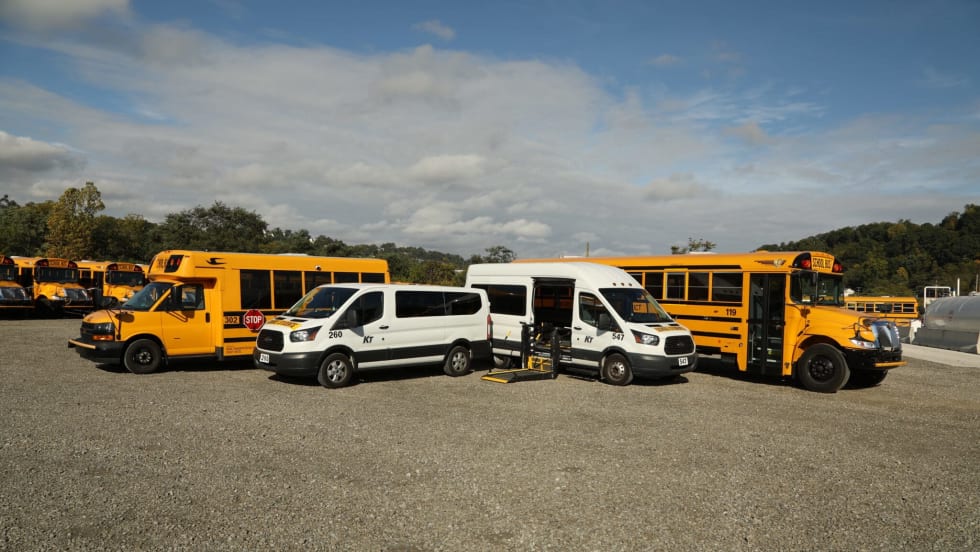
American Student Transportation Partners Acquires AJ Myers and Sons
A new deal brings a 75-year Pennsylvania student transportation provider into one of the nation’s largest private school bus contracting groups.
Read More →
What I Brought Home From SBFX: Relationships, Leadership, and Preparing What's Next
Who could lead your transportation operation tomorrow if you couldn't? Bernando Brown explores succession planning, mentorship, and preparing emerging leaders to step up.
Read More →
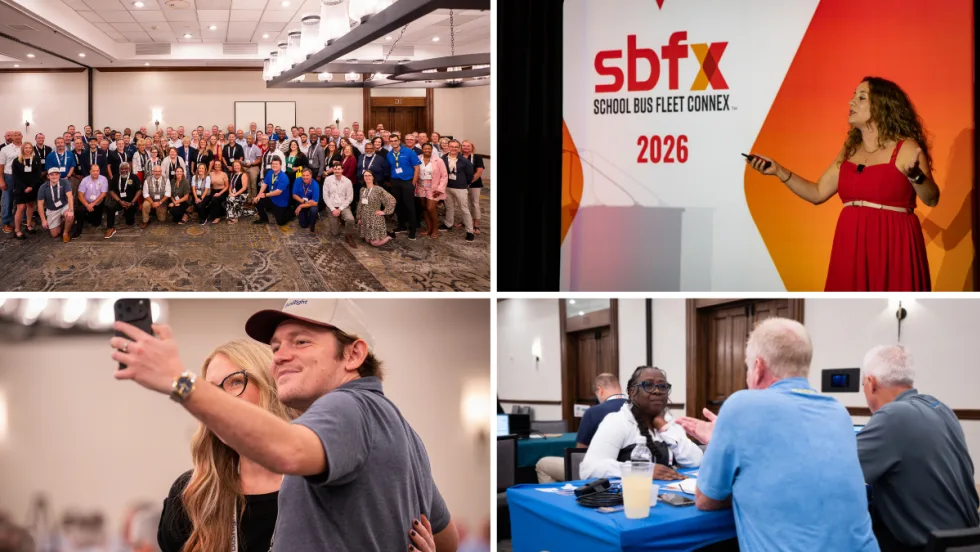
Inside School Bus Fleet ConneX 2026: Industry Leaders Connect in Scottsdale [Photos]
See highlights from SBFX 2026 in Arizona, where school bus operators and suppliers gathered for meetings, education, networking, awards, and more.
Read More →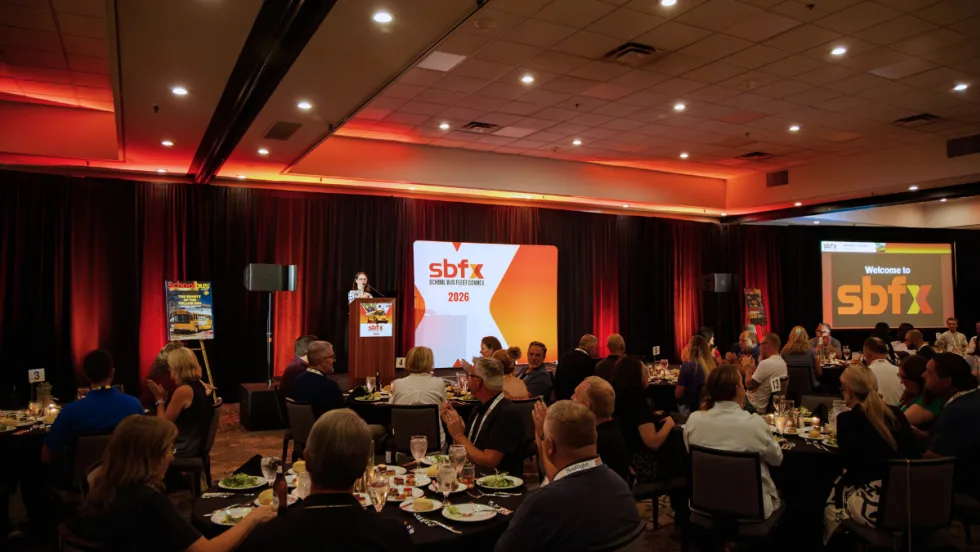
School Transportation’s Biggest Pressures and Opportunities: SBFX Attendees Weigh In
School bus operators point to rising costs, staffing, and vehicle prices as immediate pressures while identifying technology, training, and routing as opportunities for growth.
Read More →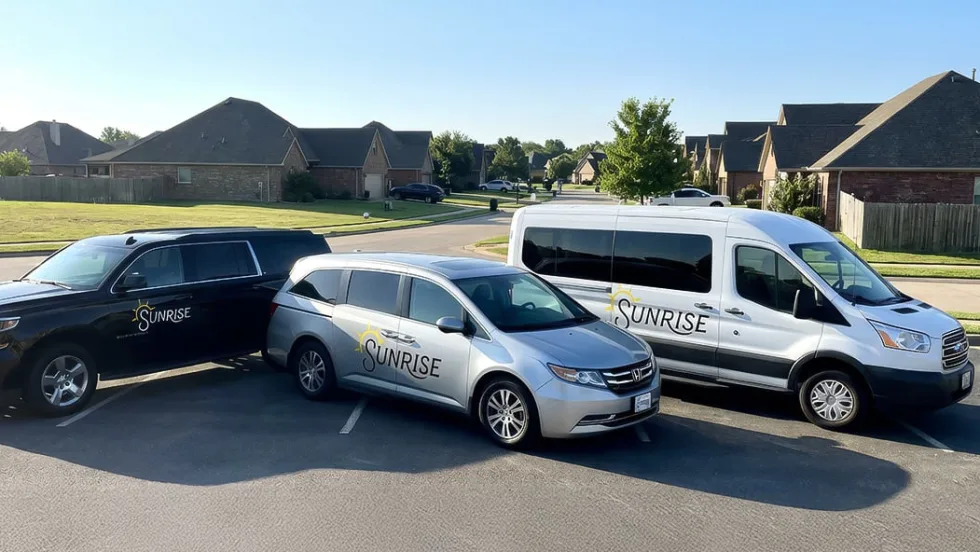
STA Acquires Sunrise Transportation
Student Transportation of America expands in Illinois and Connecticut through Sunrise's fleet of nearly 1,000 vehicles.
Read More →
EPA Opens $180M DERA Funding Round for Diesel Upgrades
The 2026 Diesel Emissions Reduction Act program seeks applications from eligible organizations to accelerate the retirement of legacy diesel vehicles.
Read More →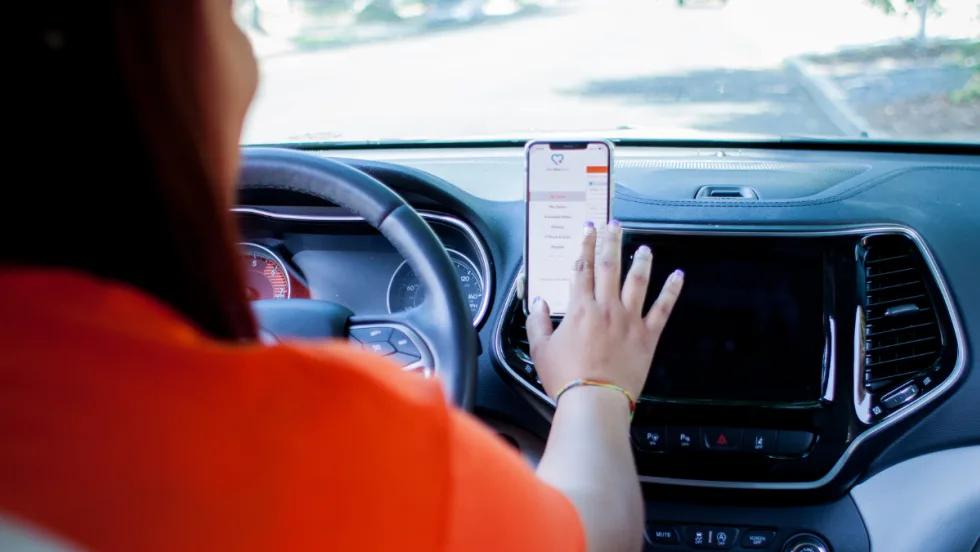
HopSkipDrive’s CareEngine Targets the ‘Exceptions’ in Student Transportation
The new platform works alongside districts’ existing transportation management systems to coordinate specialized rides, automate last-minute changes, and turn ride data into operational improvements.
Read More →
The Right Ride for Every Student: Navigating the New Student Transportation Ecosystem
How should districts blend school buses with small-vehicle transportation and other options? EverDriven CEO Mitch Bowling discusses safety, costs, partnerships, and strategy.
Read More →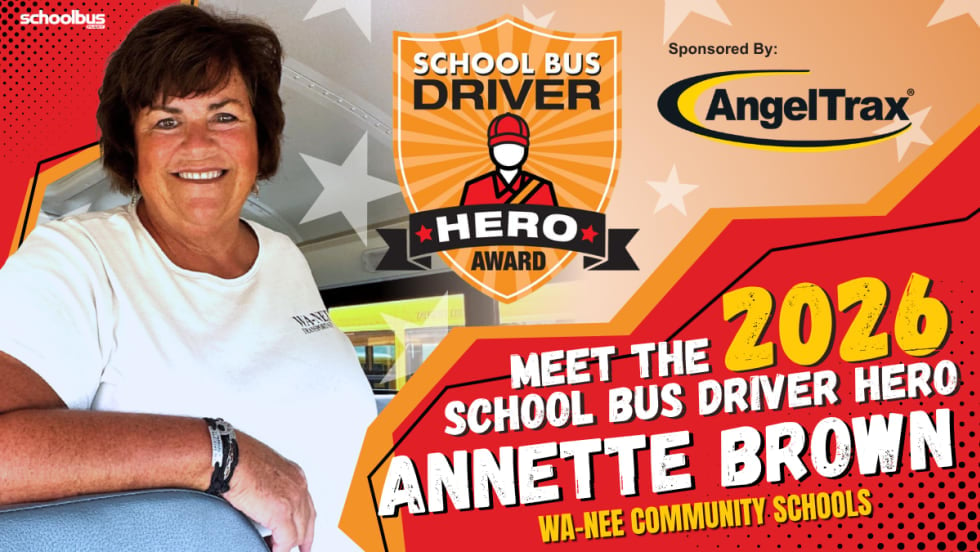
Annette Brown Always Takes the Extra Time: Meet Our 2026 School Bus Driver Hero
For more than 30 years, the Wa-Nee Community Schools driver has treated students like family, combining safety, compassion, and servant leadership to make a lasting difference on and beyond the school bus.
Read More →