




See also: NTSB Video Highlights School Bus Safety
Driver Fatigue, Seat Belt Use Among NTSB’s ‘Most Wanted’ Safety Issues
The agency’s updated list of safety improvement goals comes as federal statistics show an increase in U.S. traffic fatalities.

Thomas McMahon・Executive Editor
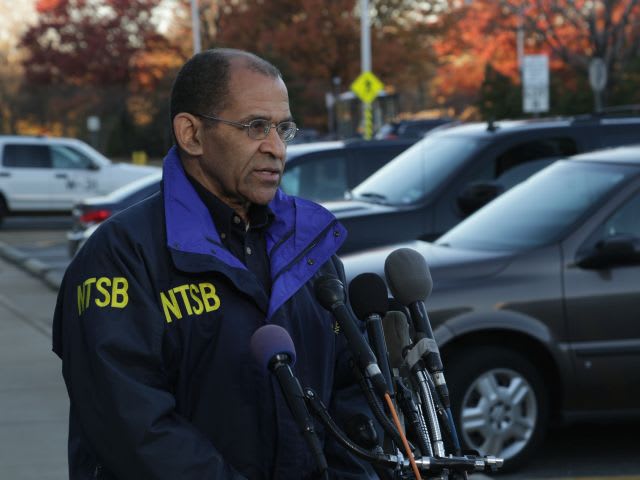
NTSB’s updated list of safety improvement goals comes as federal statistics show an increase in U.S. traffic fatalities. Seen here is agency Chairman Christopher Hart. NTSB photo by James Anderson
3 min to read
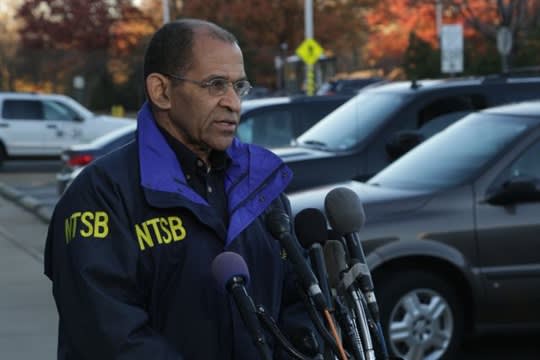
NTSB’s updated list of safety improvement goals comes as federal statistics show an increase in U.S. traffic fatalities. Seen here is agency Chairman Christopher Hart. NTSB photo by James Anderson
WASHINGTON, D.C. — The National Transportation Safety Board’s (NTSB’s) updated “Most Wanted List” of safety improvements for 2017-18 includes multiple issues that are applicable to pupil transportation.
Some of the targeted issues apply broadly to operators of all types of vehicles, such as distracted driving.
“To reduce crashes, injuries, and deaths, drivers must completely disconnect from an increasing variety of deadly distractions,” the NTSB wrote in its Most Wanted report. “Every auxiliary task impairs our ability to process the primary task at hand.”
Driver fatigue is another issue on the Most Wanted list.
“Trucks, buses, and cars are machines that require complex human interaction and an operator’s complete attention and proficient skill,” NTSB wrote. “All too often, however, drivers, maintenance personnel, and other individuals performing safety-critical functions are impaired by fatigue stemming from insufficient or poor-quality sleep.”
On that subject, a new study by the AAA Foundation for Traffic Safety found that crash risks increase for drivers who get less than seven hours of sleep.
Another of NTSB's Most Wanted topics that is relevant to pupil transportation is occupant protection.
“Some of our recent investigations have … highlighted the importance of proper seat belt use and readily accessible and identifiable evacuation routes on larger passenger vehicles, such as school buses, motor coaches, and other commercial vehicles,” NTSB wrote.
One of the agency’s recent investigations covered a 2014 school bus crash in Anaheim, California, in which the driver lost consciousness and the bus ran off of the road. The bus was equipped with three-point seat belts, and NTSB found that “reducing the severity of passenger injuries in the area of maximum intrusion was the proper use of the available lap/shoulder belts by the student passengers seated in this area.”
In announcing the 2017-18 Most Wanted List in November, NTSB Chairman Christopher Hart cited statistics from the National Highway Traffic Safety Administration showing that traffic fatalities increased by 7.2% from 2014 to 2015. Also, early estimates show a 10.4% increase in motor vehicle deaths for the first half of 2016 versus the first half of 2015.
“Before this turn for the worse, the highway safety community’s progress looked good, with fatalities generally declining for decades,” Hart said. “This setback is a reminder that safety is not a destination, but a continuing journey, and our efforts to improve safety must never stop.”
Here is NTSB’s full Most Wanted List of transportation safety improvements for 2017-18:
• Eliminate distractions
• Reduce fatigue-related accidents
• Prevent loss of control in flight in general aviation
• Improve rail transit safety oversight
• End alcohol and other drug impairment in transportation
• Increase implementation of collision avoidance technologies
• Expand recorder use to enhance safety
• Require medical fitness
• Strengthen occupant protection
• Ensure the safe shipment of hazardous materials
For more details on specific topics, go to the Most Wanted List section of the NTSB website.
More Safety

How to Build a Better School Bus Driver Training Program
Is it time to strengthen your driver training? Here’s how to pick the right talent and improve recruitment, retention, and safety. This video is brought to you by IC Bus.
Read More →
Recent School Bus Accidents Leave 2 Dead, 2 Injured
Four school bus crashes in Florida, Illinois, and Georgia highlight risks in transportation lots, at bus stops, and during student loading and unloading.
Read More →
Sponsored•September 8, 2026
When Every Second Matters, Clarity Keeps Routes Moving
From routine delays to urgent incidents, strong communication practices help drivers, dispatchers, schools, and families respond with confidence.
Read More →

What Happens When a School Bus Catches Fire — and What Can Help
School bus fires are rare but can be devastating. Learn how advances in fire suppression and asset protection help fleets detect fires earlier, reduce damage, and improve safety.
Read More →
Geotab Launches Tool to Help Fleets Investigate Road Incidents
Geotab Investigations combines telematics data, video, documents, and other evidence to help fleets reconstruct incidents, resolve claims, and determine what happened.
Read More →
Texas Sixth Grader Wins 2026 National School Bus Safety Poster Contest
Sai Darshana Yekolu of Moseley Middle School in Prosper, Texas, was named the newest winner for her artwork, bringing the theme of “Safe Rides, Everyday Heroes” to life.
Read More →
Sponsored•August 27, 2026
Doing More With Less: How Transportation Directors Can Prioritize Safety Amid Budget Uncertainty
With diesel prices soaring and nearly one-third of transportation directors expecting budget cuts, maintaining student safety has never been more challenging. Download this guide to learn how leading districts are prioritizing risk, funding critical safety technology, and building stronger budget cases with data.
Read More →
Walton County Schools Adds Gatekeeper Stop-Arm Enforcement System
The Florida district will deploy Gatekeeper’s updated Student Protector technology, which now incorporates AI to improve video evidence.
Read More →
How To Build a More Secure School Bus Yard During and After Hours
As thefts and overnight security threats continue, school transportation leaders are combining stronger operational practices with AI-enabled surveillance to better protect buses, facilities, and staff.
Read More →
FMCSA Names New Chief Safety Officer: What School Bus Operators Should Know
Steve Dowling is set to lead the federal agency's efforts to advance commercial motor vehicle safety and reduce crashes, fatalities, and injuries on the nation's roadways.
Read More →