




DEA May Reclassify Marijuana in Historic Move
Some administrative hurdles remain, but the shift could result in marijuana's acceptance as a Schedule III drug under the U.S. Controlled Substances Act and might bring changes to federal drug-testing laws.

The reclassification of marijuana’s status – from Schedule I to Schedule III under the U.S. Controlled Substances Act – would take place 30 days after the DEA’s final rule is published in the Federal Register.
Source: Canva
Don’t expect school districts to approve bongs on buses, but the U.S. Drug Enforcement Agency seems intent on reclassifying marijuana as a less dangerous drug, recognizing the medical use of cannabis.
That’s according to a report from The Associated Press on April 30, which indicated that the DEA proposal wouldn’t legalize marijuana for recreational use.
The plan doesn’t take immediate effect. It must go to the White House Office of Management and Budget, get public comments, and then we expect administrative hearings to debate the issue. After public comment and any necessary judicial review, the agency would issue its final determination. The reclassification of marijuana’s status – from Schedule I to Schedule III under the U.S. Controlled Substances Act – would take place 30 days after the DEA’s final rule is published in the Federal Register.
“It is significant for these federal agencies, and the DEA and FDA in particular, to acknowledge publicly for the first time what many patients and advocates have known for decades: that cannabis is a safe and effective therapeutic agent for tens of millions of Americans,” said Paul Armentano, deputy director of NORML, a pro-marijuana organization founded in 1970.
Even if the new reclassification is adopted, as a Schedule III drug, marijuana would be legal to possess only from licensed pharmacies under a physician’s prescription. NORML argues that the cannabis plant should be removed entirely from the Controlled Substances Act and that states should regulate marijuana as they see fit.
Should the reclassification occur, it could result in amendments to federal drug-testing laws.
Governors in six states – Colorado, Illinois, Louisiana, Maryland, New Jersey, and New York – signed off on a letter to President Joe Biden in 2023, urging him to reclassify marijuana for purposes of providing economic and tax advantages for marijuana businesses.
“As governors, we might disagree about whether recreational cannabis legalization or even cannabis is a net positive, but we agree that the cannabis industry is here to stay, the states have created strong regulations, and supporting the state-regulated marketplace is essential for the safety of the American people,” the letter stated.
In his own statement, Colorado Gov. Jared Polis wrote: "There is, and will continue to be, a significant consumer demand for cannabis. That fact will not change regardless of the public policy choices that we make. So, it seems obvious and sensible to us to make cannabis as safe as it can be for adult consumers while simultaneously protecting our children. The state-regulated marketplace does just that. If the state-legal marketplace doesn't survive, then we will see unsafe products on every street corner."
Biden had asked for a review of marijuana’s schedule during the 2022 midterm elections.
“Criminal records for marijuana use and possession have imposed needless barriers to employment, housing, and educational opportunities,” Biden has said. “Too many lives have been upended because of our failed approach to marijuana. It’s time that we right these wrongs.”
More Safety

How to Build a Better School Bus Driver Training Program
Is it time to strengthen your driver training? Here’s how to pick the right talent and improve recruitment, retention, and safety. This video is brought to you by IC Bus.
Read More →
Recent School Bus Accidents Leave 2 Dead, 2 Injured
Four school bus crashes in Florida, Illinois, and Georgia highlight risks in transportation lots, at bus stops, and during student loading and unloading.
Read More →
When Every Second Matters, Clarity Keeps Routes Moving
From routine delays to urgent incidents, strong communication practices help drivers, dispatchers, schools, and families respond with confidence.
Read More →

What Happens When a School Bus Catches Fire — and What Can Help
School bus fires are rare but can be devastating. Learn how advances in fire suppression and asset protection help fleets detect fires earlier, reduce damage, and improve safety.
Read More →
Geotab Launches Tool to Help Fleets Investigate Road Incidents
Geotab Investigations combines telematics data, video, documents, and other evidence to help fleets reconstruct incidents, resolve claims, and determine what happened.
Read More →
Texas Sixth Grader Wins 2026 National School Bus Safety Poster Contest
Sai Darshana Yekolu of Moseley Middle School in Prosper, Texas, was named the newest winner for her artwork, bringing the theme of “Safe Rides, Everyday Heroes” to life.
Read More →
Doing More With Less: How Transportation Directors Can Prioritize Safety Amid Budget Uncertainty
With diesel prices soaring and nearly one-third of transportation directors expecting budget cuts, maintaining student safety has never been more challenging. Download this guide to learn how leading districts are prioritizing risk, funding critical safety technology, and building stronger budget cases with data.
Read More →
Walton County Schools Adds Gatekeeper Stop-Arm Enforcement System
The Florida district will deploy Gatekeeper’s updated Student Protector technology, which now incorporates AI to improve video evidence.
Read More →
How To Build a More Secure School Bus Yard During and After Hours
As thefts and overnight security threats continue, school transportation leaders are combining stronger operational practices with AI-enabled surveillance to better protect buses, facilities, and staff.
Read More →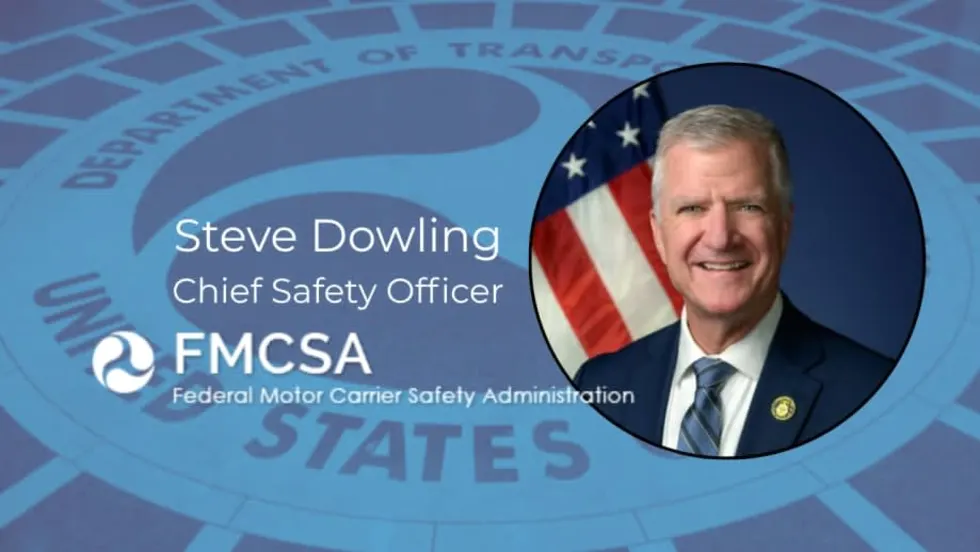
FMCSA Names New Chief Safety Officer: What School Bus Operators Should Know
Steve Dowling is set to lead the federal agency's efforts to advance commercial motor vehicle safety and reduce crashes, fatalities, and injuries on the nation's roadways.
Read More →