





Closer Look: What School Transportation Leaders Need to Know About the EPA's 2023 Rebate Program
California Governor Signs 2035 Zero-Emission School Bus Mandate
Gavin Newsom wants all newly purchased or contracted school buses to be zero-emission vehicles, with potential extensions for districts meeting certain conditions.
October 11, 2023
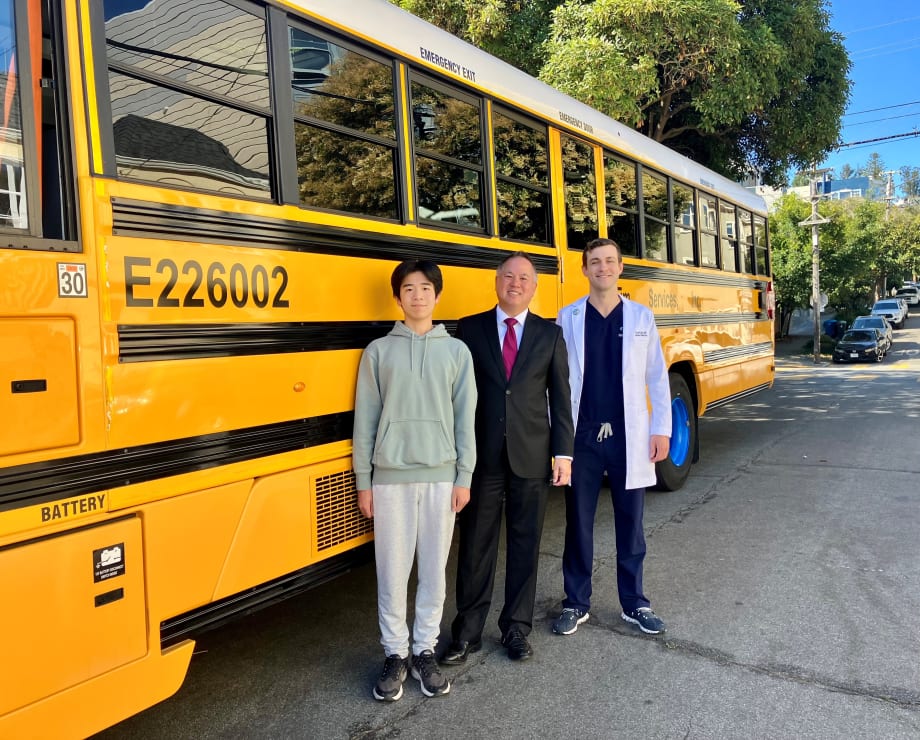
Phil Ting, a California State Assembly member from San Francisco (center), authored the legislation signed by Gov. Gavin Newsom.
Photo: California State Assemblymember Phil Ting
3 min to read
Governor Gavin Newsom over the weekend signed into law Assembly Bill 579, which calls for all of California’s new school bus purchases or leases to be zero-emission after 2035.
What's In the California School Bus Legislation
“Signing this bill demonstrates our state’s commitment to maintaining a healthy environment for our children through improved air quality,” Newsom wrote to the California State Assembly in a letter on Oct. 8. “California is steadfast in supporting a smooth and successful transition to zero-emissions vehicles, including school buses.”
The bill authorizes local education agencies to request a one-time extension of up to five years if making the transition to zero-emission school buses isn’t immediately feasible due to both terrain and route constraints. The bill also allows extensions for frontier school districts through Jan. 1, 2045 if certain conditions are met.
Said Newsom: “As the bill’s Jan. 1, 2035, implementation date approaches, I strongly encourage future legislatures and administrations to monitor zero-emission school bus technology improvements to ensure these vehicles meet the range needs of school districts and are affordably priced.”
The signing came after Assemblymember Phil Ting of San Francisco, author of the legislation, urged action from the governor. Ting lamented that only 560, or 2%, of the buses in California’s entire school transportation fleet is currently zero emission.
“The health and environmental benefits of getting more zero-emission school buses on the road are tremendous, yet California lags in utilizing them,” Ting said.
Dr. Knox Kelly, an internist with Climate Health Now, shared Ting’s concerns, saying: “Diesel exhaust is a known carcinogen. Kids who ride diesel buses have up to four times the exposure to this exhaust than people in cars riding next to the bus. Electric school buses have no tailpipe emissions, can improve community resilience, and are less expensive to fuel and maintain.”
WRI Hails "Full-Circle Moment" for California's EV Effort
The World Resources Institute notes that California leads when it comes to “committed” electric school buses since the advent of the Environmental Protection Agency’s Clean School Bus Program. Currently, according to WRI, the state has 2,078 electric buses awarded funding, ordered, delivered, or in operation.
“This is a full circle moment for California,” said Sue Gander, director of WRI’s Electric School Bus Initiative. “Nearly 10 years ago, three school districts in California deployed the country’s first electric school buses, and within a decade, state leaders have now taken this critical step to ensure all students across the state will benefit from a clean commute to school.”
The WRI praised Newsom and Ting for matching state funding with their new fleet transition commitment.
“For this one-two combination to successfully and equitably electrify the state’s school bus fleet, it’s essential that the state prioritize those most impacted by on-road pollution in their funding programs and support all districts with technical assistance and workforce development.”
More Alternative Fuels

CALSTART and Forth Combine to Form Catalyst Mobility
The new name represents a renewed vision for the nonprofit focused on advancing clean, equitable, and affordable transportation solutions that move people and goods.
Read More →
Alt-Fuel Moves: New Buses, Charging Hubs & Real-World EV Testing
Propane and electric school bus deployments continue to grow as districts add new vehicles, expand charging infrastructure, and gather more real-world operating data.
Read More →
Fewer Electric School Bus Models Reshape the U.S. Market
WRI’s latest buyer’s guide points to a consolidating electric school bus market, but fewer options may reflect a maturing industry rather than fewer meaningful choices for school bus operators.
Read More →
The Fuel Budget You Can Actually Predict: How Propane Autogas Keeps Money in the Classroom
Learn how propane autogas helps school districts manage fuel costs with predictable pricing, lower maintenance, and reduced emissions from former transportation director Joel Stutheit.
Read More →
Hendrickson, Driventic Introduce New Electric Powertrain for School Buses
ELECTRAAX, the electrified, lightweight drive axle offers integrated ePowertrain efficiency and modular flexibility for Class 6–7 school bus use.
Read More →
The Mobility House Joins PowerFlex in Fleet Electrification Deal
The acquisition combines intelligent charging software, bidirectional charging expertise, and fleet electrification services to support the growing adoption of electric school buses across North America.
Read More →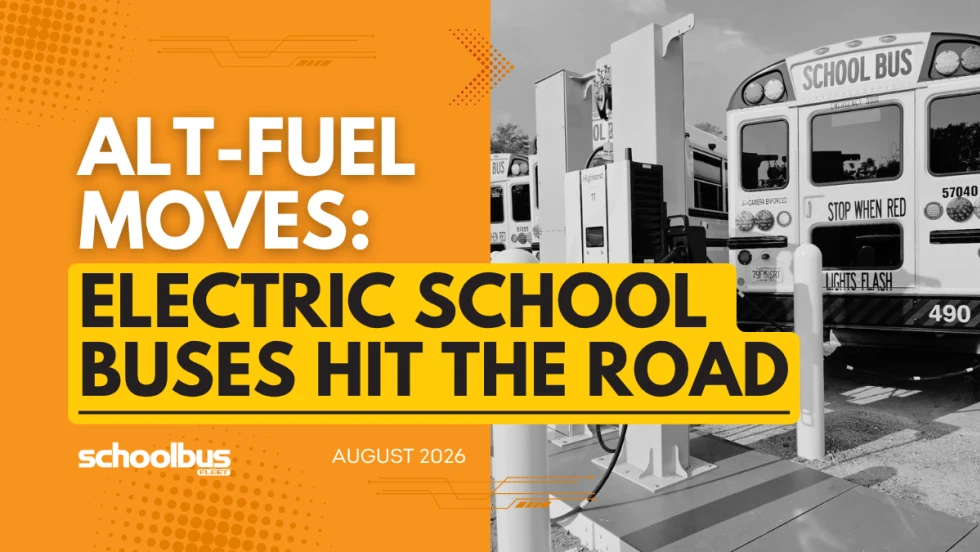
Alt-Fuel Moves: Electric School Bus Investments Hit the Road
See which districts across the U.S. are putting electric school buses into service, expanding charging infrastructure, and planning the next phase of fleet electrification.
Read More →
With Fuel Volatility Ahead, School Districts Turn to Propane
While diesel prices peaked above $5 this spring, districts with propane autogas-powered fleets paid under $2 per gallon, according to PERC.
Read More →
EPA Unveils Proposed Changes to 2027 Heavy-Duty Engine Rules
The federal agency has proposed changes to next year’s targets that would eliminate DEF derates, ease warranty requirements, and retain current NOx emissions standards.
Read More →
Alt-Fuel Moves: EV Charging & Infrastructure Projects Gain Momentum
The latest developments include new funding, charging infrastructure, utility investments, and fleet technologies designed to support the transition to electric school buses nationwide.
Read More →