

California Announces Electric School Bus Funds for Rural Districts
The Rural School Bus Pilot Project is delivering dozens of electric school buses to rural districts as part of a disbursement of more than $1.2 billion for more alternative-fuel vehicles in the state.

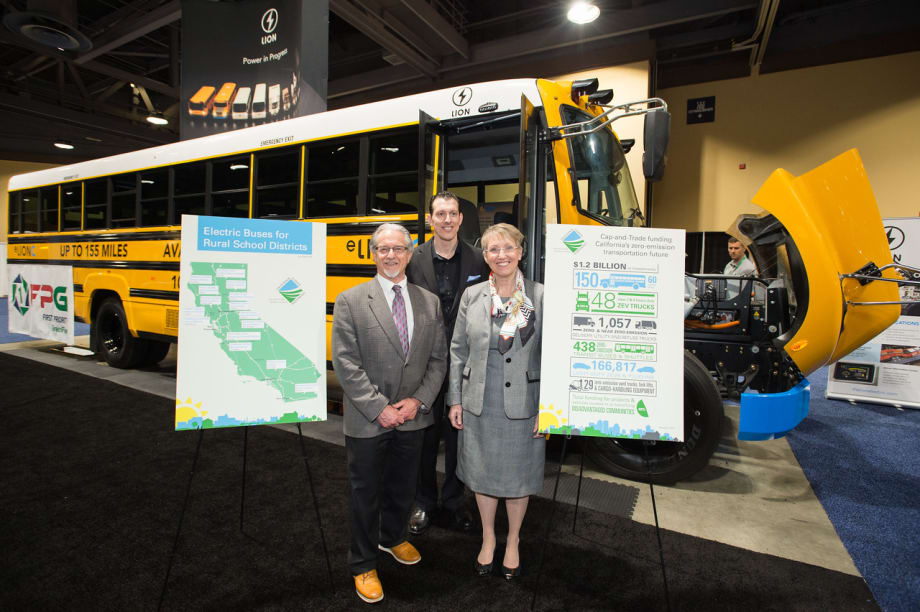
California officials said at the 2018 ACT Expo that the Rural School Bus Pilot Project is delivering dozens of electric school buses to rural districts. The project is part of a disbursement of more than $1.2 billion for more alternative-fuel vehicles in the state. Photo courtesy ACT Expo 2018
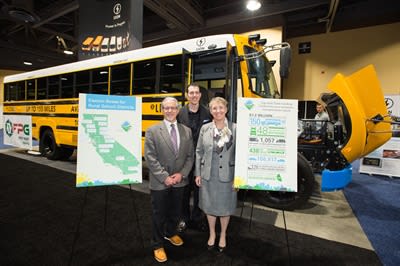
California officials said at the 2018 ACT Expo that the Rural School Bus Pilot Project is delivering dozens of electric school buses to rural districts. The project is part of a disbursement of more than $1.2 billion for more alternative-fuel vehicles in the state. Photo courtesy ACT Expo 2018
LONG BEACH, Calif. — A state program is delivering dozens of electric school buses to rural school districts as part of a disbursement of more than $1.2 billion for more alternative-fuel vehicles, officials said at the 2018 ACT Expo on Wednesday.
The Rural School Bus Pilot Project, administered by the North Coast Unified Air Quality Management District, aims to help replace some of the oldest school buses in the state.
Funding for the year-old Rural School Bus Pilot Project and other related projects comes from California Climate Investments, a statewide initiative that applies billions of cap-and-trade dollars to reduce greenhouse gas emissions in an effort to strengthen the economy and improve public health and the environment, particularly in disadvantaged communities. Forty-eight percent of these investments benefit low-income and disadvantaged neighborhoods.
In total, California Climate Investments will fund about 150 cleaner school buses across the state. These include zero-emission battery electric models and conventional models using renewable diesel. The Rural School Bus Pilot Project, which has received $25 million in cap-and-trade funding, will fund as many as 60 of those new school buses in rural areas of the state, which is expected to cut 10,000 metric tons of greenhouse gas emissions. About 40 of the school buses in rural areas will be zero-emission battery electric.
Standing before an eLion electric school bus, state officials said the project was designed to ensure that the students and drivers in districts located farther from California’s urban centers also benefit from the state’s transition to low-carbon transportation.
“Thanks to California Climate Investments, thousands of schoolkids in remote school districts across California will be riding in the cleanest-running school buses on the market,” said Sandy Berg, the vice chair for the California Air Resources Board (CARB). “This is one example of how these investments are changing people’s lives and cleaning the air.”
As of April, school districts that have received electric school buses as part of the Rural School Bus Pilot Project include:
• Brawley Elementary School District
• Calaveras Unified School District
• Chico Unified School District
• Fall River Joint Unified School District
• Gateway Unified School District
• Gonzales Unified School District
• Healdsburg Unified School District
• Konocti Unified School District
• Oroville Union High School District
• Palermo Union School District
• Plumas Unified School District
• Santa Rita Union Elementary School District
• Rescue Union School District
• Ukiah Unified School District
• Wilsona School District
California Climate Investments are designed to help drive down the upfront purchase price of the cleaner vehicles, and as their numbers increase, that cost will drop even further due to economies of scale, according to CARB.
In addition to funding zero-emission vehicles, California Climate Investments projects include affordable housing, renewable energy, public transportation, environmental restoration, more sustainable agriculture, and recycling. At least 35% of these investments are made in disadvantaged and low-income communities.
More Alternative Fuels
Bipartisan Bill Seeks to Extend Clean School Bus Program Through 2031
The proposed legislation would renew federal support for cleaner school buses as districts navigate funding uncertainty, rising fuel and infrastructure costs, and fleet replacement needs.
Read More →
Alt-Fuel Moves: Electric Bus Rollouts, Bidirectional Charging & Propane Growth
See which fleets are adding electric and propane school buses as districts and operators invest in charging infrastructure, bidirectional technology, and alternative-fuel expansion.
Read More →
Nobody Told Diesel Prices They Were Supposed to Come Down
With diesel prices surging, school bus fleets have new reason to stress-test fuel costs, consider diversification, and calculate what each route really costs to operate.
Read More →
Why Gasoline School Buses Are Making a Comeback
Gasoline is gaining ground in full-size school buses. See how today’s options stack up against diesel on cost, maintenance, emissions, performance, and more.
Read More →
EPA Opens $180M DERA Funding Round for Diesel Upgrades
The 2026 Diesel Emissions Reduction Act program seeks applications from eligible organizations to accelerate the retirement of legacy diesel vehicles.
Read More →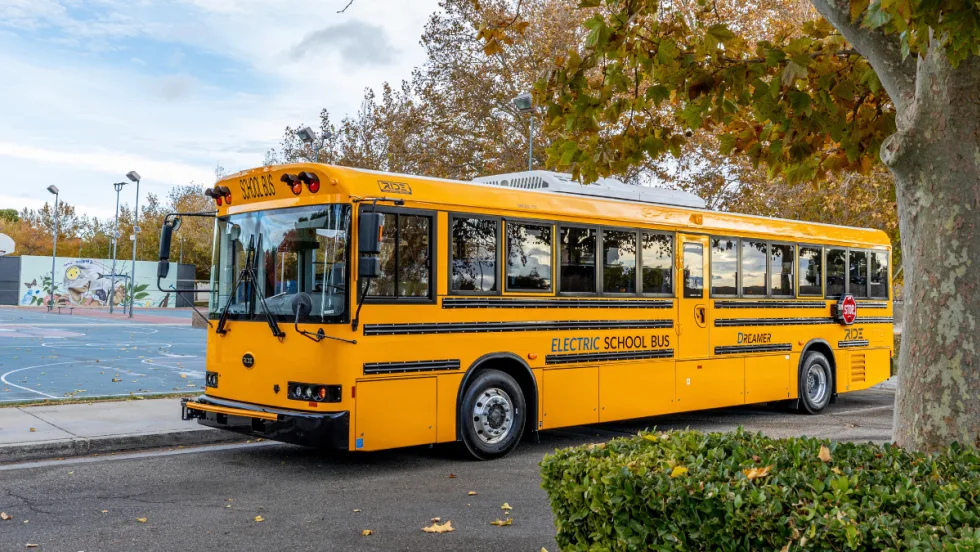
The Secret Life of an Electric School Bus Battery
Batteries change throughout years of daily routes, but degradation doesn’t necessarily mean the end. Here’s what operators should know about performance, safety, and second life.
Read More →
CALSTART and Forth Combine to Form Catalyst Mobility
The new name represents a renewed vision for the nonprofit focused on advancing clean, equitable, and affordable transportation solutions that move people and goods.
Read More →
Alt-Fuel Moves: New Buses, Charging Hubs & Real-World EV Testing
Propane and electric school bus deployments continue to grow as districts add new vehicles, expand charging infrastructure, and gather more real-world operating data.
Read More →
Fewer Electric School Bus Models Reshape the U.S. Market
WRI’s latest buyer’s guide points to a consolidating electric school bus market, but fewer options may reflect a maturing industry rather than fewer meaningful choices for school bus operators.
Read More →
The Fuel Budget You Can Actually Predict: How Propane Autogas Keeps Money in the Classroom
Learn how propane autogas helps school districts manage fuel costs with predictable pricing, lower maintenance, and reduced emissions from former transportation director Joel Stutheit.
Read More →