




Report: U.S. Electric School Bus Deployment Over 1,700 and Climbing
BYD Adds Type A Bus to Electric Vehicle Production Line
The new Type A zero-emission bus also includes vehicle-to-grid technology, allowing the bus to lend power when it's not in use.
by SBF Staff
January 27, 2022
The new BYD Type A electric school bus seats up to 30 and can travel 140 miles on a single charge.
Photo courtesy of BYD
2 min to read
Electric vehicle company BYD (“Build Your Dreams”) on Wednesday introduced its Type A battery-electric, zero-emission school bus.
The BYD Type A offers vehicle-to-grid technology, allowing the vehicle to serve as a power storage source when it’s not transporting students. The Type A, with a range of 140 miles on a single charge, can seat up to 30 and can be equipped with an ADA liftgate capable of lifting 800 pounds, according to a news release.
“This is a timely solution: BYD’s Type A battery electric school bus is designed to be there for school districts 24 hours a day, both as a vehicle and power storage resource,” said Stella Li, president of BYD North America. “The BYD combination of top-notch safety features, innovative design and reliable performance makes this a practical and highly affordable zero-emission solution.”
Standard features include a high-strength steel construction body, electronic stability control to aid handling, and an electronic braking system to ensure more evenly distributed brake force. It is powered by a lithium iron phosphate battery. It includes a stop arm that monitors approaching traffic and notifies students as they exit the bus when it is safe to cross.
Length options range from 22.9 to 26.7 feet. They can be equipped with HSM 3-point lap-shoulder belts, integrated child seats, and portable restraints.
The driver’s area features comfort seats, a 16.5-inch power steering wheel and telescopic steering column, high level of visibility, and easy-to-reach control switches.
BYD offers two kind of charging solutions to meet different needs. The 150 kw DC charging solution is available with high charging power and efficiency. BYD also offers 19.2 kw single-phase AC charging.
“Just like our Type D bus introduced last year, our Type A bus bi-directional charging capability is a game changer,” said Samuel Kang, BYD’s head of Total Technology Solutions. “School buses can be charged overnight when energy demand is low, and clean emission-free energy can be fed back into the classroom during school hours when the bus is parked, keeping classrooms well-lit and students and teachers plugged-in.”
More Alternative Fuels
Bipartisan Bill Seeks to Extend Clean School Bus Program Through 2031
The proposed legislation would renew federal support for cleaner school buses as districts navigate funding uncertainty, rising fuel and infrastructure costs, and fleet replacement needs.
Read More →
Alt-Fuel Moves: Electric Bus Rollouts, Bidirectional Charging & Propane Growth
See which fleets are adding electric and propane school buses as districts and operators invest in charging infrastructure, bidirectional technology, and alternative-fuel expansion.
Read More →
Nobody Told Diesel Prices They Were Supposed to Come Down
With diesel prices surging, school bus fleets have new reason to stress-test fuel costs, consider diversification, and calculate what each route really costs to operate.
Read More →
Why Gasoline School Buses Are Making a Comeback
Gasoline is gaining ground in full-size school buses. See how today’s options stack up against diesel on cost, maintenance, emissions, performance, and more.
Read More →
EPA Opens $180M DERA Funding Round for Diesel Upgrades
The 2026 Diesel Emissions Reduction Act program seeks applications from eligible organizations to accelerate the retirement of legacy diesel vehicles.
Read More →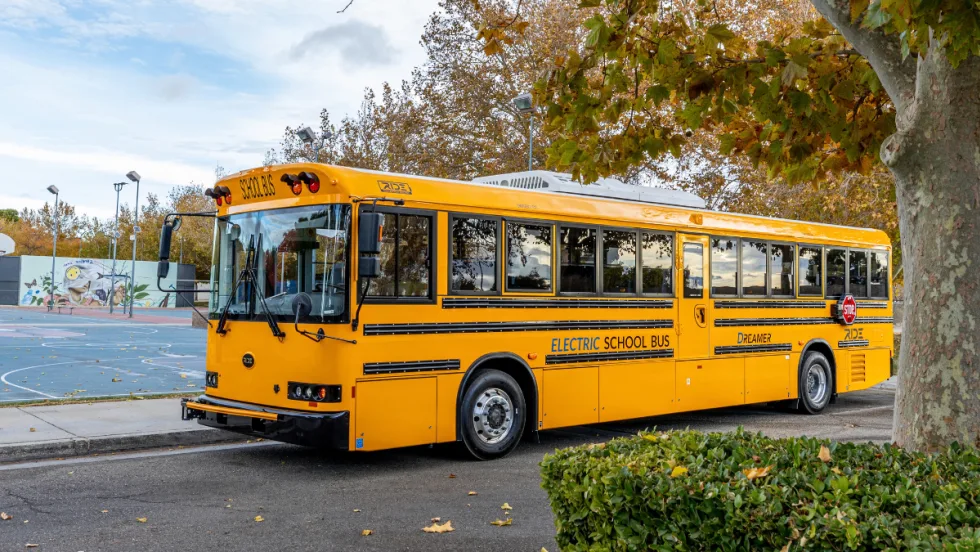
The Secret Life of an Electric School Bus Battery
Batteries change throughout years of daily routes, but degradation doesn’t necessarily mean the end. Here’s what operators should know about performance, safety, and second life.
Read More →
CALSTART and Forth Combine to Form Catalyst Mobility
The new name represents a renewed vision for the nonprofit focused on advancing clean, equitable, and affordable transportation solutions that move people and goods.
Read More →
Alt-Fuel Moves: New Buses, Charging Hubs & Real-World EV Testing
Propane and electric school bus deployments continue to grow as districts add new vehicles, expand charging infrastructure, and gather more real-world operating data.
Read More →
Fewer Electric School Bus Models Reshape the U.S. Market
WRI’s latest buyer’s guide points to a consolidating electric school bus market, but fewer options may reflect a maturing industry rather than fewer meaningful choices for school bus operators.
Read More →
The Fuel Budget You Can Actually Predict: How Propane Autogas Keeps Money in the Classroom
Learn how propane autogas helps school districts manage fuel costs with predictable pricing, lower maintenance, and reduced emissions from former transportation director Joel Stutheit.
Read More →