




Blue Bird Vision Gasoline School Bus Certified by EPA, CARB
The gasoline-powered Type C school bus, which uses a Ford 6.8L V10 engine, is now certified to the federal standard of 0.20 g/bhp-hr for NOx emissions.

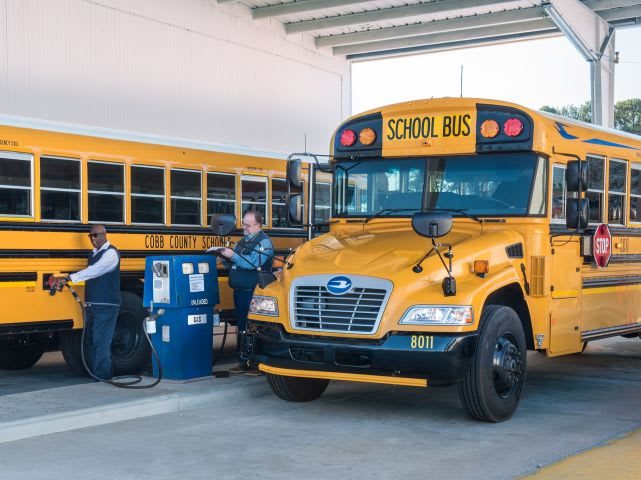
Blue Bird’s Vision Gasoline bus is now certified to the federal standard for NOx emissions. Cobb County (Ga.) School District was an early adopter of the gasoline Type C model.
Blue Bird’s Vision Gasoline bus is now certified to the federal standard for NOx emissions. Cobb County (Ga.) School District was an early adopter of the gasoline Type C model.
FORT VALLEY, Ga. — The Blue Bird Vision Gasoline school bus recently received full certification from the Environmental Protection Agency (EPA) and California Air Resources Board (CARB).
The gasoline-powered Type C school bus, which uses a Ford 6.8L V10 engine, is now certified to the federal standard of 0.20 g/bhp-hr for nitrogen oxide (NOx) emissions.
“During certification testing, our gasoline buses achieved an emission output of 0.08 g/bhp-hr NOx, which is significantly lower than the federal standard of 0.2 g/bhp-hr,” said Trey Jenkins, vice president of customer service and alternative fuels for Blue Bird Corp. “Customers are experiencing immediate savings due to the lower upfront cost of the vehicle and long-term savings due to the lower cost of maintenance.”
Blue Bird reported that more than 100 operations have purchased the Blue Bird Vision Gasoline bus since it became available last year.
“When it comes to cold-weather startup, these buses perform wonderfully,” said John Benish, CEO of Cook-Illinois Corp., one of Blue Bird’s first gasoline bus customers. “We aren’t required to use heaters to get them going in the morning. This translates to additional savings for us and for the school districts we service.”
According to Blue Bird, fuel costs are also a savings factor for the gasoline buses, because school districts can obtain contracts to avoid many taxes and fees that are added to gasoline fuel.
Georgia’s Cobb County School District, another early adopter, chose the gasoline buses because compressed natural gas and propane infrastructure would have been more difficult to implement, since many of the district’s buses park away from the district’s central fueling and shop locations.
“We also saw long-term savings in terms of our total cost of ownership as well as a larger pool of qualified mechanics,” said Rick Grisham, executive director of transportation for Cobb County School District. “Our initial numbers are showing a great amount of savings on both fuel and maintenance costs. It’s truly been a win-win for us.”
The EPA and CARB certifications were delayed on many products, including the Blue Bird Vision Gasoline bus, due to the recent Volkswagen emissions scandal.
“Now that these certifications have been received, districts around the nation can start looking to gasoline as an alternative option to diesel,” said Brian Carney, executive director of school bus and customer support at Roush CleanTech, the manufacturer of the fuel system. “There are many instances where gasoline is a great choice for fleets, so we recommend every district take a look and determine what fuel type will work best for their needs.”
More Maintenance

The Evolution of DEF Header Technology: What School Bus Operations Should Know at Replacement Time
See what school bus fleets should consider when replacing DEF headers to improve reliability, reduce repeat repairs, and control maintenance costs.
Read More →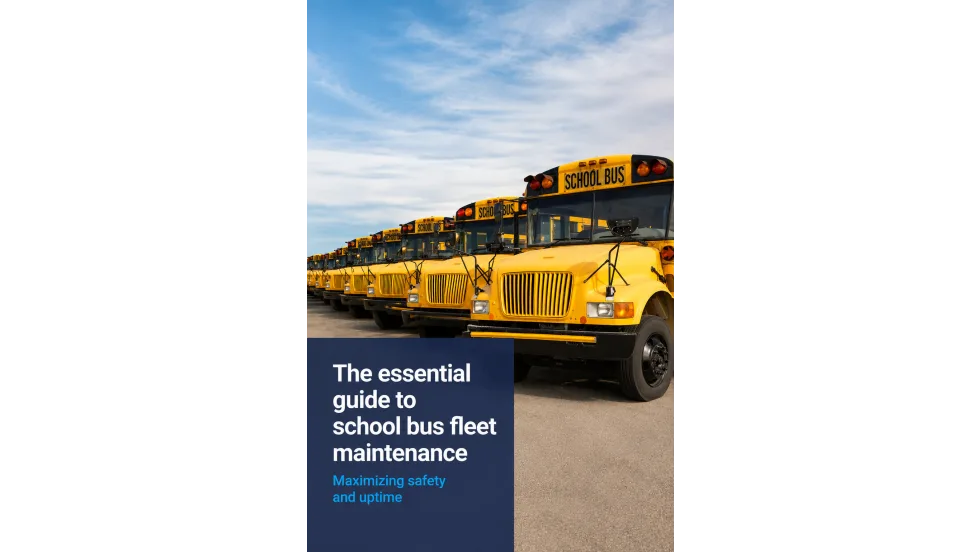
The Essential Guide to School Bus Maintenance and Student Safety
Your district's buses carry students to school every day. This guide shows how predictive maintenance powered by fleet data helps keep buses reliable, drivers accountable and students safer from the first bell to the last stop.
Read More →
Kerry Brothers Grows Michigan School Bus Repair Network
The acquisition of Downriver Truck and Bus expands Kerry Brothers’ school bus maintenance footprint across southeast Michigan, adding repair capacity, diagnostic resources, and state inspection support.
Read More →
Noregon Introduces CAN Bus Diagnostic Tool, Expands JPRO Features
CAN Mentor and the latest JPRO update aim to simplify vehicle network diagnostics and improve repair efficiency for technicians of all experience levels.
Read More →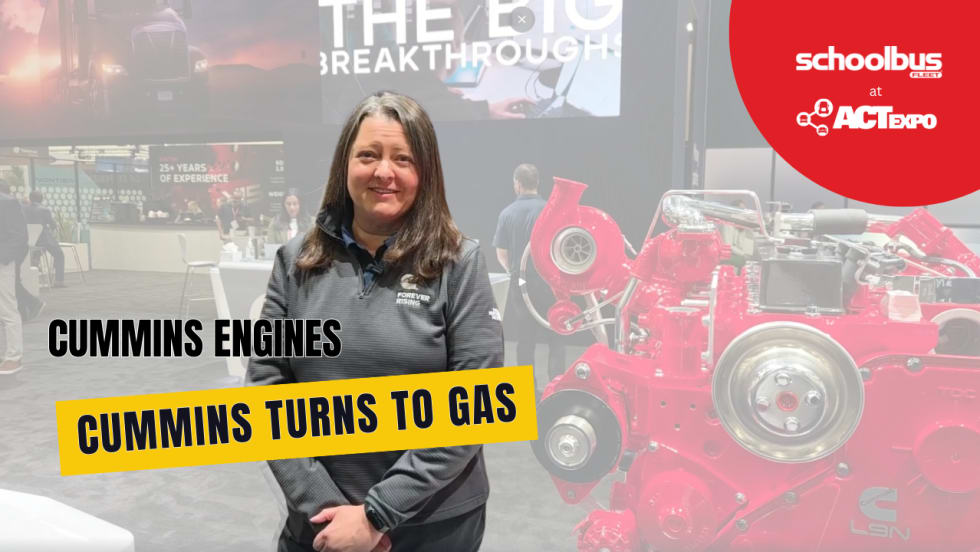
Cummins on Smarter, Simpler Engine Innovation
Cummins discusses its first-ever gasoline engine for school buses, EPA 2027, and why bus fleets still want durable, simpler internal combustion options.
Read More →
Report: 72% of Diesel School Buses Now Use Advanced Low-Emission Engines
New data shows advanced low-emission diesel technology continues expanding across school bus fleets, even as electric bus adoption gains momentum.
Read More →
Vampire Tools' CAIMAN 7.5-Inch Multi-Purpose Screw Extractor Long-Nose Pliers with Crimper
Vampire Tools introduced the VAMPLIERS Caiman 7.5-inch multi-purpose pliers, combining screw extraction, cutting, crimping, and gripping functions into a single tool designed for fleet maintenance professionals.
Read More →
How Advanced Diagnostics Helps Bus Fleets Stay Ahead of Repairs
Chat with Noregon’s Kevin Smallhorn at ACT Expo about bus diagnostic tools, telematics integration, CNG maintenance support, and strategies to help reduce downtime and improve uptime.
Read More →
How School Bus Fleets are Getting Ahead of Breakdowns
Don’t let bus downtime wear you down. Here’s how bus operators are shifting from manual processes to AI-powered, data-driven maintenance systems for improved reliability and safety.
Read More →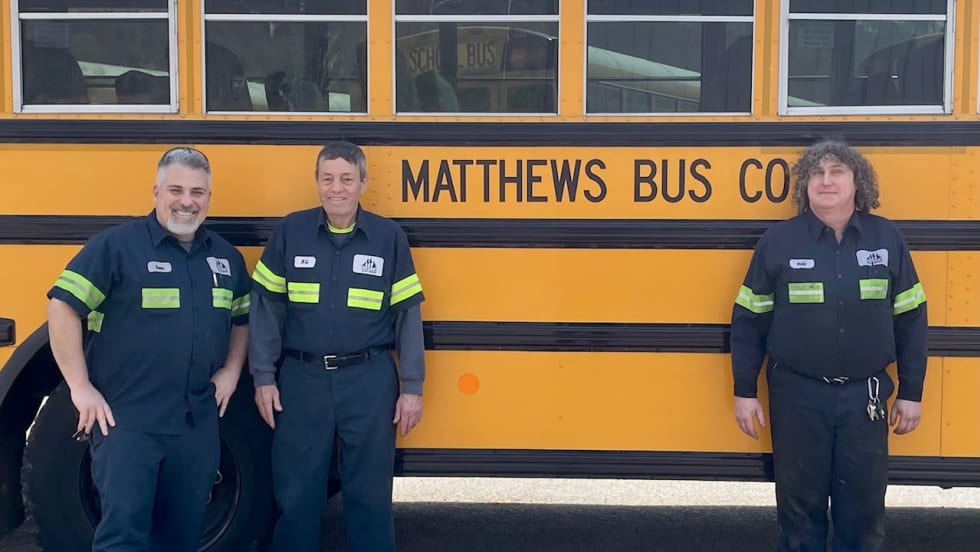
Pennsylvania School Bus Maintenance Team Praised for Dedication to Safety
Matthews Bus Company’s West Jefferson received a letter of commendation from the Pennsylvania State Police for their fleet inspections.
Read More →