





Did You Miss? SBF Trailblazer 2023: Andy Moore of Blue Bird
Blue Bird Opens Electric Vehicle Build-Up Center
The Georgia-based school bus manufacturer is using the facility to expand production capacity to meet demand for zero-emission vehicles.
May 25, 2023
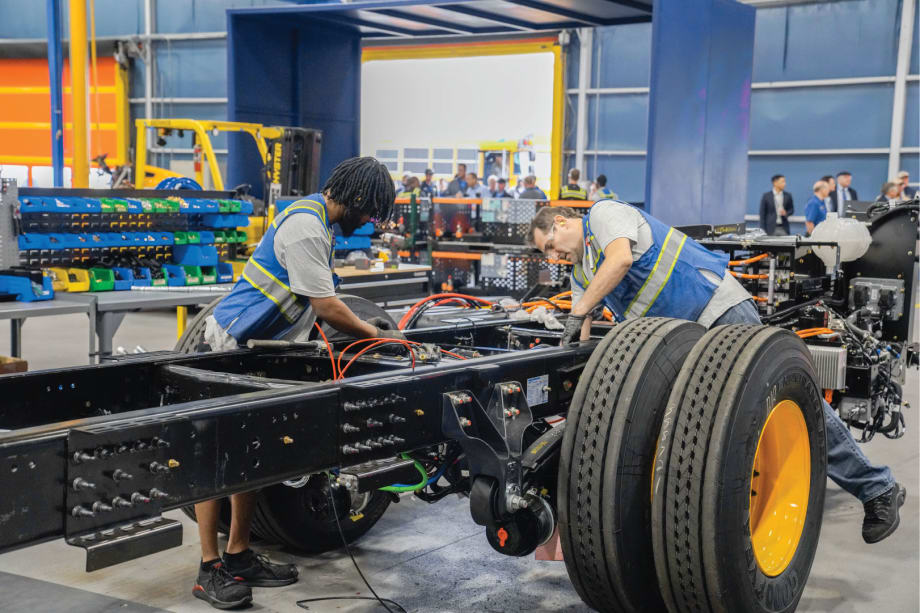
The company transformed a nearly 40,000 sq. ft. facility to meet increasing demand for electric, zero-emission school buses. Highly-trained technicians install electric batteries and other components at the EV Build-up Center to turn the vehicles into emission-free electric school buses.
Photo: Blue Bird Corporation
3 min to read
Blue Bird Corporation celebrated the grand opening of its Electric Vehicle (EV) Build-up Center on the grounds of the company’s main U.S. manufacturing plant in Fort Valley, Ga. Blue Bird transformed a nearly 40,000 sq. ft. facility to meet increasing demand for electric school buses. The opening marks an important milestone as the company continues to expand its electric school bus production capacity from four to 20 vehicles a day.
Meeting EV Demand
U.S. and Canadian school districts are increasingly transitioning their bus fleets to electric, zero-emission vehicles to reduce harmful greenhouse gas emissions, improve student and community health, and save on rising fuel costs. School districts continue to benefit from significant public funding sources to accelerate the adoption of electric school buses and the supporting charging infrastructure. Currently, there are more than $10 billion in federal, state, provincial, and local funding earmarked for zero- and low-emission school buses. This includes the Biden Administration’s Bipartisan Infrastructure Law (BIL), which provides a total of $5 billion over five years for clean school bus transportation.
“Based on the historic Bipartisan Infrastructure Law alone we anticipate thousands of additional electric school bus orders valued at an estimated $1 billion over five years,” said Phil Horlock, president and CEO of Blue Bird Corporation. “Our new EV Build-up Center reflects Blue Bird’s steadfast commitment to school districts across the U.S. and Canada to meet increasing demand and deliver clean, safe, and reliable student transportation when they need it.”
The U.S. Environmental Protection Agency (EPA) anticipates that 30% of all model year 2027 school buses will be electric-powered. This figure is projected to increase to 45% for model year 2032 school buses, according to the EPA’s newly proposed greenhouse gas emissions standards for heavy-duty vehicles. Blue Bird’s EV Build-up Center will enable the company to increase its long-term production capacity to 5,000 electric school buses a year.
Details About the New EV Build-Up Center
Blue Bird’s EV Build-up Center is part of a multi-million dollar investment in the upgrade of Blue Bird’s manufacturing site. The new facility will feature a dedicated assembly line for electric school buses. Highly-trained technicians will install electric batteries and other components to turn the vehicles into emission-free electric school buses.
Blue Bird has nearly 1,000 electric-powered, zero-emission school buses in operation today. The company will assemble Vision and All American electric school buses at the EV Build-up Center. These zero-emission vehicles can carry between 77 and 84 students for up to 120 miles on a single charge.
Blue Bird’s EV Build-up Center includes InCharge Energy ICE-30 chargers and mobile carts to flexibly charge electric school buses prior to customer delivery. Based on the charging infrastructure, newly-assembled buses at the EV Build-up Center will take four hours to fully charge.
More Alternative Fuels
Bipartisan Bill Seeks to Extend Clean School Bus Program Through 2031
The proposed legislation would renew federal support for cleaner school buses as districts navigate funding uncertainty, rising fuel and infrastructure costs, and fleet replacement needs.
Read More →
Alt-Fuel Moves: Electric Bus Rollouts, Bidirectional Charging & Propane Growth
See which fleets are adding electric and propane school buses as districts and operators invest in charging infrastructure, bidirectional technology, and alternative-fuel expansion.
Read More →
Nobody Told Diesel Prices They Were Supposed to Come Down
With diesel prices surging, school bus fleets have new reason to stress-test fuel costs, consider diversification, and calculate what each route really costs to operate.
Read More →
Why Gasoline School Buses Are Making a Comeback
Gasoline is gaining ground in full-size school buses. See how today’s options stack up against diesel on cost, maintenance, emissions, performance, and more.
Read More →
EPA Opens $180M DERA Funding Round for Diesel Upgrades
The 2026 Diesel Emissions Reduction Act program seeks applications from eligible organizations to accelerate the retirement of legacy diesel vehicles.
Read More →
The Secret Life of an Electric School Bus Battery
Batteries change throughout years of daily routes, but degradation doesn’t necessarily mean the end. Here’s what operators should know about performance, safety, and second life.
Read More →
CALSTART and Forth Combine to Form Catalyst Mobility
The new name represents a renewed vision for the nonprofit focused on advancing clean, equitable, and affordable transportation solutions that move people and goods.
Read More →
Alt-Fuel Moves: New Buses, Charging Hubs & Real-World EV Testing
Propane and electric school bus deployments continue to grow as districts add new vehicles, expand charging infrastructure, and gather more real-world operating data.
Read More →
Fewer Electric School Bus Models Reshape the U.S. Market
WRI’s latest buyer’s guide points to a consolidating electric school bus market, but fewer options may reflect a maturing industry rather than fewer meaningful choices for school bus operators.
Read More →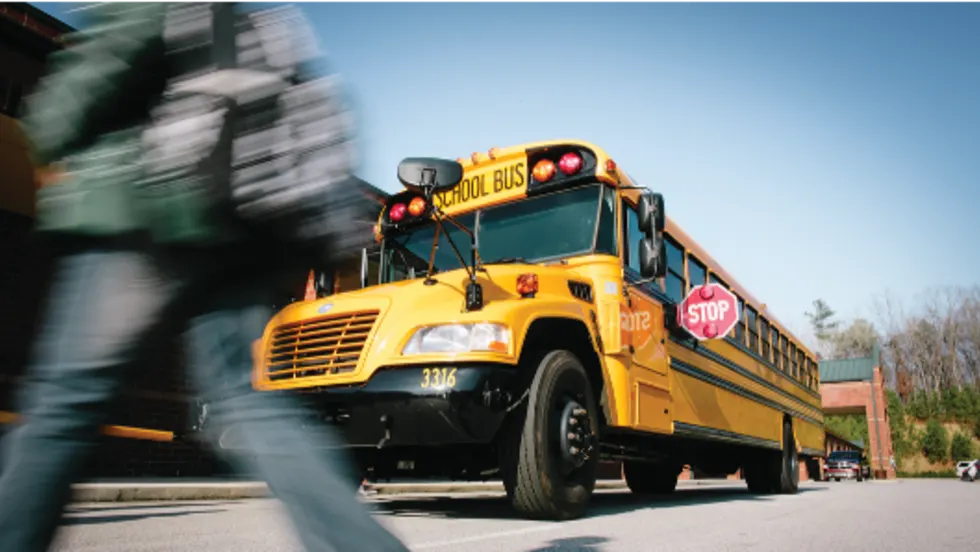
The Fuel Budget You Can Actually Predict: How Propane Autogas Keeps Money in the Classroom
Learn how propane autogas helps school districts manage fuel costs with predictable pricing, lower maintenance, and reduced emissions from former transportation director Joel Stutheit.
Read More →