



Green Fact:
Blue Bird’s electric school buses have covered more than five million miles already. That's the same distance as driving Route 66 from Chicago to Los Angeles more than 2,000 times.
 MENU
MENU SEARCH
The Clark County School District received Blue Bird’s 2,000th EV to help the nation’s fifth largest school district transition its school bus fleet to clean student transportation.
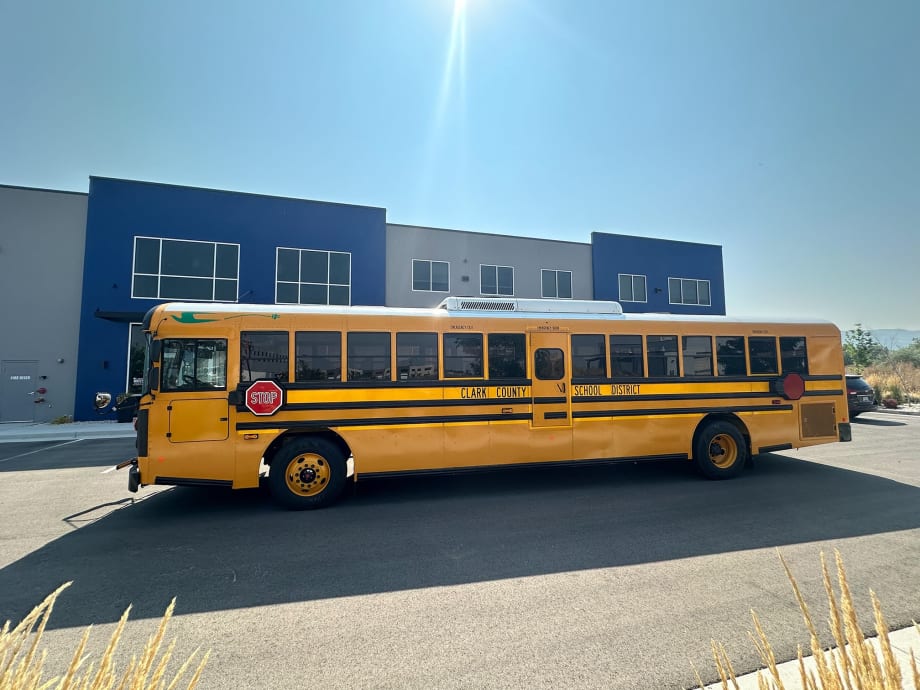
Featuring Blue Bird’s new, extended range battery, CCSD’s milestone zero-emission vehicle can carry 84 students.
Photo: Blue Bird
Blue Bird Corporation is celebrating the delivery of its 2,000th electric, zero-emission school bus.
The Clark County School District (CCSD) in Nevada received Blue Bird’s 2,000th electric vehicle (EV) to help the nation’s fifth largest school district transition its school bus fleet to clean student transportation.
CCSD operates 373 schools serving more than 300,000 students. The district maintains a bus fleet of more than 1,900 vehicles. CCSD transports over 123,000 students each school day on more than 1,400 bus routes.
Featuring Blue Bird’s new, extended range battery, CCSD’s milestone zero-emission vehicle can carry 84 students. Depending on the charging infrastructure, the bus takes between three and eight hours to recharge fully, according to a news release.
“Today, we delivered our 2,000th electric, zero-emission school bus in North America. We are thrilled to celebrate this major industry milestone with Clark County School District. Blue Bird is recognized as the undisputed leader in the field of clean student transportation. Electric school buses mean cleaner air to breathe for students, drivers, and the community at large,” said Britton Smith, president at Blue Bird Corporation.
Smith went on to applaud the Environmental Protection Agency for its Clean School Bus Program. The program is part of the Bipartisan Infrastructure Law which provides a total of $5 billion over five years for clean school bus transportation nationwide.
CCSD received a $9.875 million grant through the program to purchase electric school buses, including Blue Bird’s zero-emission milestone unit.
CCSD’s milestone unit is now one of more than 2,000 Blue Bird electric school buses serving school districts across 41 U.S. states and 4 Canadian provinces.
Replacing 2,000 diesel-powered and polluting school buses with an equal number of zero-emission vehicles reduces harmful carbon emissions by more than 21,000 metric tons annually.
In addition, nearly 150,000 students a day are no longer exposed to diesel tailpipe emissions linked to serious health issues such as asthma or heart disease.
Blue Bird continues to significantly expand its electric school bus production in Fort Valley, Georgia. In 2023, the company opened a 40,000 sq. ft. Electric Vehicle (EV) Build-up Center.
In addition, School Bus Fleetrecently reported that the U.S. Department of Energy (DOE) recently selected Blue Bird to receive an $80 million grant to convert a former manufacturing site for diesel-powered motorhomes into an approximately 600,000 sq. ft., state-of-the-art electric vehicle manufacturing facility.
The company has a goal to increase its long-term production capacity in excess of 5,000 electric school buses per year.
Blue Bird’s zero-emission school buses are powered by the electric PowerDrive 7000 system from Accelera by Cummins.

The new name represents a renewed vision for the nonprofit focused on advancing clean, equitable, and affordable transportation solutions that move people and goods.
Read More →
Propane and electric school bus deployments continue to grow as districts add new vehicles, expand charging infrastructure, and gather more real-world operating data.
Read More →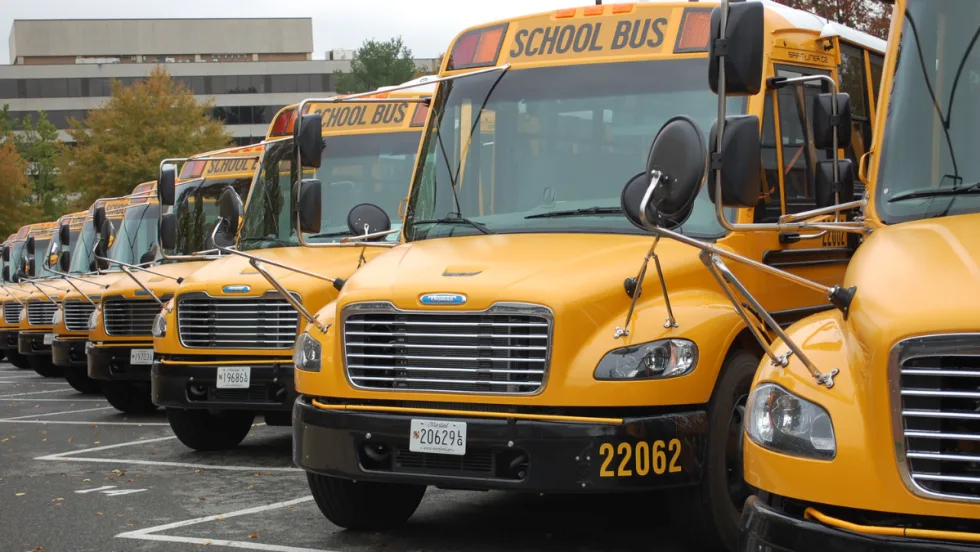
WRI’s latest buyer’s guide points to a consolidating electric school bus market, but fewer options may reflect a maturing industry rather than fewer meaningful choices for school bus operators.
Read More →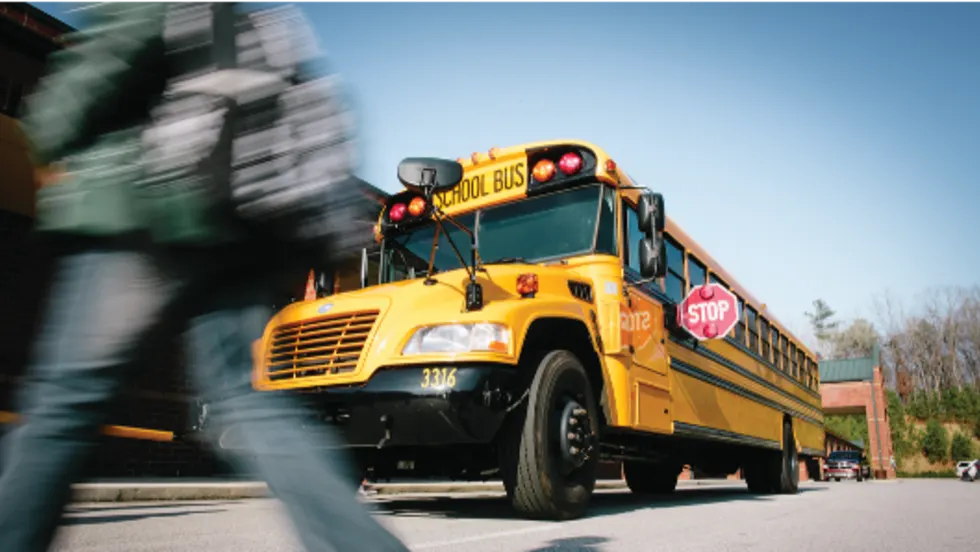
Learn how propane autogas helps school districts manage fuel costs with predictable pricing, lower maintenance, and reduced emissions from former transportation director Joel Stutheit.
Read More →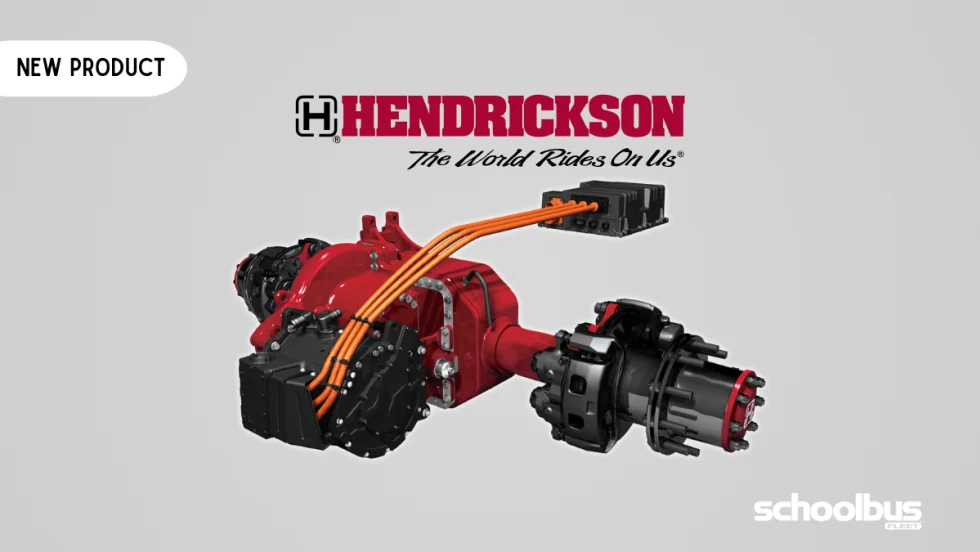
ELECTRAAX, the electrified, lightweight drive axle offers integrated ePowertrain efficiency and modular flexibility for Class 6–7 school bus use.
Read More →
The acquisition combines intelligent charging software, bidirectional charging expertise, and fleet electrification services to support the growing adoption of electric school buses across North America.
Read More →
See which districts across the U.S. are putting electric school buses into service, expanding charging infrastructure, and planning the next phase of fleet electrification.
Read More →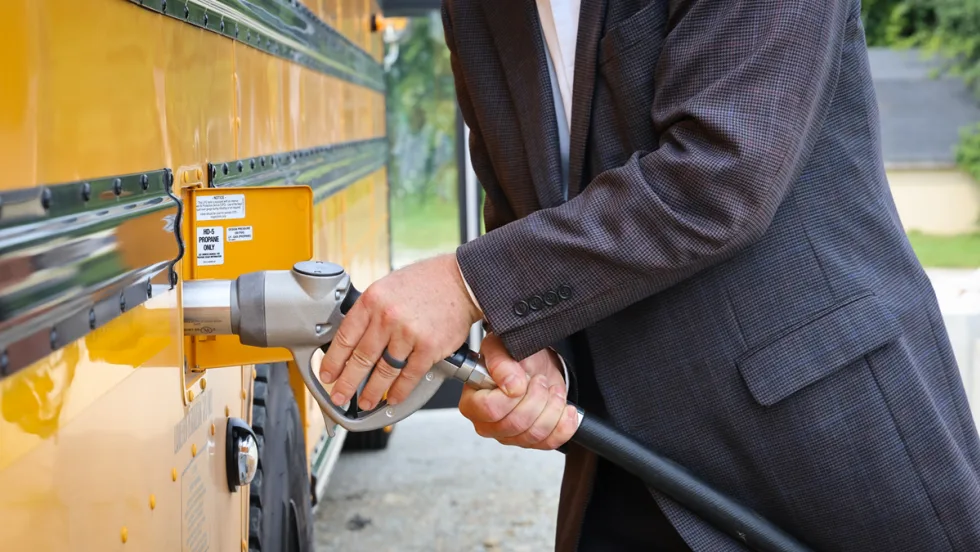
While diesel prices peaked above $5 this spring, districts with propane autogas-powered fleets paid under $2 per gallon, according to PERC.
Read More →
The federal agency has proposed changes to next year’s targets that would eliminate DEF derates, ease warranty requirements, and retain current NOx emissions standards.
Read More →
The latest developments include new funding, charging infrastructure, utility investments, and fleet technologies designed to support the transition to electric school buses nationwide.
Read More →