





Keep Reading: New Safety Standards Proposed for Electric School Buses
U.S. Department of Energy Announces Electric School Bus Manufacturing Grants
Blue Bird Corporation and Cummins are two of 11 recipients of the grant program. The funds will help both companies expand manufacturing capabilities for electric school buses and alt-fuel vehicle components.
July 17, 2024

The Domestic Manufacturing Auto Conversion Grants program will help fund the manufacturing of electric school buses, hybrid powertrains, heavy-duty commercial truck batteries, and EVs.
Photo: Blue Bird/Accelera by Cummins/School Bus Fleet
3 min to read
The U.S. Department of Energy is putting nearly $2 billion from the Inflation Reduction Act to support auto manufacturers making electric vehicles and other alt-fuel vehicle components.
The Domestic Manufacturing Auto Conversion Grants program will help fund the manufacturing of electric school buses, hybrid powertrains, heavy-duty commercial truck batteries, and EVs. Included in the recipients of the program are:
Blue Bird Corporation - Approx. $80 million
Cummins - Approx. $75 million
Fiat-Chrysler, General Motors, and Volvo were named among the other recipients.
The program advances President Joe Biden's Justice40 Initiative, which sets the goal that 40% of the overall benefits of certain federal investments in climate, clean energy, clean transportation, and other areas flow to disadvantaged communities that are marginalized by underinvestment and overburdened by pollution.
How Blue Bird is Using the Grant Money
Blue Bird intends to use the approx. $80 million to expand its EV manufacturing capabilities and related workforce development efforts, according to a news release from the manufacturer.
The financial award will help Blue Bird convert a prior manufacturing site for diesel-powered motorhomes in Fort Valley, Georgia, into an approximately 600,000 sq. ft. state-of-the-art EV manufacturing facility.
Blue Bird started manufacturing high-end, Wanderlodge-branded motorhomes at the site in 1963 based on its large, Type D school bus designs. The company ceased operations at the Wanderlodge site in 2019.
The conversion will assist Blue Bird in increasing the production of Type D electric school buses to meet the rising demand for clean student transportation nationwide. In addition, the converted facility will add more than 400 new manufacturing jobs.
“We are delighted that the U.S. Department of Energy supports our plant conversion project above the many applications that were submitted,” Blue Bird Corporation CEO Phil Horlock said. “The grant will enable Blue Bird to reinvest in middle Georgia, building on a site that previously manufactured high-end motorhomes. It will also enable Blue Bird to expand its workforce and invest in a community that is integral to Blue Bird’s history and continued success. We are looking forward to fully participating in the next phase of the negotiation process with the DOE.”
How Cummins is Using the Grant Money
Cummins, Blue Bird's supply chain partner for EV powertrains, was also selected to receive a grant.
The company plans to use its approx. $75 million to convert about 360,000 sq. ft. of existing manufacturing space at its Columbus, Indiana, Engine Plant (CEP) to expand the production of battery packs, powertrain systems and other battery-electric vehicle (BEV) components for Accelera by Cummins, the company’s zero-emissions business segment.
The grant is the largest federal grant ever awarded solely to Cummins, the company noted in a news release.
To support this additional manufacturing capacity, Cummins anticipates adding approximately 250 full-time jobs, with opportunities for the plant’s existing workforce to transition to many of these positions over time. After project completion, CEP will house around 350 employees focused on BEV-related work.
“This DOE grant is another step forward in the progress we are making toward a zero-emissions future and expanding battery manufacturing in the United States, strengthening our global position in electrified solutions for commercial markets,” Accelera by Cummins President Amy Davis said. “Today’s announcement represents a crucial step in advancing electrification and domestic battery supply chains. Partnership with government, customers, and the industry as a whole is required to accelerate the shift to zero. We are proud of this milestone and to be adding clean tech jobs to develop the workforce and communities of the future.”
Both companies will match the award for their projects.
The award selection is subject to final contract and funding negotiations between the DOE and the manufacturers, which could take up to 120 days to conclude.
More Alternative Fuels

CALSTART and Forth Combine to Form Catalyst Mobility
The new name represents a renewed vision for the nonprofit focused on advancing clean, equitable, and affordable transportation solutions that move people and goods.
Read More →
Alt-Fuel Moves: New Buses, Charging Hubs & Real-World EV Testing
Propane and electric school bus deployments continue to grow as districts add new vehicles, expand charging infrastructure, and gather more real-world operating data.
Read More →
Fewer Electric School Bus Models Reshape the U.S. Market
WRI’s latest buyer’s guide points to a consolidating electric school bus market, but fewer options may reflect a maturing industry rather than fewer meaningful choices for school bus operators.
Read More →
The Fuel Budget You Can Actually Predict: How Propane Autogas Keeps Money in the Classroom
Learn how propane autogas helps school districts manage fuel costs with predictable pricing, lower maintenance, and reduced emissions from former transportation director Joel Stutheit.
Read More →
Hendrickson, Driventic Introduce New Electric Powertrain for School Buses
ELECTRAAX, the electrified, lightweight drive axle offers integrated ePowertrain efficiency and modular flexibility for Class 6–7 school bus use.
Read More →
The Mobility House Joins PowerFlex in Fleet Electrification Deal
The acquisition combines intelligent charging software, bidirectional charging expertise, and fleet electrification services to support the growing adoption of electric school buses across North America.
Read More →
Alt-Fuel Moves: Electric School Bus Investments Hit the Road
See which districts across the U.S. are putting electric school buses into service, expanding charging infrastructure, and planning the next phase of fleet electrification.
Read More →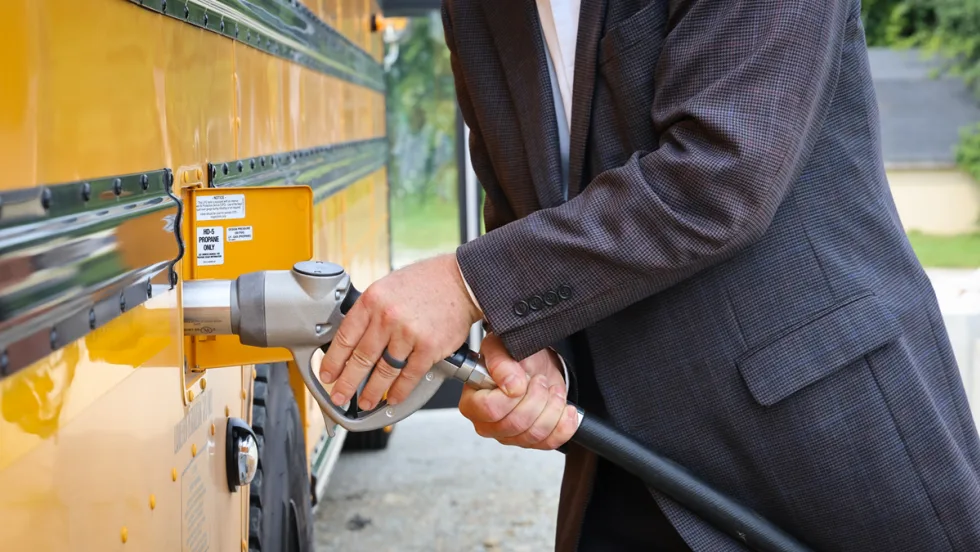
With Fuel Volatility Ahead, School Districts Turn to Propane
While diesel prices peaked above $5 this spring, districts with propane autogas-powered fleets paid under $2 per gallon, according to PERC.
Read More →
EPA Unveils Proposed Changes to 2027 Heavy-Duty Engine Rules
The federal agency has proposed changes to next year’s targets that would eliminate DEF derates, ease warranty requirements, and retain current NOx emissions standards.
Read More →
Alt-Fuel Moves: EV Charging & Infrastructure Projects Gain Momentum
The latest developments include new funding, charging infrastructure, utility investments, and fleet technologies designed to support the transition to electric school buses nationwide.
Read More →