




School Bus Maintenance Staff Seeks, Shares Regen Solution
Working as a team, a shop in an Ohio district’s transportation department reduces regeneration incidents by about 80%, and shares the solution with other technicians.

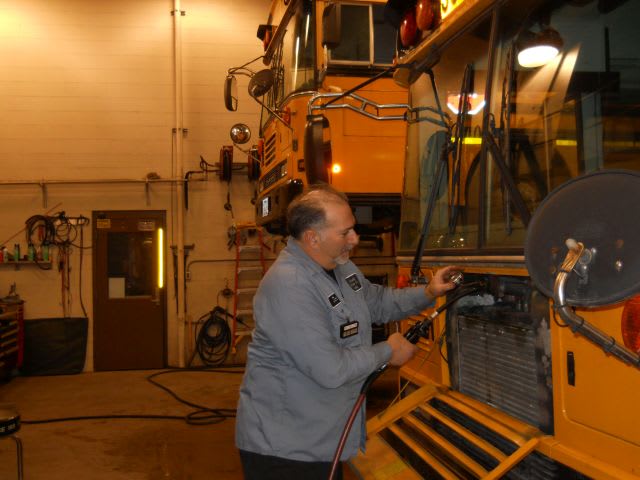
James Flauto, the vehicle maintenance foreman for Brecksville-Broadview Heights City School District, works on one of the district’s 47 school buses. His team recently saw a significant drop in regeneration incidents.
James Flauto, the vehicle maintenance foreman for Brecksville-Broadview Heights City School District, works on one of the district’s 47 school buses. His team recently saw a significant drop in regeneration incidents.
Diesel particulate filter (DPF) regeneration has long been a challenge for mechanics, and the maintenance staff at Brecksville-Broadview Heights City School District in Brecksville, Ohio, was no different.
“We would have buses [that needed to be regenerated] in front and in back of the garage, and it’s time-consuming because you have to plug them into the laptop and do the program for the regen,” says James Flauto, the vehicle maintenance foreman for the district. “You also have to watch them because sometimes [during] a regen it will set another code for another problem, and sometimes they fail the regen.”
The district’s transportation department runs 47 school buses that travel a total of 3,300 miles daily with a maintenance staff of four: two full-time mechanics, one part-time mechanic, and Flauto. To keep the buses running at optimal performance and transporting about 2,300 students daily, it takes a strong sense of teamwork within the small group.
“I stress a team effort around here,” Flauto says. “That way, we learn as a team, and I think it pays off every time.”
Collaboration
That team effort also applies to problem-solving. Over the years, the transportation department’s 29 buses that are 2010 or more recent models had frequent regeneration incidents. After talking to their Cummins representative, the team learned about a solution in Cummins INSITE that involves adjusting the parameters in the engine control module (ECM). The diesel particulate filter temperature stabilization, or “Stay Warm” feature, allows a little fuel to leak into the system, enabling aftertreatment, Flauto says.
The team tried out the fix in August, just before the school year started, and has since been able to reduce their buses’ regeneration incidents by over 80%.
“Some buses used to regen three, four times a week,” Flauto explains. “Of the buses that are regen-capable, I am seeing probably two a week, and it used to be five a day. Now we can spend time doing our job [instead of] plugging in computers. It really has helped.”
He adds that the solution is especially helpful for the district’s special-needs buses, since they idle a lot more than the general-education buses, making them more likely to regen.
“Of the buses that are regen-capable, I am probably seeing two [regens] a week, and it used to be five a day.” James Flauto, vehicle maintenance foremanBrecksville-Broadview Heights (Ohio) City School District
Sharing the Solution
After they had a solution in hand, the team decided to share it with other technicians. Also known for his graphic design skills, Bart Hahn, one of the full-time mechanics, designed a one-sheet after the team outlined the solution instructions. In addition to sharing it with members of the Ohio School Bus Mechanics Association, Flauto says he also “gave it to anyone I could.”
“Information to make your job easier? I’m all about that,” he adds. “It’s all on one piece of paper, and the directions are very user-friendly.”
When Flauto attended a recent seminar held by the state association, an instructor from Cummins gave the instructional sheet positive feedback, and Flauto passed it out to attendees.
Other mechanics have also been appreciative, Flauto says.
“I have gotten calls from other mechanics, saying, ‘This is the greatest thing since sliced bread.’”
The one-sheet can be downloaded via schoolbusfleet.com/Mar18e.
Read more success stories with the Cummins “Stay Warm” feature at schoolbusfleet.com/Mar18j.
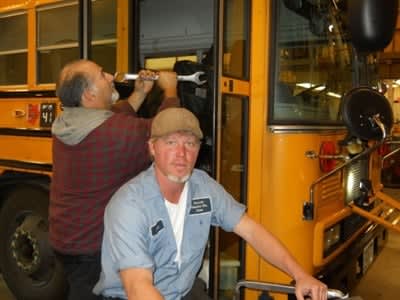
Maintenance staff members, including Bart Hahn (right), follow a three-part inspection schedule for every bus.
Proactive Maintenance
The Brecksville-Broadview shop team also prides itself on its rigorous preventive maintenance practices. The main procedure that the mechanics have put into place involves three inspections for every bus: an “A” inspection, a “B” inspection, and a “C” inspection.
The “A” inspection, which is conducted once a month, involves checking the entire bus, including the interior and exterior, for any issues or potential issues, and making repairs or replacing parts as needed. The “B” inspection is conducted once every six months, and includes everything covered in the “A” inspection, with the addition of an oil change. Once a year, a “C” inspection occurs. That includes all the aspects of the “A” and “B” inspections, and changing every filter on the bus, including the air filter, transmission filter, and fuel filters.
The maintenance shop also was able to reduce engine and transmission failures with the use of synthetic engine oil and transmission oil, and in recent years has switched the lights on the buses to LEDs for a significant budget and labor savings, Flauto says.
He adds that full-time mechanic Hahn’s work has been crucial to running the shop smoothly.
“He is a true asset to the shop, as well as to the transportation department as a whole,” Flauto says. “He deserves much of the credit around here.”
More Maintenance
The Essential Guide to School Bus Maintenance and Student Safety
Your district's buses carry students to school every day. This guide shows how predictive maintenance powered by fleet data helps keep buses reliable, drivers accountable and students safer from the first bell to the last stop.
Read More →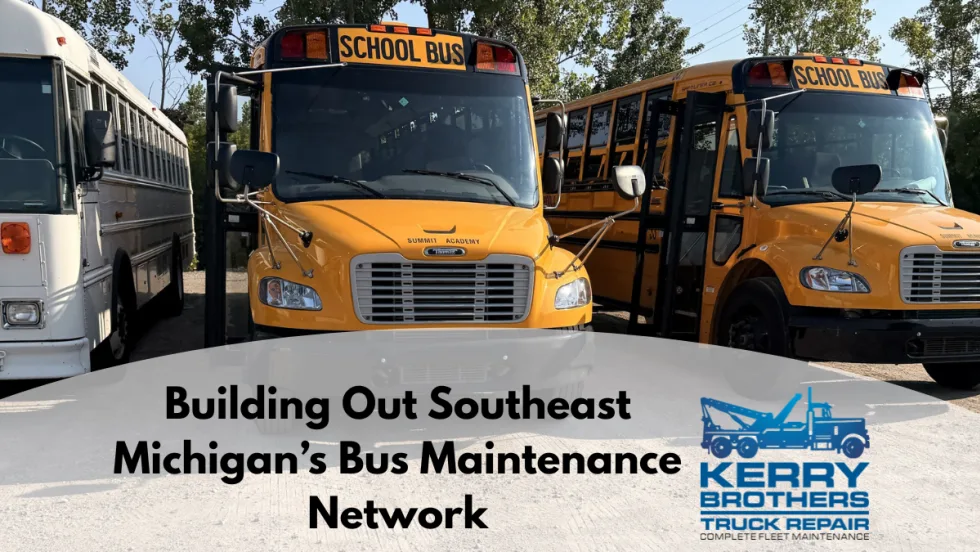
Kerry Brothers Grows Michigan School Bus Repair Network
The acquisition of Downriver Truck and Bus expands Kerry Brothers’ school bus maintenance footprint across southeast Michigan, adding repair capacity, diagnostic resources, and state inspection support.
Read More →
Noregon Introduces CAN Bus Diagnostic Tool, Expands JPRO Features
CAN Mentor and the latest JPRO update aim to simplify vehicle network diagnostics and improve repair efficiency for technicians of all experience levels.
Read More →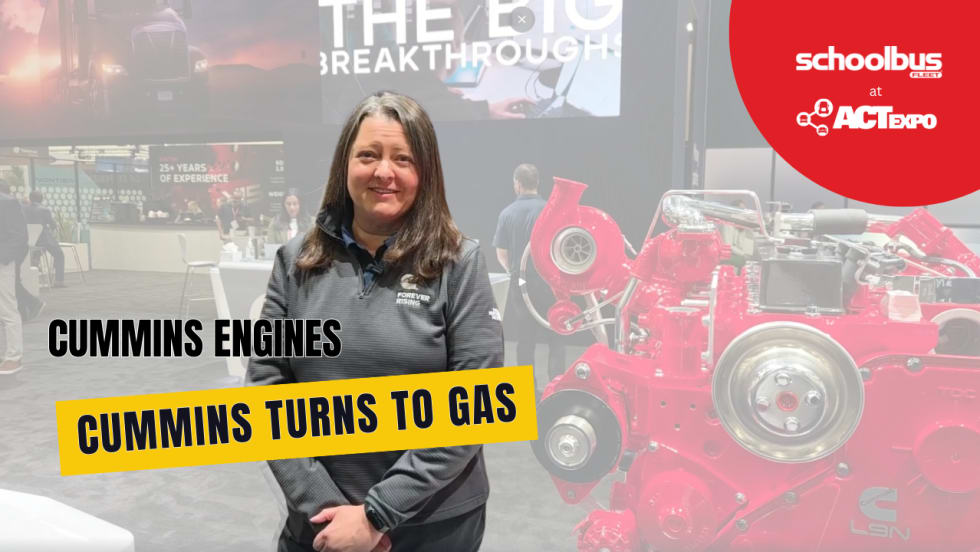
Cummins on Smarter, Simpler Engine Innovation
Cummins discusses its first-ever gasoline engine for school buses, EPA 2027, and why bus fleets still want durable, simpler internal combustion options.
Read More →
Report: 72% of Diesel School Buses Now Use Advanced Low-Emission Engines
New data shows advanced low-emission diesel technology continues expanding across school bus fleets, even as electric bus adoption gains momentum.
Read More →
Vampire Tools' CAIMAN 7.5-Inch Multi-Purpose Screw Extractor Long-Nose Pliers with Crimper
Vampire Tools introduced the VAMPLIERS Caiman 7.5-inch multi-purpose pliers, combining screw extraction, cutting, crimping, and gripping functions into a single tool designed for fleet maintenance professionals.
Read More →
How Advanced Diagnostics Helps Bus Fleets Stay Ahead of Repairs
Chat with Noregon’s Kevin Smallhorn at ACT Expo about bus diagnostic tools, telematics integration, CNG maintenance support, and strategies to help reduce downtime and improve uptime.
Read More →
How School Bus Fleets are Getting Ahead of Breakdowns
Don’t let bus downtime wear you down. Here’s how bus operators are shifting from manual processes to AI-powered, data-driven maintenance systems for improved reliability and safety.
Read More →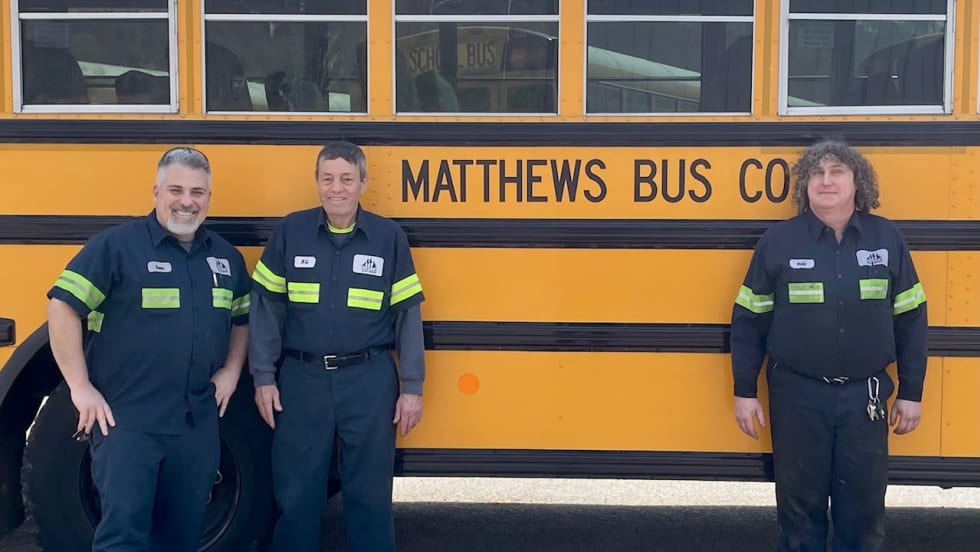
Pennsylvania School Bus Maintenance Team Praised for Dedication to Safety
Matthews Bus Company’s West Jefferson received a letter of commendation from the Pennsylvania State Police for their fleet inspections.
Read More →
From Chaos to Clarity: How School Districts Are Running Leaner Transportation Operations
Covering 38 routes on a Friday afternoon. Buses idling while routes overlap. Parents calling nonstop about late arrivals. Sound familiar? This whitepaper explores how district transportation leaders solved these exact problems — and what measurable results followed.
Read More →