




New to Electric School Bus Adoption? Experienced Operators Share 6 Tips
Two school districts and one bus company weigh in on lessons learned during operation. They recommend planning to expand infrastructure, keeping range and charging in mind, and prioritizing driver training.

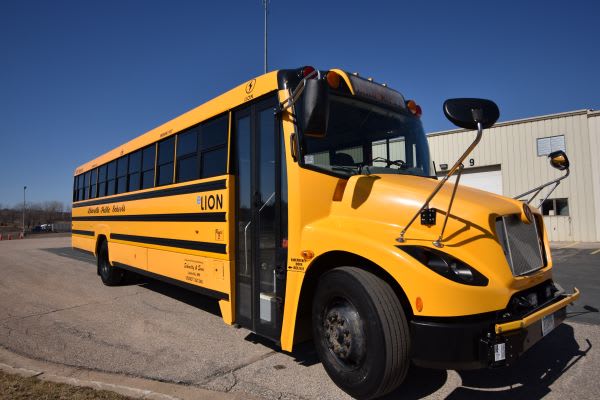
Minnesota-based Schmitty and Sons has operated one LionC electric school bus (shown here) in its fleet of 215 school buses since September 2017.
Photo courtesy Schmitty and Sons
School bus operators are increasingly adding electric buses to their fleets — many are going slow, adopting one or two at a time, and running them in a pilot phase, though some are bringing several on board at one time.
For those operators that haven’t gone electric at all yet, but understand that it is inevitable, they may be wondering what to expect when getting started. School Bus Fleet turned to two school districts and one school bus company that have deployed differing rates of adoption for some guidance. Factor expansion into your plans, carefully consider range in route planning, and provide drivers with training so they are prepared for a couple of subtle differences, they say.
1. Plan for Expansion.
Twin Rivers Unified School District in McClellan Park, California, has incrementally integrated many electric buses into its fleet over the last four years, so Tim Shannon, the district’s director of transportation, knows that having a plan in place for a growing fleet is essential.
The district has a 130-school bus fleet that includes 40 electric buses. The electric vehicles (EVs) are a manufacturer mix — from Blue Bird, The Lion Electric Co., and Trans Tech — and have run on daily routes and field trips. The transportation department uses level 2 chargers and is in the process of adding DC fast charging and vehicle-to-grid (V2G) technology.
While two major benefits in addition to zero emissions are savings — Twin Rivers has seen an 80% fuel savings and a 60% savings in maintenance costs — Shannon advises planning for infrastructure with an eye toward future expansion and realizing that it will take time.
(Shannon previously told SBF, for an article published in May 2018, that there were some unanticipated delays from the utility company they partnered with to upgrade the district’s charging infrastructure to adequately power the buses.)
“… I found out normally it’s six to nine months before [the utility company] will even break ground,” he told SBF at the time. “If you’re not prepared for that, it could delay use of the buses.”
2. Match Bus Routes With Range.
Shannon also recommends analyzing routes to determine the best fit for the buses.
Similarly, Jason Gillis, transportation director for Everman (Texas) Independent School District, says that new adopters should consider range in route selection. For his district’s three electric buses, that is approximately 80 to 100 miles (based on air conditioning/heat/driving usage) per charge, and they may be best for shorter routes (about 25 to 40 miles a day).
The district added the buses to its fleet, which also consists of 47 diesel buses, in late October. (All three Blue Bird All American-D-style Rear Engine V2G-capable buses were running on daily morning and afternoon routes by the end of November.)
3. Take Charge of Charging, Costs.
Gillis adds that he and the transportation manager share charging responsibilities, making sure to plug the buses into the BTC Power 70-amp single port after every a.m. and p.m. run. Additionally, Gillis checks on the charging systems in the morning to calculate how much electricity was needed to charge the buses, which helps sharpen his cost-effectiveness analysis.
He may delegate charging duties to the drivers in the future, but for now, Gillis and the fleet manager are keeping track of and reporting any issues.
So far, Gillis’s department has seen an over 90% cost savings on fuel and expects 80% to 90% cost savings in maintenance.
In Minnesota, Schmitty and Sons has operated one 2018 LionC electric school bus in its fleet of 215 school buses since September 2017 and closely tracked costs as well as savings.
The bus has been used for special events and charters but mainly runs on a daily route, traveling approximately 70 miles per day, says Mike Forbord, divisional operations manager. In terms of fueling costs, compared to the same model year diesel buses in its fleet, the company is saving about 12 cents per mile (charging the bus costs 24 cents per mile, which includes 6 cents per mile for the diesel heater and 18 cents per mile for electric).
Forbord points to the fact that diesel fuel prices in the Midwest are typically less than on the East and West coasts, where greater savings have been reported.
Regarding maintenance costs, compared to the fleet’s 2018 diesel bus, the company actually spent 36 cents more per mile. Forbord notes that most of the costs are not associated with the electric drivetrain, controls, or batteries, but apparently the diesel fired auxiliary heating system has been one of the highest maintenance cost drivers. Besides the heating system, some minor bus body repairs added up: windows, headlights, mirrors, etc.
“I attribute most of the increased maintenance expense to new manufacture and learning how to troubleshoot/repair new technology,” he says.
Moving forward, Schmitty and Sons expects to see maintenance savings as the warranty for the diesel engine and emissions systems lapse, Forbord adds.
The school bus company looks forward to adding more electric buses to its fleet once more funding is available, Forbord adds.
4. Get Backup.
The first step Gillis recommends for those new to EVs to take is to contact their local government or state environmental agency about grants to help buy a bus or buses and charging stations — plural.
“My recommendation would be to purchase at least two, in case a charging station temporarily goes down,” he says.
5. Prioritize Driver Training.
As with any bus, Gillis notes, drivers will need practice before taking them on a route.
A couple differences to get used to, he adds, are quick acceleration and a slight rollback, for example, when stopping at a stop sign.
“We trained our drivers for about 20 to 30 hours before putting the buses on route,” Gillis says.
Overall, feedback from Everman’s drivers on the buses has been positive.
“The buses are extremely quiet, and drivers like them,” he says.
6. Involve all Stakeholders in the Entire Process.
All parties, from school districts to school boards to the community to power companies to bus companies, need to be on the same page. If even one group is not on board, Forbord warns, it can be extremely difficult to have a successful project.
“Everyone needs to work together and understand that with new technology there is going to be a learning curve,” he adds.
More Alternative Fuels

CALSTART and Forth Combine to Form Catalyst Mobility
The new name represents a renewed vision for the nonprofit focused on advancing clean, equitable, and affordable transportation solutions that move people and goods.
Read More →
Alt-Fuel Moves: New Buses, Charging Hubs & Real-World EV Testing
Propane and electric school bus deployments continue to grow as districts add new vehicles, expand charging infrastructure, and gather more real-world operating data.
Read More →
Fewer Electric School Bus Models Reshape the U.S. Market
WRI’s latest buyer’s guide points to a consolidating electric school bus market, but fewer options may reflect a maturing industry rather than fewer meaningful choices for school bus operators.
Read More →
The Fuel Budget You Can Actually Predict: How Propane Autogas Keeps Money in the Classroom
Learn how propane autogas helps school districts manage fuel costs with predictable pricing, lower maintenance, and reduced emissions from former transportation director Joel Stutheit.
Read More →
Hendrickson, Driventic Introduce New Electric Powertrain for School Buses
ELECTRAAX, the electrified, lightweight drive axle offers integrated ePowertrain efficiency and modular flexibility for Class 6–7 school bus use.
Read More →
The Mobility House Joins PowerFlex in Fleet Electrification Deal
The acquisition combines intelligent charging software, bidirectional charging expertise, and fleet electrification services to support the growing adoption of electric school buses across North America.
Read More →
Alt-Fuel Moves: Electric School Bus Investments Hit the Road
See which districts across the U.S. are putting electric school buses into service, expanding charging infrastructure, and planning the next phase of fleet electrification.
Read More →
With Fuel Volatility Ahead, School Districts Turn to Propane
While diesel prices peaked above $5 this spring, districts with propane autogas-powered fleets paid under $2 per gallon, according to PERC.
Read More →
EPA Unveils Proposed Changes to 2027 Heavy-Duty Engine Rules
The federal agency has proposed changes to next year’s targets that would eliminate DEF derates, ease warranty requirements, and retain current NOx emissions standards.
Read More →
Alt-Fuel Moves: EV Charging & Infrastructure Projects Gain Momentum
The latest developments include new funding, charging infrastructure, utility investments, and fleet technologies designed to support the transition to electric school buses nationwide.
Read More →