





Understanding FMVSS 213: Key FAQs on Child Restraint System Requirement
Keeping Up With Special-Needs Training & Standards: What Districts Need To Know in 2026
As the number of students with disabilities and IEPs rises nationwide, transportation teams face growing pressure to stay compliant, confident, and trained. Explore what’s evolving and how to stay on top of it all.
February 9, 2026
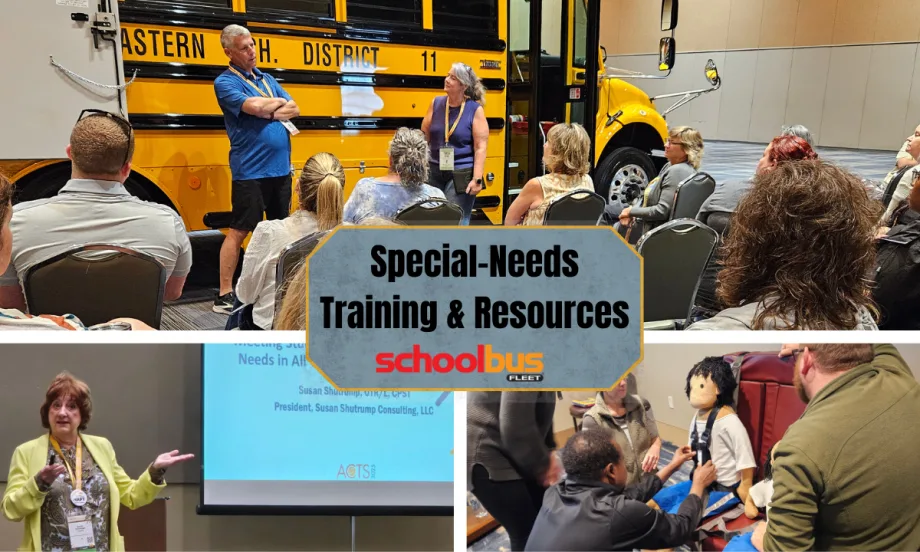
All drivers and aides (not just those on special-needs routes) should be regularly briefed on laws and best practices, with hands-on and classroom instruction on using equipment properly, plus other soft skills, to get all students to school safely each trip.
Credit:
School Bus Fleet
11 min to read
- The rise in students with disabilities and IEPs increases the necessity for transportation teams to maintain compliance and confidence.
- Ongoing changes in training standards require continuous learning for transportation staff to remain effective.
- Staying informed on evolving practices is crucial for districts to support the needs of special-needs students efficiently.
*Summarized by AI
To those on the outside, transporting students with disabilities seems easy. Just buy an accessible bus and some equipment, and start using them together, right?
Not so fast.
The problem is, to ensure safety for any student on board the bus, equipment must be used exactly as intended. When you have a bus of students with varying needs and disability levels, the driver and aide must be able to address each child’s needs and troubleshoot whatever else comes up.
The Landscape Today
According to two of the industry’s foremost experts when it comes to special needs, we are seeing a great increase in the number of students with disabilities who are being transported (partly because they must be transported per their IEP and federal law, and districts with budget issues may cut regular-ed routes).
“I started in this business in 1983, and I can tell you that the students we are transporting now are not the students that were transported then,” said Sue Shutrump, a retired OT/PT specialist and owner of Sue Shutrump Consulting.
Many of today’s students have very severe disabilities, evidence of advancements in medical technology, Shutrump believes. Add the increase in children with autism — now 1 in 31 — and the need for specialized training becomes even more crucial.
Alexandra Robinson, president of A. Robinson Consulting, added that we’re also seeing more combinations of disabilities than before. “It’s very rare that a child has a clinical behavioral disturbance,” she said. “You're talking about a lot of students who are socially maladjusted. [There can be] a lot of other things going on with the children we transport that, in some cases, has absolutely nothing to do with their disability, but manifests itself on a bus.”
Equipment Considerations
“As a manufacturer of the wheelchair securement equipment, we see a huge knowledge gap in terms of how to use that equipment effectively to secure students in mobility devices,” said Darren Reaume, director of training at Q’STRAINT.
But that’s not to place blame. With literally hundreds of devices on the market, no one person can be an expert in them all.
The key to success, as well as compliance, is knowing where and who to turn to.
For those using AMF-Bruns of America devices, its team welcomes the chance to help. “We have a program where we can visit and review your vehicles at no charge and provide a formal report on findings,” a company rep shared. They also offer instruction decals that affix to the vehicle near the securement position for easy assistance on the fly.
Tips for Staying Compliant
- Get familiar with federal guidelines, including FMVSS, IDEA, ADA, ISO 10542, WC18/WC19 standards, and NHTSA wheelchair safety guidance, for starters.
- Don’t forget state laws. If you’re new or unfamiliar with expectations in your area, your state transportation director is a great resource. You should know in what areas training is mandatory and where it’s not.
- Take advantage of free training! (See below.)
- Use experts. Have someone on staff certified in wheelchair and CSRS securement to train others. Or, bring in an expert consultant or nearby trainer to fill internal gaps.
- Check out current NCST/NSTSP recommendations for wheelchair securement and occupant protection specs and procedures.
Remember that in the event of an accident under significant scrutiny, you need to be able to say you did everything in your power to keep your students safe, which means ensuring onboard tools are used as intended and not cutting corners for convenience.
Training is Everything
Industry equipment suppliers report receiving hundreds of requests every year for training.
Additional challenges arise in small districts where there is no safety trainer and periods without a wheelchair user; in those gaps, staff turnover can leave no one with securement knowledge.
The biggest training gap is confidence, according to Bernando Brown, director of student transportation at DeKalb County Schools. “Most issues come from uncertainty, not unwillingness,” he said. “Drivers and aides want to do the right thing, but they do not always feel prepared.”
Don’t let that happen. Train often and go in-depth.
How often should training be conducted? Reaume says brushing up on special-needs skills should be done annually — a schedule that other experts agree as minimum. Even better is when equipment or standards change, or there is new staff.
Others, like Greenville County Schools, offer three seasonal in-services, along with two bus evacuations, video training, a special needs refresher, nurse instruction on administering lifesaving medications, and an annual Special Needs Physical Performance Test.
“In reality, we coach every week,” Brown said. “Whenever a parent raises a concern or a school updates a plan, we use it as a moment to retrain.”
“Monthly micro training is one of the best tools we have. Ten minutes before routes can prevent 10 hours of corrective action later.” — Bernando C. Brown
“I think people finally realize that professional development and training is necessary not just because it’s a requirement or regulation in many places,” Robinson said, “but because it’s a path to safety and our own leadership success.”
Recent legal settlements have shown that a lack of accountability and training results in huge liability for school bus operators. Use evolving technology and easily accessible educational tools and platforms to improve training.
Robinson also suggests watching trends and patterns in behavioral issues or incidents on the bus and train on those specifically. Another idea is to look at technology like cameras as a training tool to capture teachable moments.
Cross-training is imperative, Kala Henkensiefken, former Bemidji Area Schools transportation special education manager, stresses. “We all have to make sure we’re keeping records of our drivers and their training,” she said. “The drivers also need to know that it is their responsibility to use equipment correctly.”
Henkensiefken also suggests tapping into drivers who are spot-on with their knowledge and understanding of rules and tools so they can be seen as a go-to support for others.
Teena Mitchell, special needs transportation coordinator at Greenville County Schools, reminds that many students need individualized support.
When it comes to physical disabilities, the student’s ability to control their own body movement is often overlooked. “For example, can the student maintain proper head positioning to keep their airway clear for breathing?” she asked. “Do they require trunk support to remain safely seated? Can they board the bus safely on their own? In all of these situations, the driver and attendant must receive specific training to ensure the student’s safety while on the bus.”
For students with cognitive differences, provide adequate time to process information and communicate at a level they can understand. Some students struggle to process information altogether and need specific accommodations to succeed in a vehicle.
In-Person Training Resources
- NHTSA’s 8-Hour Child Passenger Safety on School Buses course
- TSD conference
- State association conferences
- Manufacturer-provided courses and workshops (check with your vendor!)
- NAPT’s Professional Development Series, certifications, and annual conference
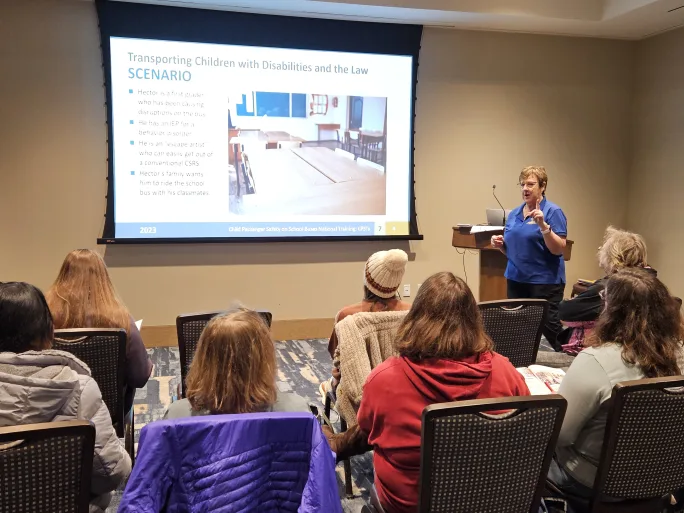
Kala Henkensiefken guides attendees through child safety restraint systems training at Minnesota’s Toward Zero Deaths event.
Photo: Amanda Huggett
Online Training & Resources
Not everyone can travel to national conferences or hire consultants. The good news is that there are plenty of no-cost/low-cost, easily accessible resources you can use anytime.
Many of the equipment suppliers offer their own resources and training videos, and are open to additional in-depth, personalized support.
Reaume notes that some districts have supervisors sign up for their monthly webinars, bring their drivers in over lunch to view and discuss them together, then practice hands-on skills afterward.
Don't miss these online resources!
- National School Transportation Specification and Procedures Manual (17th annual 2025 NSTSP)
- National Safety Council's Child Passenger Safety Learning Portal
- CPS Board’s Child Passenger Safety on School Buses National Training
- American Society of Pediatrics
- NHTSA CSRS national training
- Wheelchair Transportation Safety - University of Michigan
- Q’STRAINT Academy: Securement 101 and More
- AMF Bruns Learning Campus
- IMMI
- Braun Ability webinars
- Safe Kids Worldwide
- National Safety Council’s Child Passenger Safety Portal
- Safe Ride News
- NASDPTS position paper: Sharing Student Health and Medical Information with School Transporters
- NAPT’s Transporting Students with Disabilities Guide (coming soon!)
- NSTA’s newsletter and opportunities for contractor-members
- NASDPTS survey data, news and position papers, webinars, and more
- Your local state education agency
- School Bus Safety Company (fee applies for training)
- School Bus Fleet articles
Not sure where to start? Contact your state’s transportation director, association, or your local child passenger safety contact for help. For the latter, NHTSA has a handy list of all training contacts by state online.
Staying on Top of Changing Standards
It’s hard to stay on top of new rules and best practices, some of which can change often.
If someone on your administrative team has the capacity, it can be an easy strategy to appoint them to monitor news and trends and communicate updates as needed.
Attending the very conferences where regulations are made and discussed, such as NCST and NASDPTS, will offer a significant leg up on changing requirements. So will subscribing to industry media! *cough cough*
Don’t undervalue the opportunities and resources of industry associations such as NSTA and NAPT, as well as your state and regional groups, most of which have staff who monitor legal and regulatory issues and communicate to its members.
Another missed opportunity is leveraging relationships with manufacturers and disability groups. Having connections on the inside can be valuable, providing a trusted partner to turn to when you have questions.
“Almost every aftermarket product comes with training,” Robinson reminded. “Use it!”
What About Non-School Bus Vehicles?
We all know that our fleets are no longer just made up of yellow buses. Today, vans, SUVs, and passenger cars are used by districts, contractors, and of course, alternative transportation providers to get kids to school.
Every reputable alternative transportation provider will train its own drivers on passenger securement, and often they will hire based on skills and knowledge around students with special needs.
For instance, EverDriven requires a driver education course covering wheelchair securement, defensive driving, sensitivity training, communication with families, managing challenging behavior, and emergency response. And, drivers must pass a thorough exam before transporting students. Beyond that, local field teams provide ongoing, high-touch support throughout the year to reinforce safety expectations and quickly address issues as they arise, Mitch Bowling, CEO, explained.
“Our training, vetting, and compliance requirements are purpose-built for student transportation, not adapted from adult transportation models,” Bowling noted. “Each driver receives dedicated training focused on student safety, special needs support, and district-aligned protocols.”
“We believe the focus should remain on rigorous vetting, specialized training, and accountability for each mode of student transportation,” he added. “Well-defined training standards, background checks, and ongoing monitoring can provide strong safety outcomes without creating unnecessary barriers to serving students with unique needs.”
HopSkipDrive offers a CarePartner model (versus CareDriver) that brings a higher level of trained specialists who are booked for rides requiring specific equipment or skills, such as wheelchair assistance. All its drivers are also screened to evaluate empathy and situational judgment.
“Because ‘special needs’ doesn't mean just one thing, we combine education with driver vetting to ensure the right fit for every student,” said Jen Brandenburger, SVP safety, HopSkipDrive. “Every single driver is provided with specialized education developed in partnership with nationally recognized child development experts. We provide trauma-informed care and neurodivergence education designed to ensure every driver is equipped to handle sensory sensitivities, recognize triggers, and utilize empathy-based de-escalation. This, with the other steps in our 15-point certification process, sets a standard that exceeds others. To ensure this education translates to the ride itself, our technology allows districts to input precise ‘Must-Be-Met’ protocols and rider notes — such as a student being non-verbal — which the CareDriver receives directly in their app, helping ensure the student's specific needs are met every single time.”
It’s also important to note that the devices and techniques used on school buses do not always transfer to other vehicles. When it comes to child safety restraint systems (CSRS), in fact, most do not. Knowing that difference is key to keeping passengers safely secured.
What’s Ahead in Special-Needs Training?
In the coming years, training standards and regulations are expected to evolve, influenced by advancements in technology, safety, and societal expectations.
AMF-Bruns of America believes seven key themes are yet to come.
- Enhanced Safety Regulations:As safety remains a top priority, we can anticipate stricter regulations concerning the securement of assistive devices and the safety features of school buses. This may include more rigorous standards for child safety restraint systems and guidelines for securing wheelchairs and other mobility devices.
- Added Technology:The integration of advanced technology in school transportation, such as GPS tracking, real-time communication systems, and automated securement technologies, may lead to updated training standards that require operators to be proficient with these tools. This could also include cybersecurity training.
- Training for Emergency Preparedness: Given the increasing need for preparedness in various emergency situations, regulations may evolve to emphasize comprehensive emergency response training for school bus operators. This could include active-shooter scenarios, natural disasters, and medical emergencies, extending beyond traditional safety training.
- Inclusivity and Sensitivity Training: As awareness of the diverse needs of students grows, training standards may evolve to incorporate more comprehensive inclusivity and sensitivity training. This would prepare operators to better serve students with disabilities, mental health challenges, and different cultural backgrounds.
- Environmental Regulations: With a growing emphasis on sustainability, there may be new regulations focusing on emissions standards for school buses and training requirements on eco-friendly practices.
- Certification and Licensing: The requirements for certifications and licenses for school bus operators may become more stringent, potentially requiring expanded training hours, practical assessments, and ongoing education to maintain certification.
- Data Privacy and Protection Standards: As more data is collected on student transportation services, regulations surrounding data privacy and protection are likely to become more robust. Bus operators may need training on compliance with these standards, particularly in handling students’ personal information.
“By proactively preparing for these potential changes, school transportation providers can enhance their training programs, ensure compliance with evolving regulations, and ultimately improve safety and service delivery for students,” an AMF-Bruns spokesperson said.
Others, like Mitchell, hope to see more uniform national guidance that supports states in aligning their training requirements.
The Bottom Line
To ensure every student arrives at school safely, safety training must be top of mind.
As student needs, equipment, and laws change, training programs must be responsive.
Remember to include more than just drivers in training opportunities, keep equipment updated, stay on top of new standards, document and audit often, build your network, and offer continuous learning opportunities. Reach out to your network and your equipment vendors to complement your own training goals. Save this list of resources next time you need a refresher.
What else do you do to stay on top of special-needs issues? Share your tips and go-to resources with us!
Quick Answers
As the number of students with disabilities and Individualized Education Programs (IEPs) continues to rise, transportation teams need to ensure they are well-equipped to provide safe and compliant transport services.
*Summarized by AI
Subscribe to Our Newsletter
More Special Needs Transportation
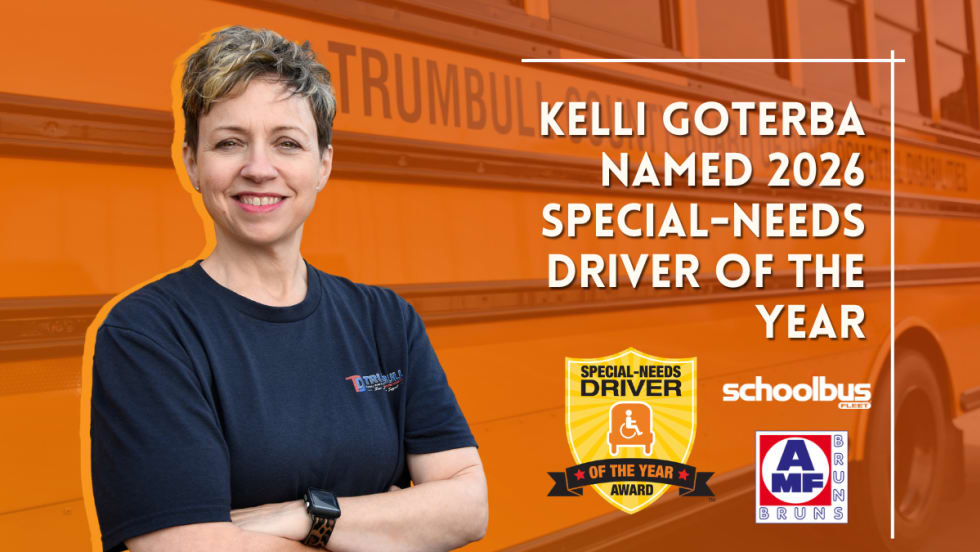
Kelli Goterba Named 2026 Special-Needs School Bus Driver of the Year
Through building trust with students and strengthening her transportation team, Goterba exemplifies the impact special-needs drivers can make.
Read More →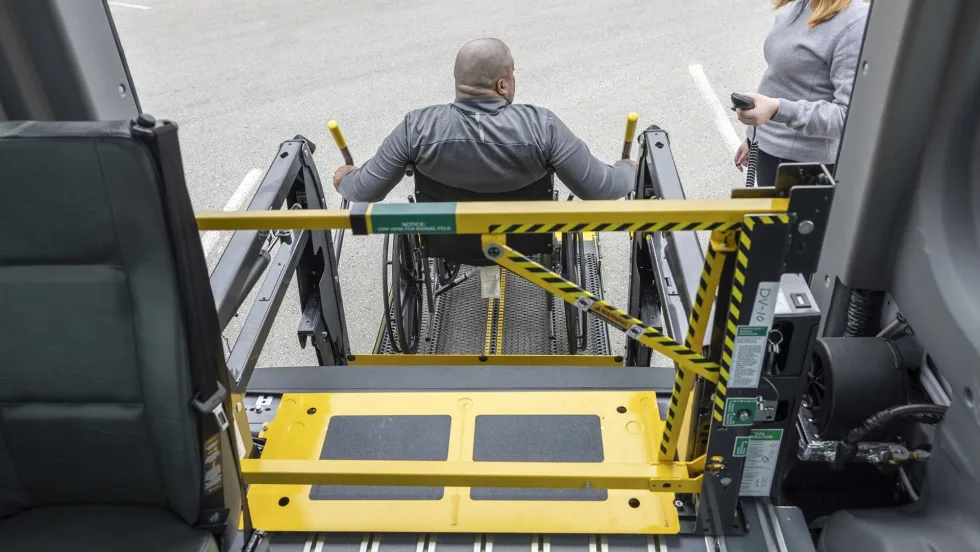
BraunAbility Introduces New Safety Barrier for Wheelchair Lifts
LiftSentinel is designed to add another layer of protection during wheelchair loading and unloading and can be retrofitted to many existing commercial lift installations.
Read More →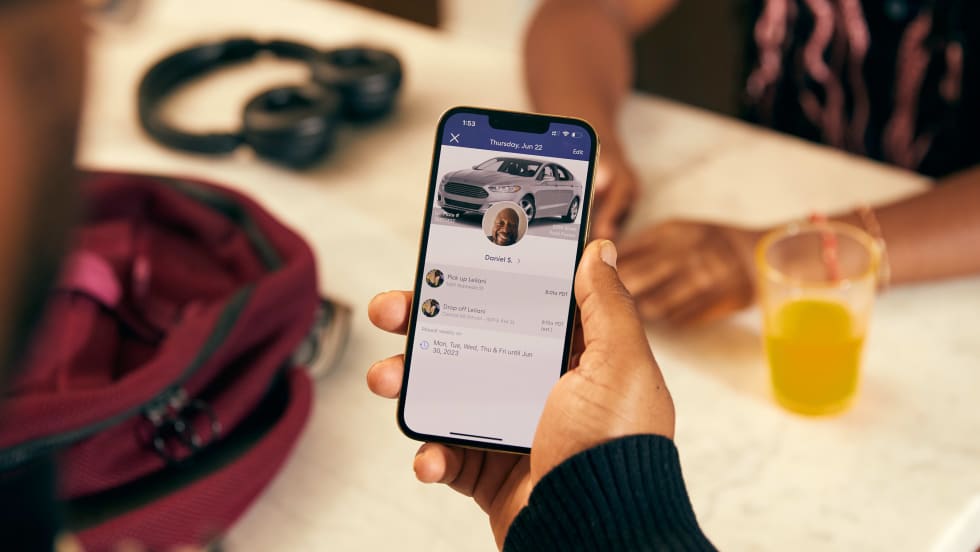
HopSkipDrive Launches New Safety, Driver Consistency Features for 2026-27 School Year
The company’s free ride recording, live ride tracking, and consistent driver assignments aim to improve safety and continuity for diverse student transportation needs.
Read More →
The Most Common Wheelchair Securement Mistakes on School Buses (and How to Fix Them)
Small missteps in wheelchair securement can have serious consequences. Here are 32 tips from experts to reduce risk and increase student safety on the bus.
Read More →
Inside AMF Bruns’ New Showroom: School Bus Securement Solutions Explained
Go inside AMF Bruns America’s new Ohio showroom with Maritza Valentin to see its FutureSafe technology, driver training tools, securement systems, and seating innovations.
Read More →
What AMF Bruns’ New Facility Means for Customers [Video]
Inside AMF Bruns’ new Stow, Ohio, operations: See how expanded space and innovation will enhance customer support and operations.
Read More →
AMF Bruns Expands in Ohio, Investing in Growth and Community
With expanded production space, local investment, and a growing workforce, AMF Bruns is scaling its U.S. presence. Here’s an exclusive first look inside the new Stow, Ohio, HQ.
Read More →
Inside AMF Bruns of America’s New Ohio Manufacturing Facility [Photos]
Take a behind-the-scenes look at AMF Bruns of America’s new 41,000-square-foot Stow, Ohio, headquarters, featuring advanced manufacturing, expanded space, and future-ready mobility solutions.
Read More →
First Student Boosts Student Support in Wichita & Texas
First Student and Wichita Public Schools are using behavioral support strategies to improve student ride experiences, while a separate initiative expands access to after-school programs through a bus donation.
Read More →
2026 Special-Needs Transportation Survey
What’s changing in special-needs transportation? This year, student transportation operators report a rising need, easing driver shortages, growing tech adoption, and evolving challenges. Sponsored by AMF Bruns of America.
Read More →