Did you know?
May is Mental Health Awareness Month, and October 10 is World Mental Health Day. Let’s all work to increase our understanding of how mental health plays a part in our student’s lives and our co-workers. #EndTheStigma
 MENU
MENU SEARCH
The number of children carrying trauma is likely more prevalent than you realize. A safe, predictable school commute can help students impacted by trauma thrive, exhibiting improved student behavior and attendance. Learn how trauma-informed principles can transform your school transportation operation.
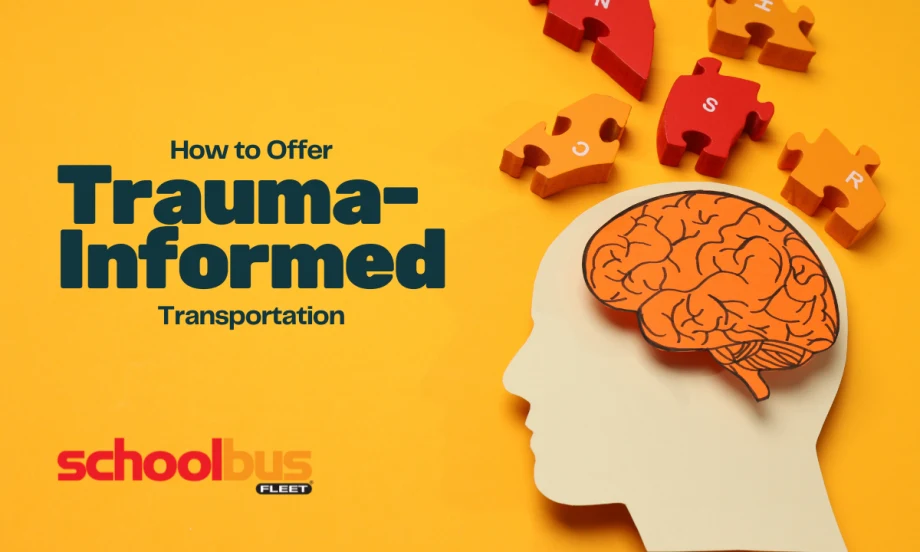
Over 60% of U.S. adults have experienced an adverse childhood experience before they were 18. And, three-quarters of high school students report experiencing one or more of these events, while one-fifth of students have experienced four or more.
Photo: SBF/Canva
For children affected by trauma, getting to and from school isn’t just about logistics. It’s about starting their day feeling safe and supported, having a sense of stability, and arriving at school ready to learn. The integration of trauma-informed care principles into school transportation can give students a better experience on the ride to school, setting them up for academic success.
By fostering a supportive environment, schools can help mitigate the negative impacts of trauma and empower students to succeed academically and socially. Transportation, as the first and last point of contact in a student’s school day, can play a crucial role in these efforts.
Below, we’ll define trauma-informed care, explore its importance in school transportation, and present actionable strategies that school districts and transportation teams can adopt to create a safer, more supportive ride experience for students who carry a heavy load.
According to the National Child Traumatic Stress Network (NCTSN), trauma-informed care (TIC) is an approach that recognizes the far-reaching effects of trauma and seeks to create an environment that promotes safety, healing, and resilience. This framework can be applied across systems, including education and transportation, to better support individuals who have experienced trauma.
In the school setting, this means acknowledging that students may have experienced adverse childhood experiences (ACEs) such as abuse, neglect, or household dysfunction, which can have long-term effects on their well-being, behavior, and life opportunities. Research from the Centers for Disease Control and Prevention (CDC) shows that adverse childhood experiences (ACEs) are widespread, with 64% of U.S. adults reporting at least one event before turning 18. Three out of four high school students reported experiencing one or more ACEs, while one in five experienced four or more.
While all children are at risk of experiencing trauma, research indicates that ACEs disproportionately affect children from low socioeconomic backgrounds and unstable living situations. One study shows that almost 100% of youth in foster care experienced two or more ACEs, while nearly 80% experienced six or more. Public health research about ACEs and homelessness shows that 89.8% of people experiencing homelessness had one or more events, while 53.9% had four or more.
These statistics highlight the importance of anyone working with students — including those involved in transporting them safely to and from school — to have an understanding of trauma-informed care practices.
Routine and stability bring huge benefits for students affected by trauma. A stressful or unpredictable ride to school can make an already anxious situation worse, which can, in turn, disrupt their entire day. But when transportation is designed with a student’s needs in mind, it creates a sense of safety and predictability that can help them start each school day feeling calm and supported.
Students who have experienced trauma face unique challenges when it comes to transportation to school. For instance, loud noises and crowded buses can be overwhelming — and potentially triggering — for some children. Social interactions on the bus can also be difficult, sometimes leading to conflicts with peers.
Children under stress can, unfortunately, be seen as “difficult” when their actions are mistaken for defiance rather than as a sign that they are struggling. Furthermore, disciplinary actions on the bus can have adverse impacts on students, as being reprimanded or singled out for behavioral issues may reinforce feelings of insecurity — particularly for children who have experienced trauma.

Students who have experienced trauma can benefit from a safe, calm ride to school.
Photo: HopSkipDrive
By providing a safe and supportive environment, implementing trauma-informed care principles, and fostering positive relationships between students and transportation staff, schools can create a transportation system that not only meets the logistical needs of students, but also prioritizes their emotional and psychological needs. This approach can lead to improved behavior, reduced anxiety, increased engagement in learning, and a greater sense of belonging within the school community.
School districts and transportation teams can take steps to integrate trauma-informed care practices into existing operations to make the ride to school safer and more supportive. By integrating the foundational concepts and principles outlined below, schools can create environments that acknowledge, understand, and respect the traumatic experiences of children. These elements also serve to maintain awareness of trauma and its impacts and mitigate the risk of re-traumatization.
The Substance Abuse and Mental Health Services Administration (SAMHSA), a national resource dedicated to enhancing the quality and accessibility of behavioral health services, outlines a trauma-informed care model grounded in four core concepts, referred to as the “Four Rs”:
In addition, a complete trauma-informed care strategy incorporates six essential principles, initially defined by the CDC’s Office of Public Health Preparedness and Response (OPHPR) in collaboration with SAMHSA’s National Center for Trauma-Informed Care (NCTIC):
A valuable resource for schools and districts, NCTIC offers consultation, education, and outreach related to trauma-informed care, as well as resources to support a broad range of service systems, including education and child welfare.
School district staff and transportation teams understand the needs and challenges of students on a deeply personal level. They’re often the first school representatives to interact with students each day, they build meaningful relationships with families, and they witness firsthand when student circumstances change.

It's important that drivers understand the principles of trauma-informed care for a better ride experience for students. HopSkipDrive's CareDrivers have at least five years of caregiving experience and receive resources about trauma-informed care.
Photo: HopSkipDrive
For all these reasons and more, drivers and their teams can play a pivotal role in creating a safe and supportive environment for student commutes by implementing strategies that acknowledge the impact of trauma on behavior and foster a sense of security and trust.
By prioritizing these key areas, school districts and transportation teams can create a safe and trusting environment that not only ensures the physical safety of students, but also contributes to their overall well-being and positive experiences during their commutes.
When student transportation is approached with trauma-informed care in mind, the benefits ripple beyond just the ride itself. These benefits include:
HopSkipDrive understands that the way kids get to and from school can have a profound impact on them, their families, schools, and our communities.

HopSkipDrive's Safe Ride Support team proactively tracks rides in real time, providing peace of mind for students, schools, and parents.
Photo: HopSkipDrive
As a leader in innovative, supplemental school transportation solutions, we partner with districts to help ensure every ride is a safe, supportive experience for all students. Here are some of the many ways we do so:
School transportation is more than just a way to get kids from point A to point B — it’s an extension of their school experience. For children who have experienced trauma, a stable, supportive ride can be life-changing. By prioritizing trauma-informed care, schools and transportation providers can ensure that every child arrives at school feeling safe, valued, and prepared to learn.

Jen Brandenburger
Photo: HopSkipDrive
About the Author: As senior vice president of safety, Jen Brandenburger leads HopSkipDrive’s safety strategy and execution. She recently served as head of product policy, U.S. Data Security at TikTok. Before that, Brandenburger spent eight years at Lyft in various roles, including building and scaling Lyft’s first Trust & Safety organization, and serving as the company’s head of policy development and research. She holds a B.A. from the University of Colorado at Boulder and a J.D. from the Seattle University School of Law.

Student Transportation of America expands in Illinois and Connecticut through Sunrise's fleet of nearly 1,000 vehicles.
Read More →
The 2026 Diesel Emissions Reduction Act program seeks applications from eligible organizations to accelerate the retirement of legacy diesel vehicles.
Read More →
The new platform works alongside districts’ existing transportation management systems to coordinate specialized rides, automate last-minute changes, and turn ride data into operational improvements.
Read More →
How should districts blend school buses with small-vehicle transportation and other options? EverDriven CEO Mitch Bowling discusses safety, costs, partnerships, and strategy.
Read More →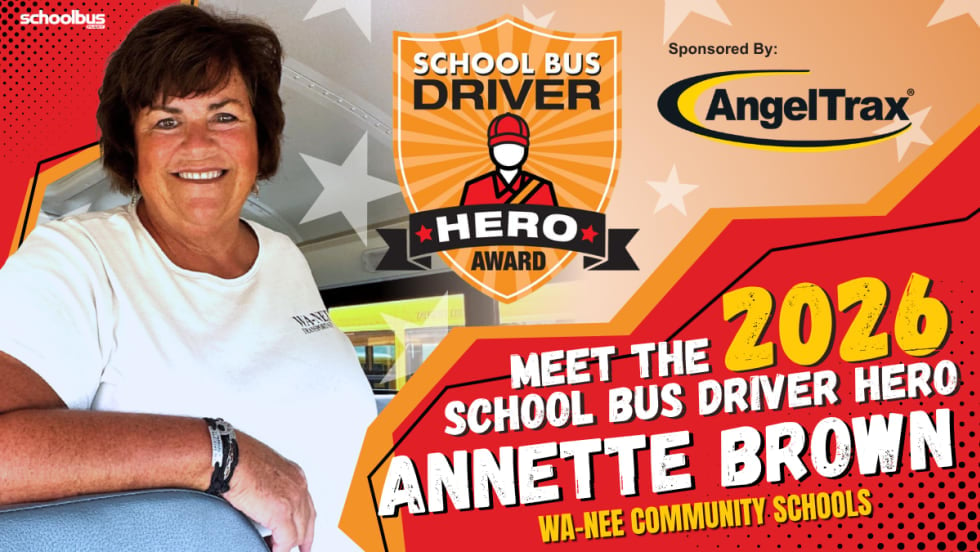
For more than 30 years, the Wa-Nee Community Schools driver has treated students like family, combining safety, compassion, and servant leadership to make a lasting difference on and beyond the school bus.
Read More →
Ready to boost up your school bus instructor training? Here’s how to pick the right talent and improve recruitment, retention, and safety.
Read More →
The new name represents a renewed vision for the nonprofit focused on advancing clean, equitable, and affordable transportation solutions that move people and goods.
Read More →
Choosing the right school bus driver trainer takes more than experience. Learn six keys to selecting and developing trainers and evaluating program effectiveness.
Read More →
STA's Canadian division acquires Ontario-based G&L Stevenson Transport; Durham School Services adds a new district in California; First Student expands in New Jersey; and Minnesota Coaches rebrands and acquires Halo Transportation.
Read More →
A summer pilot found that AI agents could handle most routine calls, freeing up time for customer service staff to focus on emergencies and complex family concerns.
Read More →