


SchoolBus logo in red and orange
MenuMENU
SearchSEARCH

Safety Leadership for School Bus Operations

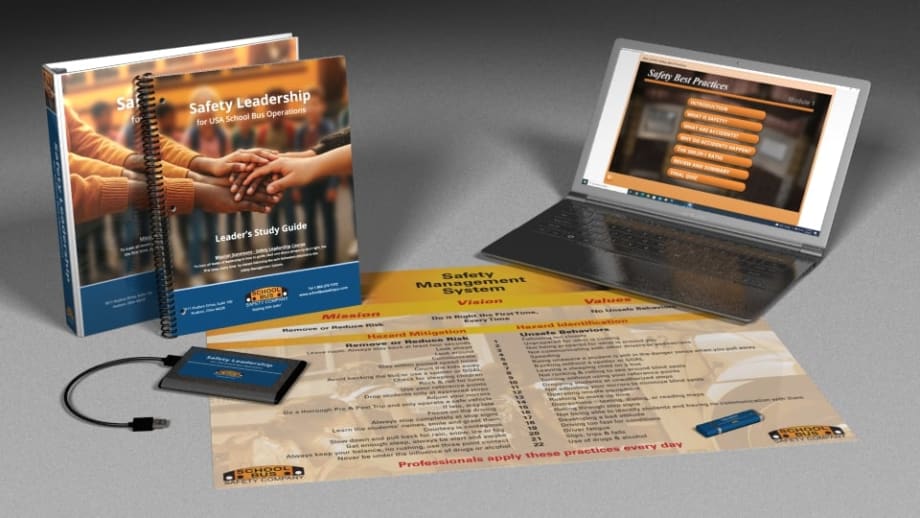
The most important factor in operating as safely as possible is leadership. Learn about an innovative new training course that teaches all levels of leadership the many practices to instill a safety culture in the drivers.

by Jeff Cassell
December 1, 2025
Safety Leadership for School Bus Operations


Image Courtesy of SBSC

Sponsored by
4 min to read


In all facets of safe student transportation, the most important factor is the leadership provided. Unfortunately, most leaders have received little to no leadership training and have to rely on their own past experiences. There is now an innovative new training course available aimed specifically at all levels of leadership in the school bus industry. 

This new course starts by focusing on the outcomes desired by the leadership, being safe student transportation. To achieve safe student transportation, we need to remove or reduce risk in all facets of operating a school bus. There are 22 behaviors that potentially involve risk and 22 reciprocal behaviors that remove or reduce these risks. These 22 behaviors are detailed on this poster.

Leadership

When all drivers are persuaded to always follow the 22 safe practices detailed on this poster, automatically, as a NORM, you will have removed or reduced the risks, and as such be operating as safely as possible. It really is that simple. If drivers always stay back at least four seconds, they reduce the risk of a rear end collision. If drivers never back up the bus, they will have removed the risk of a backing accident. If drivers count the kids away they will reduce the risk of hitting a student. The 22 risky behaviors and the reciprocal safe or safer behaviors are detailed on this poster.
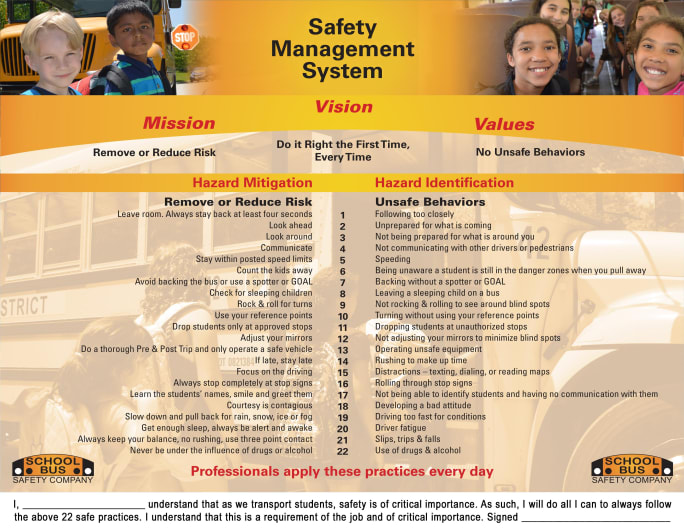
Image Courtesy of SBSC

So, to operate safely, we need to persuade drivers to always practice these 22 safe behaviors, as a NORM. 

So, who decides how to instill these safe behaviors into the drivers and how do they do this. It is all down to the location leadership. The new Safety Leadership Course teaches all levels of leadership how to use antecedents to shape the drivers’ behaviors. Behavior theory teaches the ABC of influencing driver behaviors. 

Antecedents lead to Behaviors to achieve Consequences. 

Each day we are faced with dozens of antecedents that affect our behaviors. A speed limit sign causes us to slow down, as we want to be safe and not get a speeding ticket. A red light is an antecedent, kids waiting at a stop is an antecedent. 

The Safety Leadership Course presents many antecedents that leaders can use to instill the desired behaviors into the drivers and achieve the desired consequences. 

Antecedents

  1. When an applicant first contacts your location to apply for a job, before going through the hiring process, share a copy of the poster with them and explain that if they join your operation, they will be required to always follow these 22 safety practices. Request their agreement, before you proceed with the hiring process. 

    Tell them that following these 22 safe behaviors is a condition of employment, a requirement of the job. By doing this at the very first contact, you make a great first impression and the applicant will start to understand the importance of these practices. 

  2. After completing the hiring process, before passing on to the trainer, present the new trainee with a copy of the poster and require them to sign their agreement. 

  3. Once the applicant is passed to the trainer, the trainer should provide the trainee with a copy of the study guide and show them there is a copy of the poster on the back of the guide. The trainer explains that all the training they will go through will be to instill these desired behaviors into the trainee as a NORM. 

  4. Ongoing antecedents will include safety messages, posters, and trainer guidance to continually persuade the drivers to adopt the 22 desired behaviors. 

    Let’s go back to what we are trying to achieve. That the drivers reduce or remove risk in all their actions. Following these 22 safe behaviors is what achieves this. Again, it really is that simple. 

KSA/MPV

The use of the effective antecedents is one of the most important parts of Safety Leadership, but the course includes many additional practices to instill a safety culture. The course explains how understanding a trainees KSA (knowledge, Skills and Abilities and MVP (Motivations Values and Personality) can be allowed for in the leadership practices. 

This course can be used to train all levels of leadership, including the location manager, supervisors, trainers and dispatchers, to all be working together in the same direction to operate as safely as possible. 

This article reflects the views of SBSC and does not necessarily represent the views of School Bus Fleet or Bobit Business Media.
Subscribe to Our Newsletter

More Safety

Fatal School Bus Accident in New York graphic dated Jan. 29, 2026, showing a close-up of a yellow school bus with cracked-glass overlay and School Bus Fleet logo.
Safetyby StaffFebruary 3, 2026

New York 5-Year-Old Killed by School Bus, Investigation Ongoing

A Rockland County child was struck by their school bus late last week. Here's what we know so far about this and other fatalities and injuries in the area over the years.

Read More →
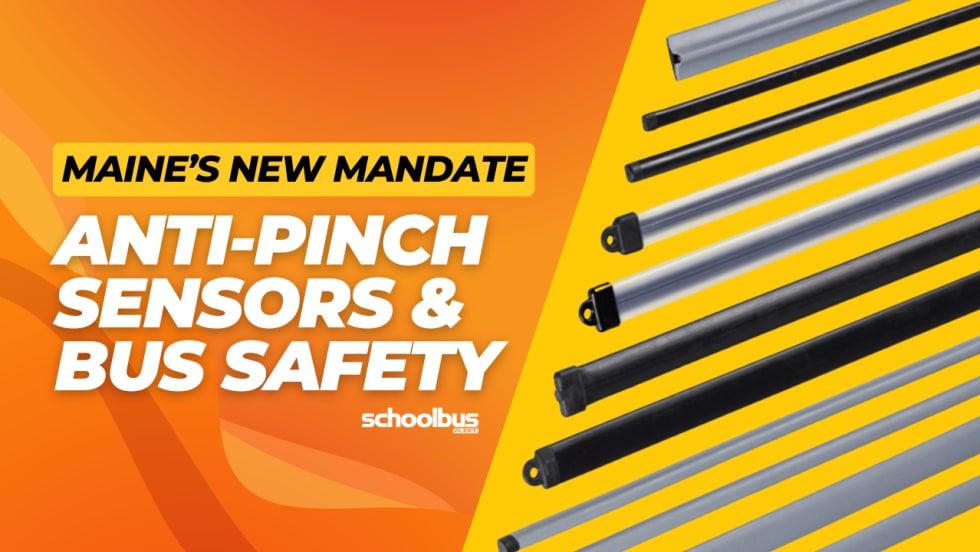
A red, orange and yellow graphic with anti-pinch door sensor products and text reading "Maine's New Mandate: Anti-Pinch-Sensors & Bus Safety."
Safetyby Elora HaynesJanuary 29, 2026

Prevent School Bus Dragging Incidents: Anti-Pinch Door Sensors and Maine’s New Mandate

As Maine becomes one of the first states to require anti-pinch door sensors on new school buses, manufacturers like Mayser offer a look at how the technology works and why it's a critical fail-safe.

Read More →
SponsoredJanuary 29, 2026

8 Ways To Simplify and Streamline School Bus Fleet Operations

What if your fleet technology actually worked together? Learn eight practical strategies to integrate multiple systems into one platform, unlocking clearer insights, stronger safety standards, and smoother daily operations.

Read More →
an illustration of a survey on a mobile phone with a hand on it, and the words Survey Says on it
Safetyby News/Media ReleaseJanuary 28, 2026

Survey: Most Parents Want Automated Enforcement on School Buses

A recent Verra Mobility survey reports that 82% of parents support safety cameras to penalize stop-arm violators and 70% favor automated enforcement in school zones.

Read More →
Image of an extended stop-arm with text reading "School Bus Safety: Funding Provides Bus Upgrades Across Ohio."
Safetyby StaffJanuary 27, 2026

State Grant Program Advances School Bus Safety Upgrades Across Ohio

$10 million in state grants will fund safety upgrades and new features on school buses serving students across the Buckeye State.

Read More →
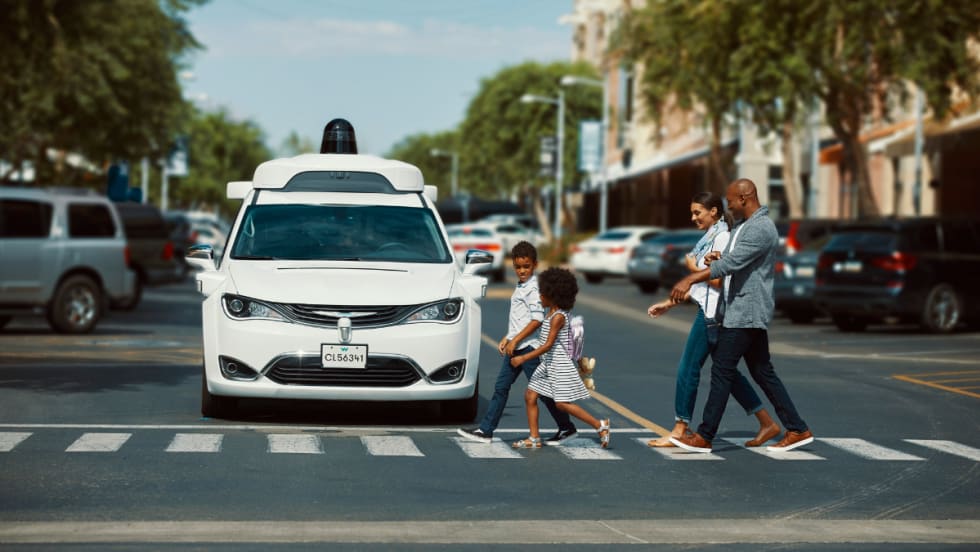
A white Waymo vehicle waits at a crosswalk as a family crosses.
Safetyby StaffJanuary 26, 2026

Waymo Scrutiny Intensifies as NTSB Launches Investigation

After complications in multiple cities when self-driving taxis failed to stop for school buses, the NTSB joins NHTSA in a probe to determine what's behind the tech and related safety concerns.

Read More →
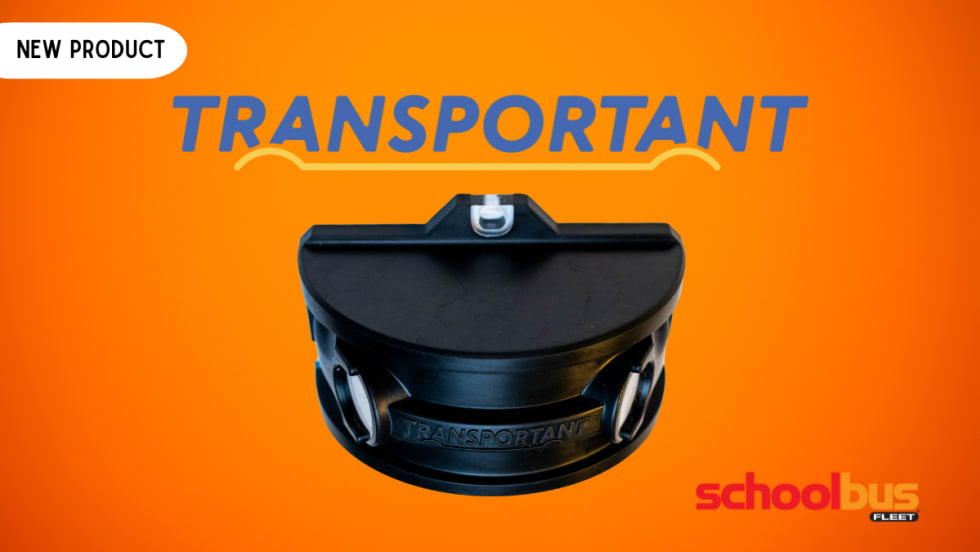
Transportant stop arm camera shown on an orange “new product” graphic with School Bus Fleet branding.
SafetyJanuary 20, 2026

Transportant Debuts First Full-Color Stop Arm Camera for School Buses

Transportant introduced a next-generation stop arm camera designed to improve image quality and reliability for documenting illegal school bus passings.

Read More →
SponsoredJanuary 19, 2026

3 New Ways Fleet Software Pays: ROI opportunities for modern fleet managers

Keeping buses safe, reliable, and on schedule requires more than manual processes. This eBook explores how modern fleet software supports school transportation teams with automated maintenance scheduling, smarter video safety tools, and integrated data systems. Discover practical ways fleets are reducing breakdowns, improving safety, and saving valuable staff time.

Read More →
An image of a student with a backpack walking with text reading "Walking School Bus: Grant Fuels Safer Pedestrian Routes to School in New Mexico."
Safetyby Elora HaynesJanuary 15, 2026

New Mexico District Receives $2.7M Grant to Expand Walking School Bus Programs

See how a federal grant will help Albuquerque Public Schools expand supervised walking routes and improve student safety.

Read More →
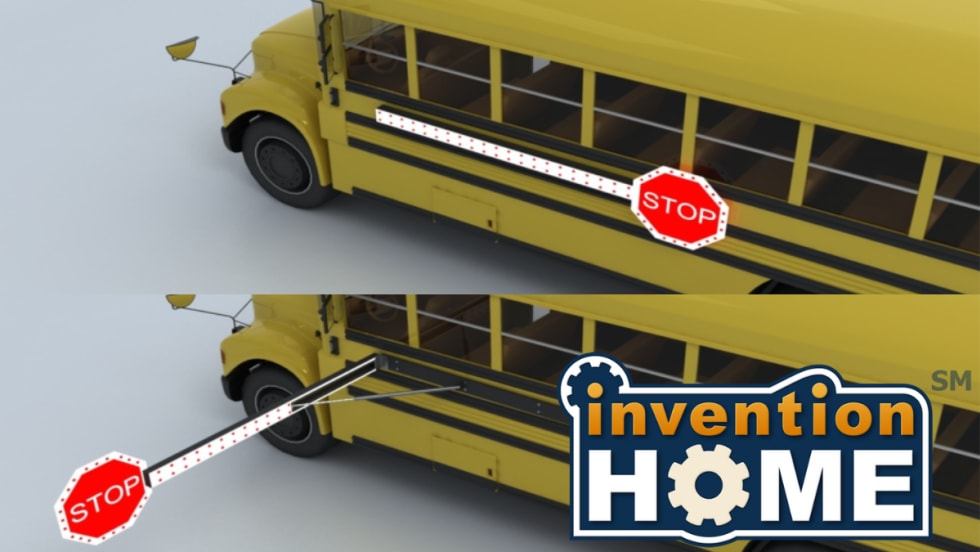
Illustration showing a school bus with a standard stop arm and a deployed retractable safety barrier extending across the roadway to block passing vehicles.
Safetyby News/Media ReleaseJanuary 13, 2026

Florida Inventor Creates Retractable 10-Foot Stop-Arm

A newly developed school bus safety device introduces a retractable barrier designed to deter illegal passing during student loading and unloading.

Read More →