




Keep Reading: Why the Time Is Now to Modernize Student Transportation
Innovation Was the Answer: Five Lessons Learned in School Transportation from 2025–26
Transportation leaders are embracing technology, transparency, and operational flexibility to meet growing demands with limited resources.
by Mitch Bowling, EverDriven
June 24, 2026
The 2025–26 school year didn’t give transportation departments any easy answers, but it did reveal how districts and providers navigating this moment most effectively are willing to rethink how they operate.
Credit:
EverDriven/School Bus Fleet
6 min to read
When I reflect on student transportation in the 2025–26 school year, it’s not the pressure that stands out; it’s the creativity.
Tight budgets, shifting enrollment, and persistent driver shortages didn’t stall the industry. Instead, they accelerated it. Transportation directors across the country responded with more tools, more ingenuity, and more resourcefulness than we’ve seen in years. They redesigned routes, embraced new technology, and rethought the very model of how students get to school.
In fact, according to EverDriven’s survey of nearly 200 transportation directors nationwide found that districts face a challenging reality: 30% expect transportation budgets to decrease, while 44% anticipate enrollment growth in the coming year. Yet the most notable finding wasn't the pressure. It was how districts responded.
Rather than waiting for conditions to improve, transportation leaders are proactively building more flexible, efficient, and resilient programs. Here's what we learned.
1. Creativity Became the Response to Constraint
Budget challenges are real. Nearly one in three directors expect funding to decrease, and 62% point to district-wide cuts as the primary driver. But what this year demonstrated is that constraints don’t have to define outcomes.
Even in districts where funding held flat, directors found ways to deliver more: smarter routes, better-matched vehicles, stronger partnerships. Federal funding uncertainty added complexity, particularly for programs supporting students experiencing housing instability and those with disabilities — and directors met it with resourcefulness.
The 2025–26 school year is a pivotal moment, and what stands out is the creativity transportation directors brought to it. They had more tools at their disposal than ever before: smarter technology, a broader range of vehicles, and trusted partnerships that opened new ways to solve longstanding challenges. That innovation shows up in each of the trends that follow.
2. Smarter Routing Became the Budget Strategy Districts Needed
When you can’t add resources, you must optimize the ones you have. Routing moved from the back office to the boardroom this year as districts recognized it as one of the most direct levers for cost control. The challenge: transportation departments generate more data than ever, but 48% of transportation professionals report that limited staff prevents them from acting on it. Too many disconnected systems, not enough time.
The response was a clear shift toward integrated technology platforms: systems that surface insights automatically rather than requiring staff to go looking for them. Districts that invested here found real savings: consolidated routes, reduced mileage, and freed-up capacity that could be redirected toward students with the most complex needs.
According to our research, 98% of districts now report active modernization efforts, and 68% say technology will play a significant or critical role in their transportation strategy going forward.
The message is clear: smarter routing isn’t a tech upgrade. It’s a budget strategy.
3. On-Demand Went from Niche to Necessary
On-demand transportation used to be the exception, a workaround for edge cases that didn't fit the fixed-route model. This year, it became something else: a core strategy for districts navigating enrollment volatility, staffing constraints, and budgets that couldn't absorb the overhead of standing routes running half-empty.
That shift matters because on-demand models only deploy when a trip is confirmed, resulting in no wasted capacity and no coverage gaps when a student moves mid-year or enrolls in October. In a budget environment this tight, that kind of structural efficiency isn't a nice-to-have; it's the point — and it serves the students who need it most.
Students experiencing housing instability, whose addresses shift throughout the year, late enrollees, students with disabilities whose attendance is medically variable: fixed-route systems were not designed for this level of variability. But, on-demand networks are.
When districts use a vetted, scalable model with key partners that activates when coverage is needed and scales back when it doesn’t, it means no new fleet and no new headcount — just flexible capacity that bends without breaking when enrollment gets complicated.
4. Technology and AI Are Driving a New Era of Innovation
If there is one force reshaping student transportation faster than any other right now, it’s technology — AI in particular.
Districts that once relied on manual processes and institutional knowledge to manage routing, driver assignment, and family communication are now deploying AI-powered platforms that surface answers in hours, not days. The results are measurable: consolidated routes, reduced mileage, faster onboarding of new riders, and better outcomes for students with the most complex needs.
The impact extends beyond efficiency. AI-driven monitoring tools enable real-time driver oversight, proactive incident response, and faster communication with families. That gives caregivers visibility they’ve never had before. According to research, 68% of districts say technology will play a significant or critical role in their transportation strategy going forward, and 98% report active modernization efforts.
The districts seizing this moment are doing more than cutting costs. They’re building more responsive, more resilient transportation programs than ever before.
5. Safety and Transparency: Proof Has Replaced Promises
If there is one through-line across every trend this year, it’s the expectation of proof when districts work with contracted providers.
Families want real-time updates. Districts want performance data they can stand behind. And safety, once treated as a given, is now a documented standard.
This year, we released EverDriven’s 2026 Safety and Operations Report, which found that 99.99% of more than 2.1 million trips were completed without an accident, and nearly 84% of rides for students with disabilities were served by the same driver. Those numbers matter.
In an environment where every dollar and every vendor relationship is scrutinized, providers who can’t demonstrate their full operational picture — safety records, driver consistency, incident response, family communication — shouldn’t be in the conversation.
This is ultimately a trust story. When providers share their operational data openly, including trip completion rates, safety records, and driver consistency metrics, they give districts the confidence to defend their choices and families the reassurance that the system is working.
The districts and providers who embraced transparency this year didn’t just build better relationships. They built more resilient operations, because accountability forces the discipline that drives performance.
Where We Go From Here
The 2025–26 school year didn’t give transportation departments any easy answers. It did, however, reveal something important: the districts and providers navigating this moment most effectively aren’t the ones with the biggest budgets. They’re the ones willing to rethink how they operate — to use data where they previously used intuition, to right-size where they previously defaulted to the status quo, and to prove their value where they previously assumed it was understood.
The students at the center of this work, often vulnerable students whose path to school is rarely simple, don’t have the luxury of waiting for systems to catch up. Every missed ride is a missed day. Every missed day is a widening gap.
Districts and providers that internalized that reality this year built something durable: transportation systems designed around the students who need them most, not the students who are easiest to serve.
The 2025–26 school year didn't break the industry. It sharpened it.
The path forward belongs to those willing to keep that edge.

Source:
EverDriven
About the Author: Mitch Bowling is the CEO of alternative transportation company EverDriven, which serves more than 800 districts across 36 states and completed over 2 million trips last year, 99.99% of them accident-free with 100% safety compliance.
This article was authored and edited according to School Bus Fleet editorial standards and style. Opinions expressed do not necessarily reflect that of SBF or Bobit Business Media.
Subscribe to Our Newsletter
More Management
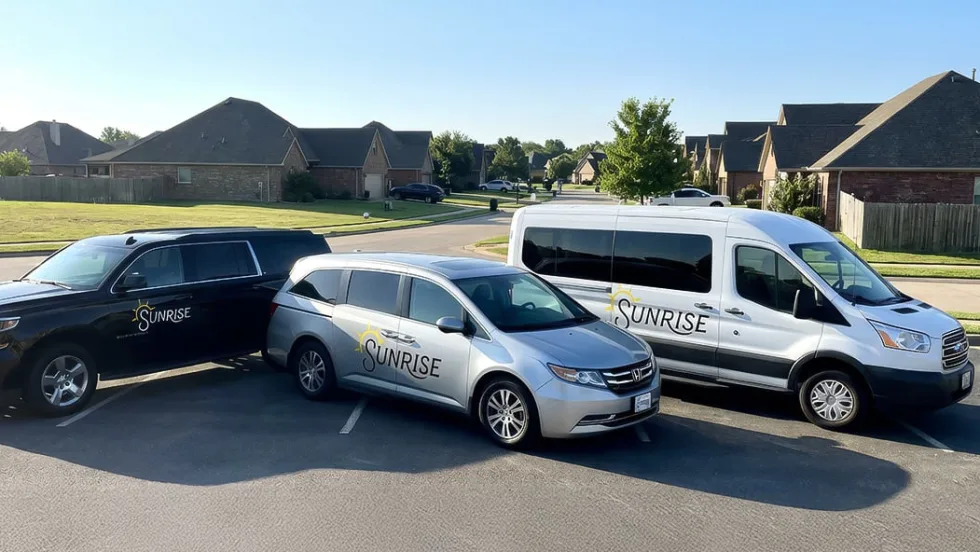
STA Acquires Sunrise Transportation
Student Transportation of America expands in Illinois and Connecticut through Sunrise's fleet of nearly 1,000 vehicles.
Read More →
EPA Opens $180M DERA Funding Round for Diesel Upgrades
The 2026 Diesel Emissions Reduction Act program seeks applications from eligible organizations to accelerate the retirement of legacy diesel vehicles.
Read More →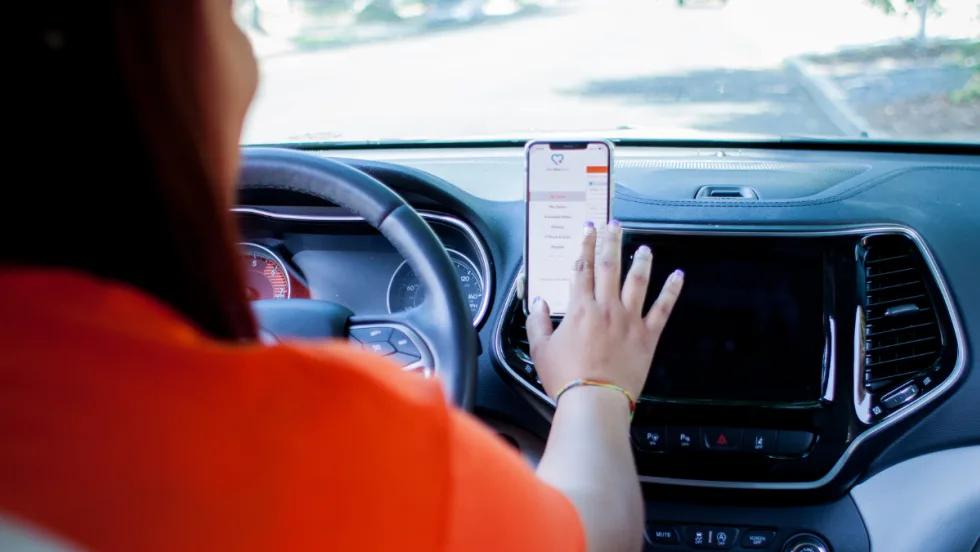
HopSkipDrive’s CareEngine Targets the ‘Exceptions’ in Student Transportation
The new platform works alongside districts’ existing transportation management systems to coordinate specialized rides, automate last-minute changes, and turn ride data into operational improvements.
Read More →


The Right Ride for Every Student: Navigating the New Student Transportation Ecosystem
How should districts blend school buses with small-vehicle transportation and other options? EverDriven CEO Mitch Bowling discusses safety, costs, partnerships, and strategy.
Read More →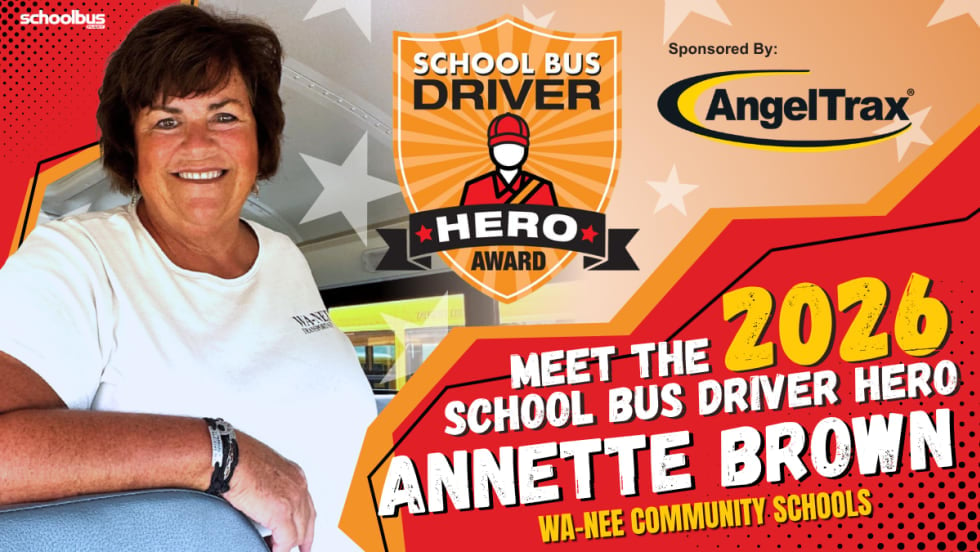
Annette Brown Always Takes the Extra Time: Meet Our 2026 School Bus Driver Hero
For more than 30 years, the Wa-Nee Community Schools driver has treated students like family, combining safety, compassion, and servant leadership to make a lasting difference on and beyond the school bus.
Read More →
How to Build a Better Driver Training Program
Ready to boost up your school bus instructor training? Here’s how to pick the right talent and improve recruitment, retention, and safety.
Read More →
CALSTART and Forth Combine to Form Catalyst Mobility
The new name represents a renewed vision for the nonprofit focused on advancing clean, equitable, and affordable transportation solutions that move people and goods.
Read More →
What Makes a Great School Bus Driver Trainer?
Choosing the right school bus driver trainer takes more than experience. Learn six keys to selecting and developing trainers and evaluating program effectiveness.
Read More →
School Bus Contractors Expand Through New Deals, Acquisitions & Partnerships
STA's Canadian division acquires Ontario-based G&L Stevenson Transport; Durham School Services adds a new district in California; First Student expands in New Jersey; and Minnesota Coaches rebrands and acquires Halo Transportation.
Read More →
Logan Bus Company Rolls Out AI Phone System for NYC School Bus Families
A summer pilot found that AI agents could handle most routine calls, freeing up time for customer service staff to focus on emergencies and complex family concerns.
Read More →