




Denis Gallagher Urges ‘Old School’ Fleets to Modernize
The CEO of Student Transportation Inc. says that many school bus operations need to replace their aging vehicles, embrace new technologies, and “totally rethink routing” to become more efficient.


Gallagher is chairman and CEO of STI, which he founded in 1997.

Gallagher is chairman and CEO of STI, which he founded in 1997.
Much has changed in the 20 years since Denis Gallagher founded Student Transportation Inc. (STI). Then again, the contracting luminary says that many school bus operations are still stuck in the past when it comes to their equipment and their routing practices.
As chairman and CEO of STI, Gallagher oversees a growing company that now transports 1.25 million students in the U.S. and Canada with a fleet of 13,500 school buses.
As he surveys the state of the industry, Gallagher says he is disappointed in the prevalence of ongoing issues like aging buses, inefficient routing systems, and limited use of technologies that can help improve service.
Gallagher addresses those topics as well as driver shortage, alternative fuels, and his own history in the business — starting in his dad’s garage at 8 years old — in this spirited interview with School Bus Fleet.
SBF: How would you describe the current state of the school bus business?
DENIS GALLAGHER: In my opinion, we are at a crossroad with many issues at the forefront. Budget constraints, inefficiencies in routing-scheduling, sleep studies, overreaching regulations, driver shortages, training, fleet technologies, clean fuels, and, of course, passenger safety are just the ones on the top of my list. This “old school” industry has got to answer how it is going to deal with these issues. There seems to be conflicting agendas instead of public-private partnerships working on solving these issues, which is what is needed.
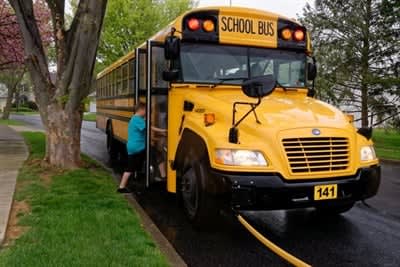
STI now transports 1.25 million students in the U.S. and Canada with a fleet of 13,500 school buses.
Driver shortage, which you mentioned, has been at the top of the list of challenges for many districts and contractors in recent years. What do you see as the primary contributing factors?
Driver shortages are a combination of several items. First, drivers’ positions were always part-time — two-plus hours driving in the morning, then two-plus hours in the afternoon. So while it is difficult to make this a full-time position, in many cases, it has led to a “wage shortage.”
Routing inefficiencies are the second issue. Schools need to totally rethink routing. Roads and streets have changed, kids have moved, traffic patterns have shifted, yet we are running the same routes “because that’s the way we always did it.” Schools need to have better systems, and if they contract for their service, they need the transportation contractor to be part of the solutions by working together to eliminate excess routes that can reduce vehicles and thus the number of drivers.
How would you describe the current level of interest in alternative fuels among school districts?
I don’t think enough schools are thinking strategy, let alone about alternative fuels, with all the other issues they face. We have been leaders in liquid propane vehicles and will continue to push that in markets where parents, school officials, and the community are embracing less carbon monoxide in and around schools. With our initial lead role, we have seen more districts and contractors adding alternative fuels to their fleets. … It is something that isn’t going away, I can say for sure.
From the company’s standpoint, how are alternative-fuel buses working out?
We have found liquid propane to be a highly effective solution in many areas. Parents and drivers love them as they are cleaner burning, much quieter, easier to work on for technicians [because] they are converted gasoline engines, and, to my surprise, they start up easy in extremely cold weather, which was a major initial concern. The one issue I raise with the manufacturers is we have to improve the miles per gallon on these, and they assure me they are working on that issue.
“If [school districts] contract for their service, they need the transportation contractor to be part of the solutions by working together to eliminate excess routes.”Denis Gallagher, chairman and CEO, Student Transportation Inc.
In terms of technology on school buses, what are you seeing the greatest demand for from customers?
Of course, everyone is camera-driven these days due to many security and safety reasons. We are including more of the SafeStop app, which is the leader in the bus and student tracking apps, in contracts. Parents want timely, accurate information on bus arrivals and also the ability to see where the bus is to eliminate calling the office. Some schools and contractors are fearful it exposes their inefficiencies, but it actually will improve service. The analytics and key performance indicators it provides have reduced late arrivals, unnecessary bus stops, and can show school administrators not only what percentage of the fleet is running on time but the routes that aren’t … so they can be fixed immediately. So with any GPS, the bus is talking to dispatch on its performance, and then add SafeStop and the parents and dispatch can talk without phones, which all improves service.
Do you foresee automated or autonomous technologies being integrated into school buses in the near future?
I won’t say never, but I will say it will be difficult in my opinion for parents to agree to let their kids on a bus without a driver. Yes, a monitor could be there, so again it’s possible. I think we need to remember we are not a fixed-route transit operation, nor should we be. We are in vast rural areas, as well as suburban and major cities. As the first and last classroom of a child’s day, it’s important for our passengers to have a familiar face greet them on the school bus.
As you think back on when you started STI 20 years ago, what are some of the biggest differences in school transportation now compared to then?
Twenty years ago wasn’t that long ago, and I think many things are the same and, for that reason, I’m a little disappointed. We still have not embraced technology that is right here. Yes, many things have changed, like safety and [better] equipment … all for the good. Regulations have gotten tougher in some areas and relaxed terribly in others due to budget constraints. Driver licensing is very hard and costly in some states. There are school-owned and -operated fleets that have gotten so old it is beyond rationale. States and school districts that have average age fleets over 15 to 20 years should be modernizing now. What are you waiting for? ... Interest rates are historically low, capital is available, and there are alternatives.
How has STI changed in those 20 years?
We’ve grown tremendously. We’ve added a lot of great people to our family. We’ve demonstrated leadership and corporate responsibility. We continue to invest in new equipment, new technology, our people, and our communities. I started this company with the idea to build a business to last with people who care and love what they do, not be a dinosaur on the side of the road like so many that have come and gone. I get to choose where we work and with whom we work. We are leaders by design. This is my 41st year full-time in this industry, but [I] started in my dad’s garage at age 8.

In May, Gallagher and other STI execs gathered in New York City to ring the closing bell for the Nasdaq Stock Market. Outside of the Nasdaq building, a giant display highlighted STI’s 20th anniversary.
How has the company stayed the same?
First of all, I love what I do. Our core values of being a “family” business are what drives me every day. It’s about the families of the 15,000 folks I get to work for each day. They allow me to work with their mom, dad, husband, wife, grandmother, or grandfather, who are with us as much as with them. It’s being recommended by existing customers to new customers. It’s drivers telling other drivers about the way they are respected and welcomed. It is hard when you grow not to lose that touch, but the folks I work for know how much this means to me and they make it happen.
How might school transportation be different 20 years from now?
I had a boss 20 years ago who said this was “buggy whip” business. Needless to say, he was one of the reasons I started STI. I hope we see some innovation in routing. I am a huge fan of dynamic routing. Parents would let us know either through an opt-in or opt-out message if their child was riding that day. That would reconfigure routes immediately on a daily basis based on ridership ... potentially saving millions on equipment, fuel, drivers and [creating] time efficiencies. New technologies through the innovative SafeStop app will allow parents to not only know and see where the bus is, but who is driving it today, a short bio, and picture. Parents and schools will also be able to learn more about safety, driver credentialing, training, vehicle maintenance, and inspection procedures. As a famous clothier used to say, “An educated consumer is our best customer.”
More Safety
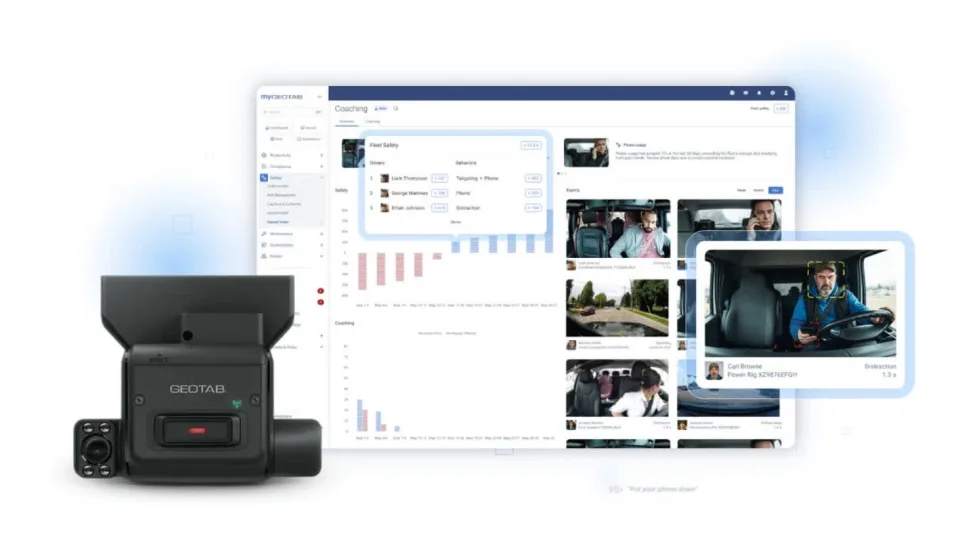
Geotab Expands Fleet Safety Tools With Video Coaching, Risk Insights
New safety and video capabilities aim to help fleet managers assess risk, support drivers, and take targeted action through video coaching, red-light violation detection, and more.
Read More →
How to Build a Better School Bus Driver Training Program
Is it time to strengthen your driver training? Here’s how to pick the right talent and improve recruitment, retention, and safety. This video is brought to you by IC Bus.
Read More →
Recent School Bus Accidents Leave 2 Dead, 2 Injured
Four school bus crashes in Florida, Illinois, and Georgia highlight risks in transportation lots, at bus stops, and during student loading and unloading.
Read More →

When Every Second Matters, Clarity Keeps Routes Moving
From routine delays to urgent incidents, strong communication practices help drivers, dispatchers, schools, and families respond with confidence.
Read More →
What Happens When a School Bus Catches Fire — and What Can Help
School bus fires are rare but can be devastating. Learn how advances in fire suppression and asset protection help fleets detect fires earlier, reduce damage, and improve safety.
Read More →
Geotab Launches Tool to Help Fleets Investigate Road Incidents
Geotab Investigations combines telematics data, video, documents, and other evidence to help fleets reconstruct incidents, resolve claims, and determine what happened.
Read More →
Texas Sixth Grader Wins 2026 National School Bus Safety Poster Contest
Sai Darshana Yekolu of Moseley Middle School in Prosper, Texas, was named the newest winner for her artwork, bringing the theme of “Safe Rides, Everyday Heroes” to life.
Read More →
Doing More With Less: How Transportation Directors Can Prioritize Safety Amid Budget Uncertainty
With diesel prices soaring and nearly one-third of transportation directors expecting budget cuts, maintaining student safety has never been more challenging. Download this guide to learn how leading districts are prioritizing risk, funding critical safety technology, and building stronger budget cases with data.
Read More →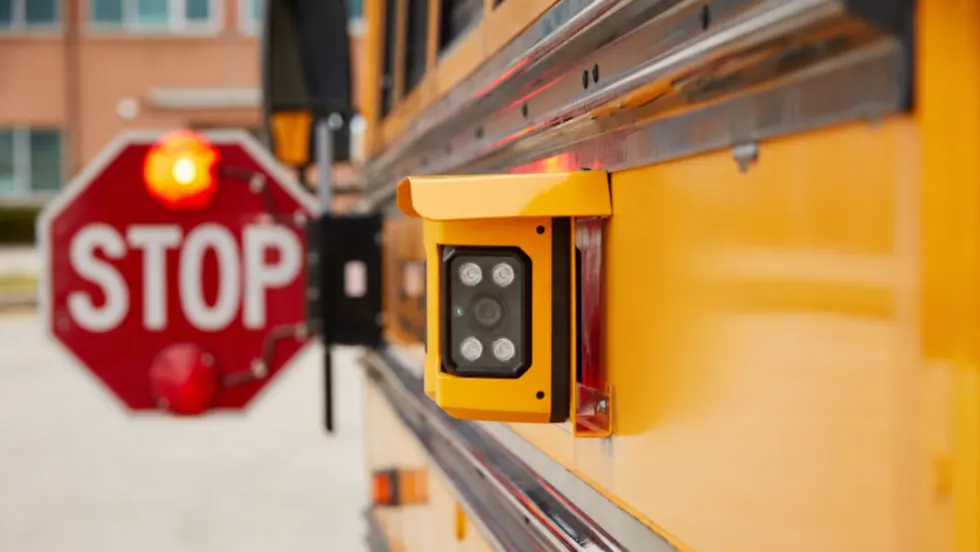
Walton County Schools Adds Gatekeeper Stop-Arm Enforcement System
The Florida district will deploy Gatekeeper’s updated Student Protector technology, which now incorporates AI to improve video evidence.
Read More →
How To Build a More Secure School Bus Yard During and After Hours
As thefts and overnight security threats continue, school transportation leaders are combining stronger operational practices with AI-enabled surveillance to better protect buses, facilities, and staff.
Read More →