




Alternative Fuel Options: Spotlight on Propane and CNG
Thinking about operating buses powered by these fuels? Take into consideration the possible financial benefits, the space necessary for refueling infrastructure and what type of dispensing equipment suits the fleet, as well as employee safety and training.

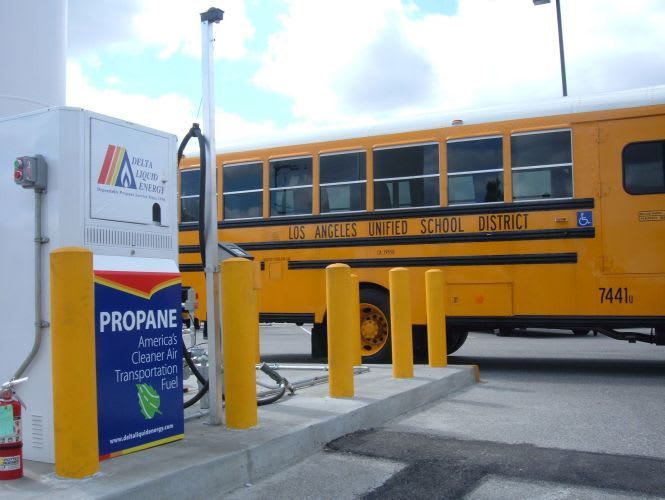
Delta Liquid Energy recently installed propane refueling equipment for Los Angeles Unified School District. Ted Olsen, alternative fuels manager for the company, says that making certain there is adequate space to house refueling infrastructure at a facility is important.
The primary focus of the pupil transportation industry is to get children to and from school safely, and there are many facets involved in this: Bus drivers must be properly trained and certified; the buses must be in good condition; students must know how to properly board and disembark their buses — the list is extensive.
In recent years, another component has been added to this list: The air students breathe should be free of pollutants. To help reduce the harmful components of exhaust, pupil transportation administrators can retrofit their buses with particulate traps or diesel oxidation catalysts.
Another option to achieve cleaner running buses is to transition to units that can operate on an alternative fuel, such as propane or compressed natural gas (CNG). Ted Olsen, alternative fuels manager for propane provider Delta Liquid Energy in Paso Robles, Calif., says that vehicles powered by propane emit virtually no particulate matter and 50-percent less nitrogen oxide compared to vehicles powered with a gasoline or diesel engine.
Natural gas-powered vehicles also generate a low level of nitrogen oxide and particulate matter, according to Jim Harger, chief marketing officer for natural gas provider Clean Energy in Seal Beach, Calif.
While improved air quality is a benefit of running fleets on CNG and propane, there are factors that operations should consider if they are thinking about working toward a “greener” fleet with the help of these fuels.
Weigh the potential for cost savings
Officials in the alternative fuels industry say that it is important for pupil transporters to first determine what the cost savings will be as a result of operating their buses on propane or CNG as opposed to diesel or gasoline.
Olsen says that his years working in the propane industry have shown him that propane will save operators money due to its lower cost compared to other fuels.
Harger says that powering vehicles with natural gas will also save pupil transporters money. “Natural gas-powered buses cost more, but the fuel is substantially less,” he explains. “The fuel cost savings over the life of the bus will far outweigh the additional cost up front.”
Consider the size of your facility and your equipment needs
Moreover, think about how you will want to refuel your school buses. Bus drivers can fill up at a company’s network of stations in the area that their district serves, or the district can house refueling infrastructure at its facility.
Operations that would like to have refueling equipment in their bus lot must make certain that there is sufficient space to accommodate the infrastructure.
Olsen says that the complete footprint for Delta Liquid Energy’s refueling equipment is 15 feet by 15 feet.
“We’ve put in vertical tanks, which enabled operators to have more space onsite,” he adds.
Pupil transportation operations will need an approximately 30-by-30-foot plot to house a compressor, dryer, the switch gear and a single storage vessel from Clean Energy.
Harger also notes that the equipment has to be 10 feet away from buildings, and it cannot be located underneath any power lines.
Selecting the type of fuel dispensing equipment (i.e., time-fill or fast-fill) that will best meet a fleet’s needs is just as important as ensuring that there is sufficient space for the infrastructure.
In working with school districts to have Delta Liquid Energy’s propane refueling infrastructure installed onsite, Olsen has found that many operations request a fast-fill system.
“We know that school bus operators need to be able to fill the vehicles in less than 10 minutes, so we’ve put in equipment that will fill the buses in a timely fashion,” Olsen says.
Aside from finding out whether an alternative fuel provider can fulfill your dispensing equipment needs, Olsen says pupil transporters considering switching to propane should ask themselves the following questions:
- Do I want to be able to fill the bus only, or do I want to be able to fill the bus and have a record of the transaction?
- Do I want to integrate my propane dispensing equipment with my gasoline or diesel dispensing equipment?
“We did a job for a district, and they wanted the propane dispenser integrated with their gasoline and diesel fuel islands,” Olsen explains. “The drivers can fill the buses with propane the same way they do with gasoline and diesel.”
The system also enables the district to receive a complete report on how many gallons of propane were used during a refill, which bus was refilled, its mileage and the time that the refill occurred.
Harger suggests that operations thinking about powering their school buses with CNG use a time-fill dispensing system. He feels that this type of system is ideal for filling a school bus fleet because buses are typically parked in the bus lot for an extended length of time.
“When the bus comes back to the yard, you can hook it up and have it fuel overnight, for instance, instead of having a driver sit at a pump,” he says.
By extension, Harger notes that having a dispensing system that does not require that the drivers spend time refueling the buses can result in substantial labor savings over the life of a bus.
NGVAmerica’s Stephe Yborra offers a different outlook on refueling equipment for school bus operations.
“NGVAmerica recommends that if there is refueling infrastructure that is nearby, convenient and has the ability to accommodate the additional fuel load, use existing fueling stations,” Yborra says. “If that’s not economical or convenient, you need to make sure that you have enough throughput with the buses that you’re buying for the volume of fuel to justify investing in a refueling station onsite at your facility.”
This means that, ideally, operations should run 10 or more buses on CNG. Yborra says that school districts could work with other entities that have fleets with natural gas-powered vehicles.
“If there’s an arrangement where the fueling meets everyone’s needs, it will create enough fuel throughput to improve the station economics. The bigger the station, the larger the fuel throughput and, therefore, the better the cost per gallon will be,” he says.
Ensure that your staff will be safe around the fuel
In addition to dedicating enough space in your bus lot to accommodate refueling infrastructure, Harger says there are some garage modifications that older pupil transportation operations interested in using CNG would have to undergo to ensure the safety of employees.
Any open space heaters would have to be removed, and methane detection sensors would have to be installed on the shop ceiling.
“Natural gas is lighter than air, so if there was a leak while the bus was inside during normal maintenance, you want to make sure that you don’t allow gas to escape and then be trapped at the ceiling where there could be an open flame or a lighting system that could cause ignition,” Harger explains.
To that end, any lighting in the garage would have to be explosion-proof.
Staff safety is also a factor when running buses on propane. Olsen says that the fuel is stored in heavy-duty steel pressure vessels that have been crash-tested, and they are also equipped with auto-overfill valves so that the tanks cannot be overfilled.
Refueling training for drivers aids in the transition
Does the propane or CNG company that your operation is thinking about working with offer training to help bus drivers become familiar with the refueling process?
This is a question that school bus administrators should ask since the drivers must know how to refuel the buses properly and should feel comfortable doing so.
Harger says that Clean Energy provides training for its customers’ drivers, and for operations that have drivers who refuel at the company’s network of refueling stations, there is a two-minute training video to watch.
“All of the stations accept Visa or MasterCard. Following the training video, a two-digit ID is assigned at the dispenser for that card, so as long as you remember the ID, you don’t have to go through the training the next time you refuel,” Harger explains.
Delta Liquid Energy also offers training on safe filling procedures. Olsen says that an advantage to fueling buses with propane is that it is a simple system — it is similar to filling a bus with gasoline.
“Training is important because drivers are typically not familiar with refueling with propane, and it helps them understand the simple process,” Olsen says. “It’s fun to watch because once they realize how easy it is, it becomes second nature to them.”
Alternative-fueled buses
Many school bus manufacturers offer one or more alternative-fueled buses for pupil transportation operations to choose from.
Several years ago, Blue Bird Corp. released the Propane-Powered Vision, and the company’s All American RE can run on either CNG or diesel.
Type A manufacturer Collins Bus Corp. has entered the propane market with its NEXBUS propane-powered school bus, while Thomas Built Buses’ Saf-T-Liner HDX can run on CNG or diesel.
IC Bus offers a hybrid-electric Type C unit, and, like other manufacturers, its buses can run on biodiesel. Thomas Built and Collins also manufacture hybrid-electric school buses.
Ted Olsen of Delta Liquid Energy emphasizes the value of speaking to colleagues when trying to decide which type of fuel to use.
“Go out and talk to other operators that are using propane or another alternative fuel and find out what works for them. It’s a great way to determine which way to go and what kind of infrastructure to put into place,” he says.
For more information about each manufacturer’s alternative-fuel offerings, visit their Websites: www.blue-bird.com, www.collinsbuscorp.com, www.thomasbus.com and www.icbus.com.
On another note, there is an alternative to purchasing a new CNG-powered school bus. Stephe Yborra, director of market development for Natural Gas Vehicles for America in Washington, D.C., says that some existing diesel-powered buses can be repowered to run on natural gas.
“We repower International school buses through one of our suppliers — it’s a company called Emissions Solutions Inc.,” Yborra says. “They completely remanufacture the engine block using a natural-gas version of the International DT466. It matches the same transmission, and it fits with the same cooling package.”
Editor's Note: In 2011, Blue Bird began offering the Propane-Powered Micro Bird.
More Alternative Fuels

CALSTART and Forth Combine to Form Catalyst Mobility
The new name represents a renewed vision for the nonprofit focused on advancing clean, equitable, and affordable transportation solutions that move people and goods.
Read More →
Alt-Fuel Moves: New Buses, Charging Hubs & Real-World EV Testing
Propane and electric school bus deployments continue to grow as districts add new vehicles, expand charging infrastructure, and gather more real-world operating data.
Read More →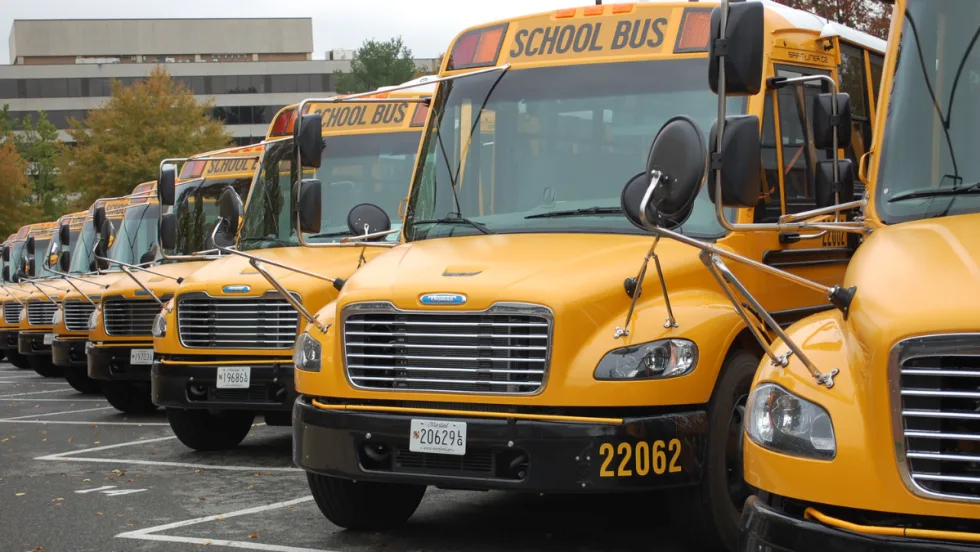
Fewer Electric School Bus Models Reshape the U.S. Market
WRI’s latest buyer’s guide points to a consolidating electric school bus market, but fewer options may reflect a maturing industry rather than fewer meaningful choices for school bus operators.
Read More →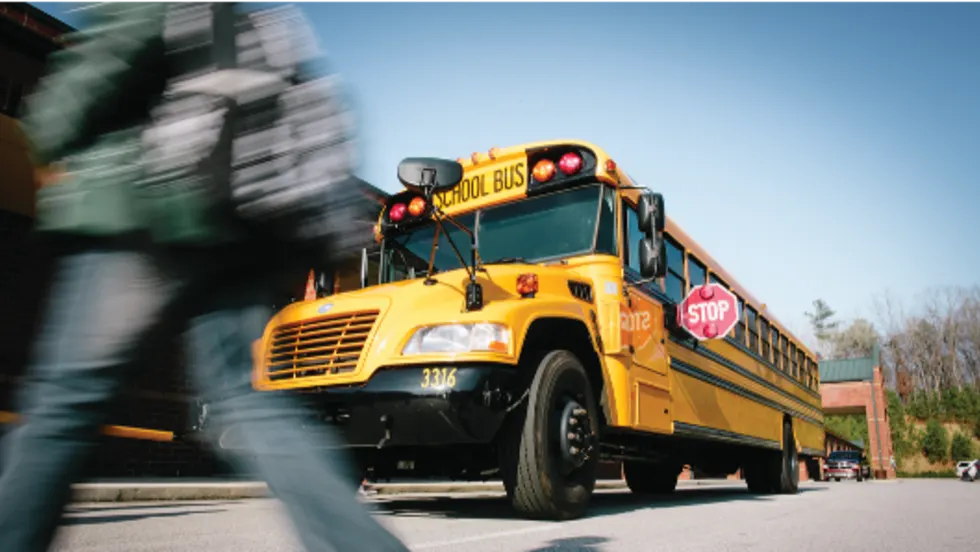
The Fuel Budget You Can Actually Predict: How Propane Autogas Keeps Money in the Classroom
Learn how propane autogas helps school districts manage fuel costs with predictable pricing, lower maintenance, and reduced emissions from former transportation director Joel Stutheit.
Read More →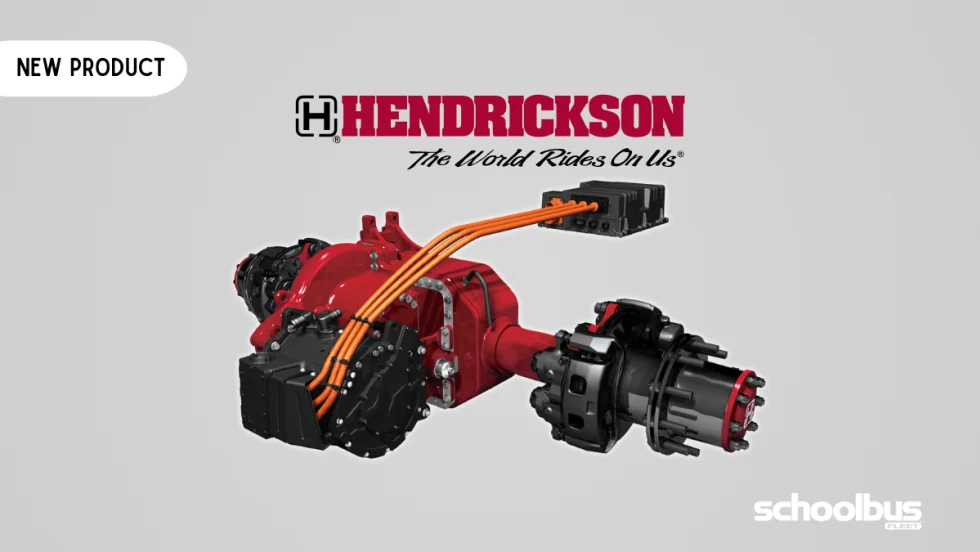
Hendrickson, Driventic Introduce New Electric Powertrain for School Buses
ELECTRAAX, the electrified, lightweight drive axle offers integrated ePowertrain efficiency and modular flexibility for Class 6–7 school bus use.
Read More →
The Mobility House Joins PowerFlex in Fleet Electrification Deal
The acquisition combines intelligent charging software, bidirectional charging expertise, and fleet electrification services to support the growing adoption of electric school buses across North America.
Read More →
Alt-Fuel Moves: Electric School Bus Investments Hit the Road
See which districts across the U.S. are putting electric school buses into service, expanding charging infrastructure, and planning the next phase of fleet electrification.
Read More →
With Fuel Volatility Ahead, School Districts Turn to Propane
While diesel prices peaked above $5 this spring, districts with propane autogas-powered fleets paid under $2 per gallon, according to PERC.
Read More →
EPA Unveils Proposed Changes to 2027 Heavy-Duty Engine Rules
The federal agency has proposed changes to next year’s targets that would eliminate DEF derates, ease warranty requirements, and retain current NOx emissions standards.
Read More →
Alt-Fuel Moves: EV Charging & Infrastructure Projects Gain Momentum
The latest developments include new funding, charging infrastructure, utility investments, and fleet technologies designed to support the transition to electric school buses nationwide.
Read More →