




5 Questions: National Express' Nick Voisard Addresses EV School Bus Transitions
In this interview with SBF, Voisard addresses his goals for his new role, as well as how school districts and other school transportation providers can prepare for school bus electrification.


Nick Voisard brings 13 years of experience working in the pupil transportation industry to his new role as the senior director of electric vehicles, North America, for National Express. National Express appointed Voisard to the position in April. He previously worked as the company’s director of business development. Before working for National Express, Voisard worked for Lion Electric.
We imagine Voisard keeps himself busy outside the office. He tells School Bus Fleet he has an amazing wife and three children, as well as four dogs.
In this interview with SBF, Voisard addresses his goals for his new role, as well as how school districts and other school transportation providers can prepare for school bus electrification.
What do you hope to achieve as National Express’ senior director of EVs for North America?
A full transition to zero emissions for our company by 2040 and to assist the industry to full adoption of zero emission vehicles.
Why do you believe fleet electrification in school buses is important?
Fixed route services such as school transportation, mail service and trash service are the most practical application for electric vehicles today. With local operations, shorter range, low speed and heavy stop and go operation, these types of services make a strong business case for electrification. School buses are the largest form of public transportation, moving more than 26 million passengers daily. Today, school buses remove more than 17 million cars from our roads. This alone removes more than 56 billion pounds of CO2. By transitioning these vehicles to zero emission, we only further reduce the amount of CO2 in the environment.
What hurdles do you think school districts will experience in transitioning to electric school buses?
There are four main hurdles in the transition to electric:
Cost – Currently, the cost of an electric school bus is more than three times that of its diesel counterpart. Until the cost comes down significantly, it will be a challenge for school districts to make the investment to adopt to technology.
Real Estate – A school district will need adequate facilities to house and secure electric buses. The buses will need to be parked in a way where each will have access to a charger. The facility will also need to have adequate space to set up the necessary utility infrastructure (transformer and switchboard).
Infrastructure – Charging an electric bus takes time. Unlike an ICE vehicle which can be fueled in less than 10 minutes, an electric bus can take anywhere from three to eight hours to charge (based on Level 3 @ 50kW down to Level 2 @ 19kW on a 210kW battery). This means each bus will need its own charging equipment. School districts will need to work closely with their utility provider to ensure power availability to the site and will have to make significant investments in site preparation and charging systems.
Anxiety – As a company, we teach our school bus drivers to refuel buses when they get to a half tank. With an electric bus, drivers will potentially operate buses until they are nearly out of charge due to range limitations on current technology or the ability to purchase a vehicle with a range more suited to a route. We hear about “range anxiety” from owners of electric vehicles. That is something that, in the short term, will be a concern for school bus drivers.
How can school districts prepare for electrifying their school bus fleets?
If a district is planning to transition to electric, it would benefit the administration to perform both a facility and route audit. It will be important to understand any barriers to conversion which may arise from electric grid limitations or facility footprint. Additionally, it will be important that the district understands the length of the routes being serviced by an electric school bus. Some manufactures offer vehicles with different range options. Understanding route length will allow the district to purchase the appropriately sized battery pack for the route.
How do you think the EPA Clean School Bus Program will impact the pupil transportation industry?
The Clean School Bus Program will do quite a bit to eliminate one of the major barriers to market: cost. Overall, I think the impact to the industry will be positive. The financial assistance will provide school districts the ability to adopt electric school buses potentially at a lower cost than a comparable diesel bus. However, the long-term sustainability of the electric school bus transition will only take hold when vehicle prices and total cost of ownership reach parity with diesel. The CSBP could potentially put around 17,000 electric school buses on the road. There are more than 460,000 school buses in North America.
More Alternative Fuels

CALSTART and Forth Combine to Form Catalyst Mobility
The new name represents a renewed vision for the nonprofit focused on advancing clean, equitable, and affordable transportation solutions that move people and goods.
Read More →
Alt-Fuel Moves: New Buses, Charging Hubs & Real-World EV Testing
Propane and electric school bus deployments continue to grow as districts add new vehicles, expand charging infrastructure, and gather more real-world operating data.
Read More →
Fewer Electric School Bus Models Reshape the U.S. Market
WRI’s latest buyer’s guide points to a consolidating electric school bus market, but fewer options may reflect a maturing industry rather than fewer meaningful choices for school bus operators.
Read More →
The Fuel Budget You Can Actually Predict: How Propane Autogas Keeps Money in the Classroom
Learn how propane autogas helps school districts manage fuel costs with predictable pricing, lower maintenance, and reduced emissions from former transportation director Joel Stutheit.
Read More →
Hendrickson, Driventic Introduce New Electric Powertrain for School Buses
ELECTRAAX, the electrified, lightweight drive axle offers integrated ePowertrain efficiency and modular flexibility for Class 6–7 school bus use.
Read More →
The Mobility House Joins PowerFlex in Fleet Electrification Deal
The acquisition combines intelligent charging software, bidirectional charging expertise, and fleet electrification services to support the growing adoption of electric school buses across North America.
Read More →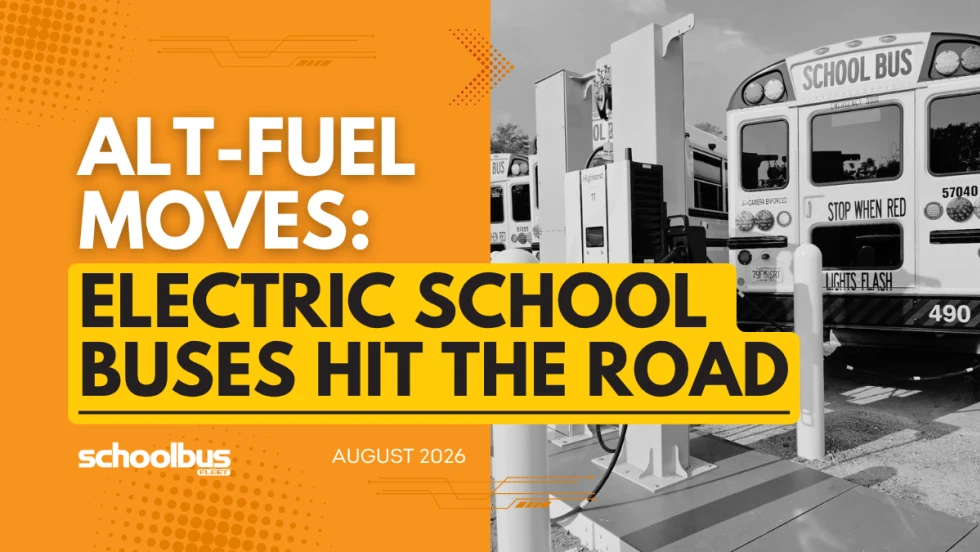
Alt-Fuel Moves: Electric School Bus Investments Hit the Road
See which districts across the U.S. are putting electric school buses into service, expanding charging infrastructure, and planning the next phase of fleet electrification.
Read More →
With Fuel Volatility Ahead, School Districts Turn to Propane
While diesel prices peaked above $5 this spring, districts with propane autogas-powered fleets paid under $2 per gallon, according to PERC.
Read More →
EPA Unveils Proposed Changes to 2027 Heavy-Duty Engine Rules
The federal agency has proposed changes to next year’s targets that would eliminate DEF derates, ease warranty requirements, and retain current NOx emissions standards.
Read More →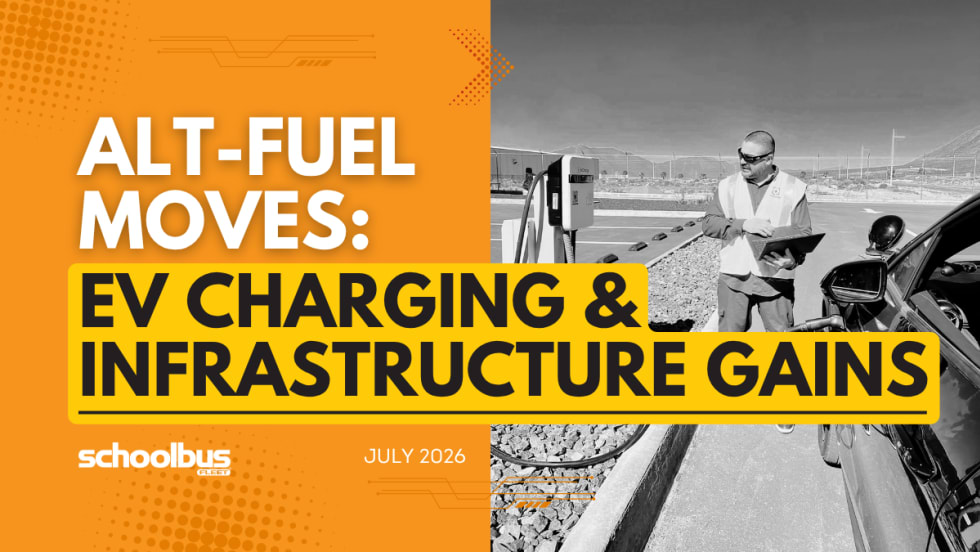
Alt-Fuel Moves: EV Charging & Infrastructure Projects Gain Momentum
The latest developments include new funding, charging infrastructure, utility investments, and fleet technologies designed to support the transition to electric school buses nationwide.
Read More →