




Keeping the Engine Warm: How Winter Weather Plays with Alt-Fuels
2025 Trend to Watch: Cloudy Future for Alternative Fuels
As the landscape of alternative-fuel school buses evolves, with electric, propane and natural gas buses gaining popularity, schools are navigating funding challenges, infrastructure needs, and the push for a greener future.
by Staff
January 13, 2025
Propane and natural gas buses are gaining traction as cost-effective, cleaner alternatives to electric and diesel, especially in areas with limited charging infrastructure.
Photo: The Mobility House & SBF/Canva
4 min to read
Over the past several years, alternative fuels have been a major topic of discussion for vehicles of all kinds. Electric vehicles have taken center stage for these discussions, but propane, natural gas, and others are being discussed more and more.
Electric buses are becoming a major focus partially thanks to government-funded initiatives that allow schools to purchase the expensive infrastructure and vehicles necessary to make the switch.
As of Oct. 1, 2024, there are 12,241 electric school bus commitments in the U.S., according to WRI. Over two-thirds of those were funded by the EPA’s Clean School Bus program.
With the Biden administration’s goal of shifting America to electric vehicles, several federal programs have been implemented (DERA and Clean Heavy Duty Vehicles Fund, in addition to CSB) to help schools afford the costs of going green. Due to the upcoming administration change, many questions are being asked about the fates of these programs.
If these programs are not renewed going forward, the cost of converting to an all-electric fleet is a major concern. There is also the question of what happens to the infrastructure schools are investing in now if they cannot get new electric buses down the line.
“We can’t be so hyper-focused on defined deadlines like 2027 to buy brand new, and 2035 to fully electric,” said Vice President of Logan Bus Company Corey Muirhead on a November 2024 episode of NSTA’s podcast. “I think we need to sit down and understand, can we get to 20%, can we get to 30%. We really need to have an honest conversation on what happens if the EPA does not have a clean school bus rebate program past 2025 and what happens if New York State does not have environmental bond money?”
Schools losing access to electric buses due to the high cost is not the only trend to watch going into 2025, as other fuel sources are starting to gain popularity. Some areas are quickly finding out that electric vehicles are not suitable for the existing infrastructure, and with goals to replace diesel buses approaching quickly, propane is gaining momentum.
In areas where the electric grid cannot handle the additional stress from a large all-electric school bus fleet or where electric vehicle chargers are few and far between, propane offers a cheap, clean alternative to diesel. Natural gas buses can also be used depending on the availability of fuel sources.
With longer ranges and less infrastructure required to get them off the ground, propane and natural gas buses have distinct benefits over electric. In addition, the buses themselves are cheaper than electric buses, meaning that these are less reliant on grant funding to acquire.
Schools would still have to get fueling stations installed for these buses. However, these systems are often less extensive and costly than electric charging infrastructure.
One concern that comes with any alternate fuel bus is the range when traveling outside of their district. When traveling long distances for field trips, for example, finding a place to refuel or charge can challenging due to current infrastructure so focused around diesel and gasoline.
This can bring additional challenges such as needing to turn to charter transportation for students to be able to attend an event.
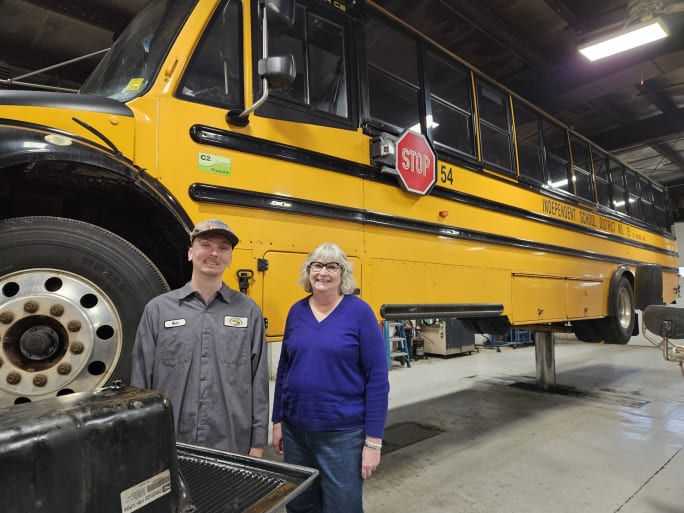
Peggy Tesdahl and a maintenance employee at St. Francis Area Schools pose by one of their propane buses.
Photo: Amanda Huggett
“I see the benefits of it, but there is still the whole point that we can’t send some of these buses on long field trips,” said Teri Mapengo director of transportation at Prosper Independent School District in Texas. “We have to be very strategic in how we purchase buses, because we’re one of the fastest-growing districts in Texas. We have to be smart out our purchases and making sure that we are able to make those trips because we don’t want to have to charter all that stuff out because that’s expensive too.”
Another issue that many districts are observing with alternative-fuel buses is the difficulty of getting spare parts for maintenance. While this is not exclusive to alternative fuels, the specialized nature of the equipment makes the issues more noticeable overall.
The nature of alternative fuel also highlights the limited number of suppliers for fuel. The availability of propane and natural gas can be limited to a single supplier in certain areas, which greatly limits options.
And for those interested in propane, there is only one manufacturer option. “There needs to be competition in the marketplace,” said Peggy Tesdahl, transportation supervisor for St. Francis Area Schools in Minnesota. “Competition makes everyone work harder to produce a product that meets the expectations of the end-user. We need choices to meet our needs.”
Ultimately, the future of alternative fuel will come down to expanding options and giving districts choices to make the best decision for their situation. In their current state, there is no one-size-fits-all option for alternative fuel school buses. But one thing is for certain: diesel is most likely on the way out.
Editor's Note: This article is part of our 2025 trends analysis exploring key issues to watch this year, from telematics to safety, alt fuels, the driver shortage, and school bus ridership.
Check out the other articles in this series:
Subscribe to Our Newsletter
More Alternative Fuels

CALSTART and Forth Combine to Form Catalyst Mobility
The new name represents a renewed vision for the nonprofit focused on advancing clean, equitable, and affordable transportation solutions that move people and goods.
Read More →
Alt-Fuel Moves: New Buses, Charging Hubs & Real-World EV Testing
Propane and electric school bus deployments continue to grow as districts add new vehicles, expand charging infrastructure, and gather more real-world operating data.
Read More →
Fewer Electric School Bus Models Reshape the U.S. Market
WRI’s latest buyer’s guide points to a consolidating electric school bus market, but fewer options may reflect a maturing industry rather than fewer meaningful choices for school bus operators.
Read More →
The Fuel Budget You Can Actually Predict: How Propane Autogas Keeps Money in the Classroom
Learn how propane autogas helps school districts manage fuel costs with predictable pricing, lower maintenance, and reduced emissions from former transportation director Joel Stutheit.
Read More →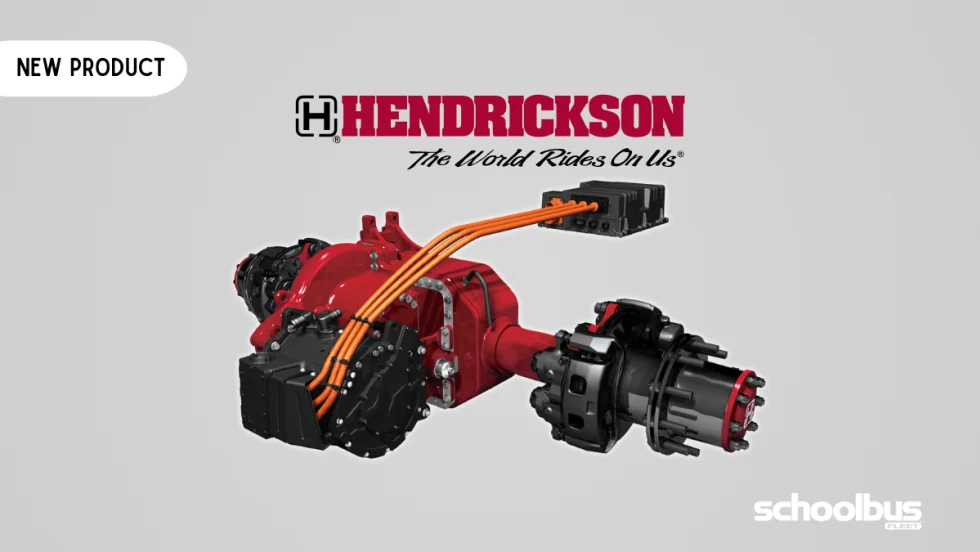
Hendrickson, Driventic Introduce New Electric Powertrain for School Buses
ELECTRAAX, the electrified, lightweight drive axle offers integrated ePowertrain efficiency and modular flexibility for Class 6–7 school bus use.
Read More →
The Mobility House Joins PowerFlex in Fleet Electrification Deal
The acquisition combines intelligent charging software, bidirectional charging expertise, and fleet electrification services to support the growing adoption of electric school buses across North America.
Read More →
Alt-Fuel Moves: Electric School Bus Investments Hit the Road
See which districts across the U.S. are putting electric school buses into service, expanding charging infrastructure, and planning the next phase of fleet electrification.
Read More →
With Fuel Volatility Ahead, School Districts Turn to Propane
While diesel prices peaked above $5 this spring, districts with propane autogas-powered fleets paid under $2 per gallon, according to PERC.
Read More →
EPA Unveils Proposed Changes to 2027 Heavy-Duty Engine Rules
The federal agency has proposed changes to next year’s targets that would eliminate DEF derates, ease warranty requirements, and retain current NOx emissions standards.
Read More →
Alt-Fuel Moves: EV Charging & Infrastructure Projects Gain Momentum
The latest developments include new funding, charging infrastructure, utility investments, and fleet technologies designed to support the transition to electric school buses nationwide.
Read More →