




What You Need to Know About Diesel Retrofit Equipment
The tailpipe emissions of school buses have been attracting greater attention each passing year. Advocacy groups have targeted school buses because of...
The tailpipe emissions of school buses have been attracting greater attention each passing year. Advocacy groups have targeted school buses because of dual concerns over ambient air quality and the health of schoolchildren who ride the bus.
New school buses feature cleaner-burning diesel engines that meet stringent federal emissions regulations. But there are hundreds of thousands of older school buses still plying the roads that aren’t as environmentally friendly as their late-model counterparts.
In the past few years the Environmental Protection Agency (EPA) has made millions of dollars available to school bus operators to retrofit older vehicles with pollution-reducing equipment and, in some cases, to purchase new buses.
Without this infusion of funding, it’s doubtful that school transportation providers would equip their buses with devices such as diesel particulate filters (DPFs) or diesel oxidation catalysts (DOCs). Not only is there an upfront cost to these units for purchase and installation, but in some cases, they require ultra-low sulfur diesel fuel (ULSD) to function properly. This fuel is more expensive than standard diesel and is unavailable in certain areas.
Funding in the pipeline
You can expect that more federal funding, as well as state and local funding, will be made available to school bus operators for pollution-control devices.
“There are all kinds of programs out there for this type of retrofitting,” says Fred Schmidt, sales director for Donaldson Co., a Minneapolis-based manufacturer of emissions-control technology for school buses that includes DPFs, DOCs and closed crankcase filtration systems.
In addition to EPA grant funding, other sources include Toyota Motor Corp.’s settlement for its violations of the EPA Clean Air Act. Under an agreement with the federal government, Toyota is providing $20 million in grants to school bus operators for emissions-reducing filters and ULSD. Schmidt says states such as New York, Washington and California also provide millions of dollars in funding for school bus retrofit projects.
“There’s all kinds of stuff going on,” Schmidt says. He estimates that 20,000 to 50,000 school buses already have been retrofitted with clean-air equipment. In the next three or four years, Schmidt predicts about a third of the nation’s approximately 440,000 school buses will be equipped with supplemental emissions-control devices.
To help you get a handle on the available options, here’s a summary of the equipment and how it works. {+PAGEBREAK+} Particulate filters
DPFs are ceramic devices that collect particulate matter in the exhaust stream. Precious metal catalysts oxidize the particulate matter into less harmful components.
According to the EPA, the combination of DPFs and ULSD (sulfur content less than 15 parts per million) can reduce emissions of particulate matter and, hydrocarbons and carbon monoxide by 60 to 90 percent.
Schmidt says the DPF can be used in school buses manufactured between 1994 and 2002 but warned that the engines need to produce high-temperature exhaust to break down the particulates. If this critical temperature is not reached, the filter will become clogged with ash and soot and require a special heat treatment to become viable again.
Schmidt says the general rule of thumb is that engines in the southern half of the United States will burn hot enough, but engines in the north won’t.
The application of the bus and its drive cycle can also affect the engine’s ability to generate enough heat to regenerate the filter. The DPF generally requires a cleaning each year as a standard part of its preventive maintenance.
Cost of the filters can range from $6,500 to $7,500, including installation. Retrofitting a fleet of 100 buses with the filter would cost between $650,000 and $750,000. In addition, installation time can vary from a few hours to as much as eight hours. The labor costs would also have to be figured into the bottom line.
DPFs require the use of ULSD, which costs between 8 and 25 cents per gallon more than standard diesel fuel, depending on the location. In June 2006, ULSD will become available nationwide (under an EPA mandate) with a reduced cost differential.
Oxidation catalysts
A DOC uses a chemical process similar to the DPF to break down pollutants in the exhaust stream into less harmful components. It contains a honeycomb-like structure that’s coated with a material that catalyzes a chemical reaction to reduce pollution.
A DOC is not as effective as a DPF in reducing emissions, but it cuts down particulate matter emissions by 20 percent. It also reduces hydrocarbon emissions by 50 percent and carbon monoxide by 40 percent.
And it’s cheaper. The cost for a DOC ranges from $1,000 to $2,000. Installation is easier, too, taking only one to two hours. Moreover, it doesn’t require high engine temperatures to operate effectively.
The other advantage of a DOC is that it allows the use of standard diesel fuel. The effectiveness of the device, however, can be improved with the use of ULSD.
According to the EPA, a DOC rarely requires maintenance and often comes with a 100,000- to 150,000-mile warranty. (Both DOCs and DPFs require the same warranty coverage.) The DOC’s life expectancy is seven to 15 years. {+PAGEBREAK+} Crankcase filters
Another method of reducing emissions is to combine the use of a DPF or a DOC with a crankcase filter.
While tailpipe emissions have been ratcheted down, crankcase emissions have been stable. Because of this imbalance, Donaldson’s Schmidt says the crankcase is becoming a relatively larger contributor of total emissions.
Adding a crankcase filter, Schmidt says, can reduce a significant portion of the remaining emissions and has other benefits. He says Donaldson’s Spiracleª Crankcase Filtration System also curtails diesel odor that can seep into the cab and spillage of motor oil.
The combination of Donaldson’s DOC and Spiracle unit is approved by the EPA as a verified retrofit technology. (For a list of the products verified for the EPA’s Voluntary Diesel Retrofit Program, visit www.epa.gov/otaq/retrofit/retroverifiedlist.htm.)
Other alternatives
The EPA also lists compressed natural gas (CNG) engines as a clean technology option. Natural gas engines are more common in transit buses than school buses, but California has subsidized the purchase of CNG school buses for the past decade or so. Currently, the only school buses that are available with CNG engines are the Type D (transit-style) vehicles.
According to the EPA, CNG engines that have been fitted with an oxidation catalyst can reduce particulate matter emissions by 70 to 90 percent and nitrogen oxide by 60 percent.
The EPA approximates the additional cost of a CNG engine at $30,000 more than a diesel engine. In addition, the installation of a full-service CNG fueling station can cost as much as $500,000.
Another emission-reducing option is biodiesel fuel. The EPA says the fuel, which combines soy oil with diesel, can reduce particulate matter emissions by 10 percent (20 percent biodiesel, 80 percent regular diesel) to 40 percent (100 percent biodiesel). At the same time, however, biodiesel increases nitrogen oxide emissions slightly. The cost differential is 15 to 30 cents a gallon for B20 and 75 cents to $1.50 a gallon for B100.
More Alternative Fuels
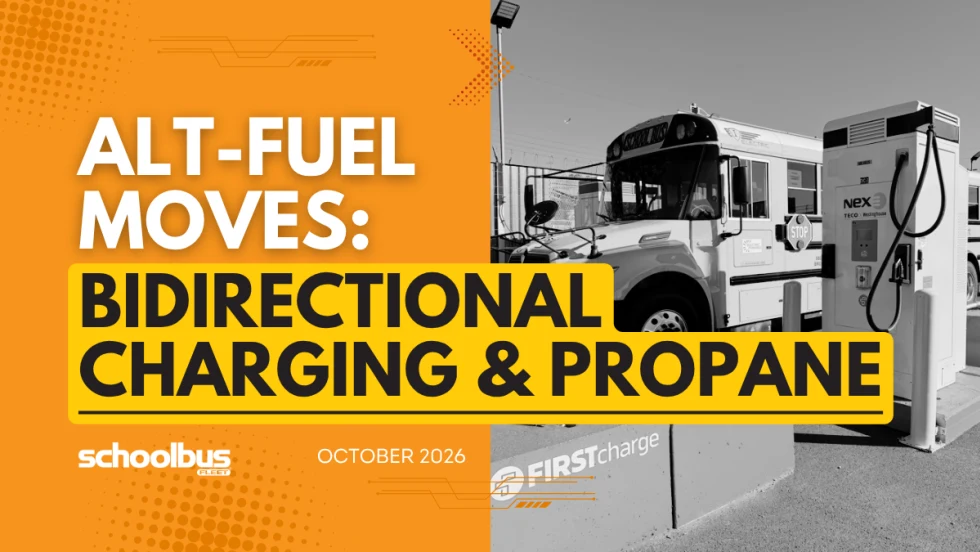
Alt-Fuel Moves: Electric Bus Rollouts, Bidirectional Charging & Propane Growth
See which fleets are adding electric and propane school buses as districts and operators invest in charging infrastructure, bidirectional technology, and alternative-fuel expansion.
Read More →
Nobody Told Diesel Prices They Were Supposed to Come Down
With diesel prices surging, school bus fleets have new reason to stress-test fuel costs, consider diversification, and calculate what each route really costs to operate.
Read More →
Why Gasoline School Buses Are Making a Comeback
Gasoline is gaining ground in full-size school buses. See how today’s options stack up against diesel on cost, maintenance, emissions, performance, and more.
Read More →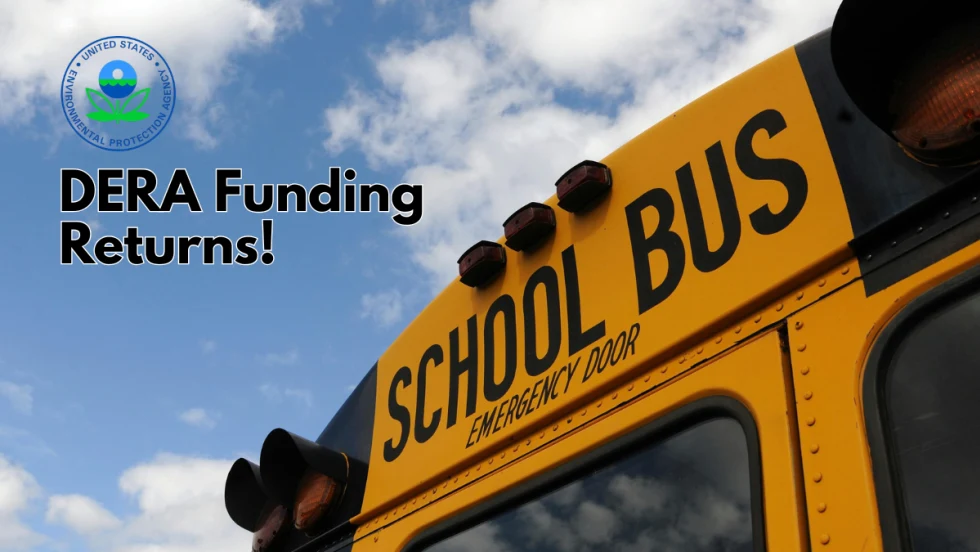
EPA Opens $180M DERA Funding Round for Diesel Upgrades
The 2026 Diesel Emissions Reduction Act program seeks applications from eligible organizations to accelerate the retirement of legacy diesel vehicles.
Read More →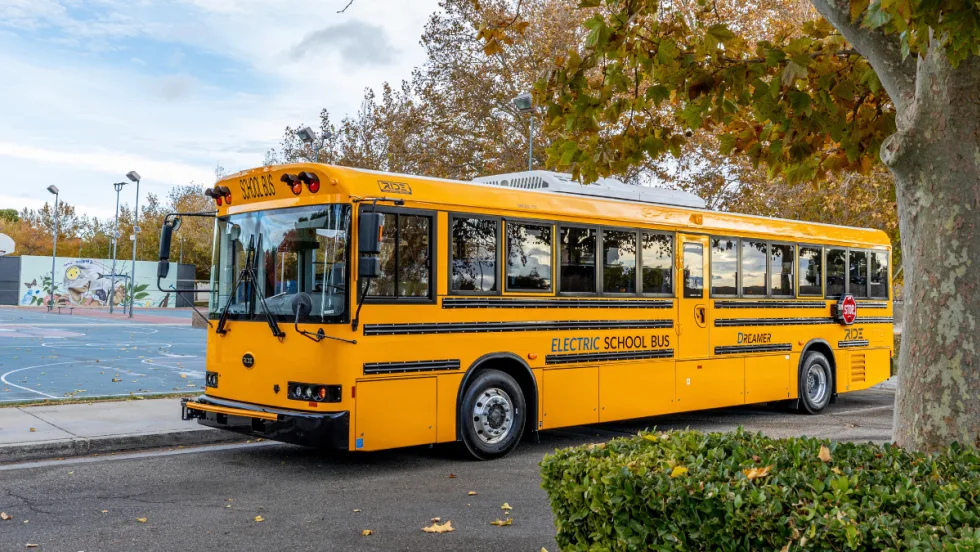
The Secret Life of an Electric School Bus Battery
Batteries change throughout years of daily routes, but degradation doesn’t necessarily mean the end. Here’s what operators should know about performance, safety, and second life.
Read More →
CALSTART and Forth Combine to Form Catalyst Mobility
The new name represents a renewed vision for the nonprofit focused on advancing clean, equitable, and affordable transportation solutions that move people and goods.
Read More →
Alt-Fuel Moves: New Buses, Charging Hubs & Real-World EV Testing
Propane and electric school bus deployments continue to grow as districts add new vehicles, expand charging infrastructure, and gather more real-world operating data.
Read More →
Fewer Electric School Bus Models Reshape the U.S. Market
WRI’s latest buyer’s guide points to a consolidating electric school bus market, but fewer options may reflect a maturing industry rather than fewer meaningful choices for school bus operators.
Read More →
The Fuel Budget You Can Actually Predict: How Propane Autogas Keeps Money in the Classroom
Learn how propane autogas helps school districts manage fuel costs with predictable pricing, lower maintenance, and reduced emissions from former transportation director Joel Stutheit.
Read More →
Hendrickson, Driventic Introduce New Electric Powertrain for School Buses
ELECTRAAX, the electrified, lightweight drive axle offers integrated ePowertrain efficiency and modular flexibility for Class 6–7 school bus use.
Read More →