




5 Steps to Improve Your Dispatch Operation
School bus operators recommend hiring dispatchers from within the department, establishing support networks and investing in the latest technology.
School Bus Fleet
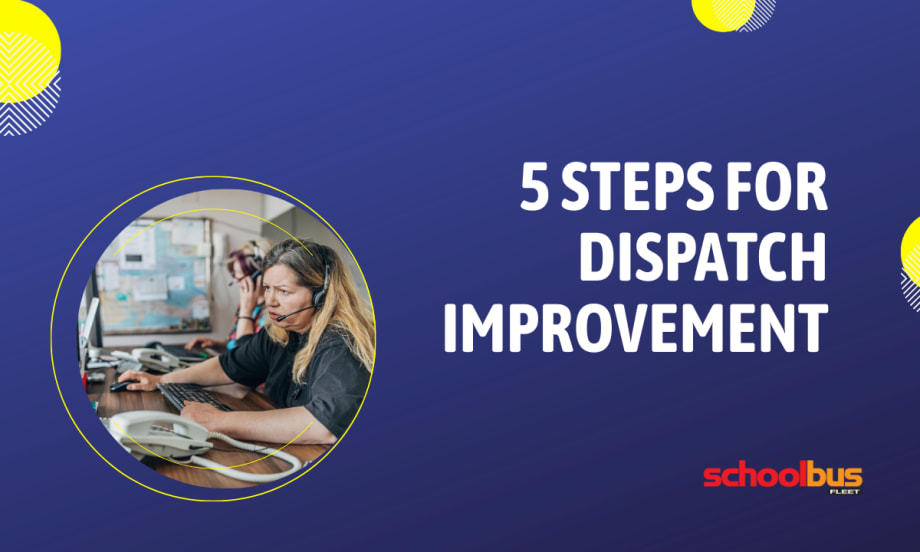
Dispatch procedures in the pupil transportation industry vary widely across the nation. At most operations, dispatchers field phone calls, make sure routes are staffed and maintain communication with drivers via two-way radio or cell phone. But their duties rarely end there.
Oftentimes, dispatchers take on the additional duties of routing, scheduling field trips, handling discipline problems and acting as a liaison between the transportation department and the outside world.
Dispatching is a job that requires a wide variety of skills and abilities, but for which there is very little specialized training. Compensation for the position also varies widely from operation to operation, with some dispatchers making managerial-level salaries and others earning less than a starting driver.
Whatever the compensation, it’s undeniable that the role of dispatcher is always important and never easy. With that in mind, we contacted transportation departments across the country to find ways in which you can improve your dispatch operation.
Here is what we found.
1. Be choosy in hiring
Kevin Harvill, head of dispatch for the Denton (Texas) Independent School District, which transports 6,000 students on 115 buses, says that dispatch is the hub of the transportation operation. “All the other offices in the building funnel everything through us to the drivers. The drivers kind of funnel everything back through us to the other offices,” he explains.
With a role at the center of the operation, it’s important that the dispatcher be properly suited for the job, he says. Harvill recommends hiring from the driver pool and looking for people who are reliable, conscientious and service-oriented. By choosing from your own staff, you have a better handle on their abilities because you’ve seen them work, he says.
However, gauging a driver’s ability to deal with the public can be tricky. “They [drivers] are out there doing their own thing, and I can’t watch them, so finding someone who knows how to work in customer service is hard to do,” he admits. Sometimes, he says, you just have to take a risk.
George Korn, vice president of Safeway Training and Transportation in Kingston, N.H., agrees that hiring the right person is vital. “The dispatchers set the tone for the drivers, who in turn interact with the parents. The attitude that the drivers have has basically formed the reputation that has allowed our company to grow,” he explains. Safeway Training and Transportation transports about 650 special-needs students with a fleet of just over 100 buses.
Derinda Spires, a dispatcher at Anaheim (Calif.) Union High School District, says that one of the most important qualities to look for in a dispatcher is compassion. “As a dispatcher, you have to remember that when someone is talking about a problem, it may seem very trivial to you, but it’s very important to them,” she says.
This ability to emphathize can be hard to identify in an interview, but it is essential to effective customer service.
2. Evaluate your training
Despite the stressful and chaotic nature of the position, few school bus operators provide dispatchers with specialized pre-service training. Many dispatchers are former drivers and understand the ins and outs of the operation. Some, however, come from an administrative background or from an entirely different industry and have little or no transportation experience.
What sort of preparation should a dispatcher undergo before being thrust into the heart of things? Rosann Van Lear, co-owner of Van Lear Equipment Inc. in Reading, Pa., asserts that no one should be allowed to dispatch unless they have first worked as a driver. At her operation, which employs 225 workers and transports 12,500 students, nine people are trained in dispatch. “Unless you’re licensed and know what it’s like to sit behind the wheel of a 72-passenger bus and be stuck at a dead-end street needing assistance, I don’t feel you’re qualified to tell someone how to try to maneuver out of a situation,” she says.
Many operations require dispatchers to attend driver in-service and/or managerial meetings, but few take dispatcher training to the level they do at most New York operations.
Dispatching is a civil service job in the state of New York, and all candidates must pass a civil service exam to qualify for the position. In addition, many operations require dispatchers to be certified driver trainers.
Sandra Crotty, former dispatcher for Liverpool Central School District in East Syracuse, N.Y., says dispatchers in her county are required to be both school bus drivers and driver instructors for a minimum amount of time before they can be hired as dispatchers. “Most school districts would not hire a dispatcher now unless they had their SBDI (School Bus Driver Instructor) certification and their 19-A (New York state examiner),” says Crotty.
3. Delegate effectively
It’s important to get to know your dispatchers and assign duties based on their strengths. Ed Puntervold, field operations specialist for Central West Transportation at the Dade County (Fla.) School Board, says his four dispatchers split chores based on their level of experience. The two newest dispatchers handle the radios and communicate with the drivers. The two veteran dispatchers assign drivers to routes. “They have the knowledge of the drivers — who is experienced, who can handle the routes better than the others and so on,” explains Puntervold.
As an operation grows, some duties may have to be redistributed. Anaheim’s Spires says that it’s important to be flexible and open to change. “When I first came here, we had specific rules about what times we could do things. The bigger we got, the more I realized that this wasn’t working anymore,” she says.
A growing operation requires adjustment. Some of a dispatcher’s duties may have to be delegated to other office personnel. At the Denton school district, dispatchers used to do the routing themselves. Now that the operation has nearly doubled in size, two people have been hired to handle routing, says Harvill.
Likewise, since Crotty left her dispatching position at Liverpool, they have replaced her with two new employees, while at the same time reducing the demands of the position.
In delegating duties, Harvill suggests tapping into your workers’ strengths. His newest dispatcher is a former department secretary who has connections with personnel all over the district. “That’s helped me in getting information from campuses about extracurricular trips and such. She knows the person to go straight to, whereas I might just call the campus and try a shotgun effect,” he explains.
4. Build support systems
Fielding hundreds of phone calls daily, listening to parent complaints, handling discipline problems, dealing with absentee drivers and dozens of other chores fall on the shoulders of the dispatcher. Though these services must be provided, there is no reason that the dispatcher alone should carry the burden.
Carefully assigned support personnel can easily remove some of the weight from the dispatcher’s shoulders. At Liverpool Schools, a former driver acts as a driver-student liaison, fielding parent complaints, reviewing bus videotapes and handling behavior problems. This frees the dispatcher from acting as the go-between on behavioral issues. “At one point the dispatcher used to handle complaints. That would require at least four phone calls,” says Crotty.
At the Clark County School District in Las Vegas, a crew of 15 transportation investigators handles behavioral problems on the district’s 1,035 school buses. The dispatchers field calls on behavioral matters and refer them to the appropriate investigator. “It’s a tremendous help to the dispatchers,” says Transportation Director Ron Despenza.
Dispatchers at Clark County receive extra support at the beginning of the school year from a 30-person temporary phone bank. “We get approximately 20,000 calls a day in this location alone during the first two or three days of school,” says Despenza. District clerks and temporary employees field phone calls and assist dispatchers for approximately one month, beginning two weeks before school starts.
5. Use technology
Though the investment is not at the top of most transportation departments’ wish lists, new vehicle tracking systems and communication technology can help streamline a dispatch operation. Most operators have turned to routing software of one sort or another, and an increasing number are taking advantage of GPS (global positioning system) technology to track their buses on the road. Others are simply looking to improve on the technology systems already in use by their fleets.
Operations such as the Dade County School Board, where GPS and other advanced technology is not in the near future, are looking to improve their existing equipment. Currently, Dade’s two-way radio system broadcasts all radio transmissions to all receivers at once. “If one person calls up and says something, everybody hears him. Also, you’ve got your clowns who’ll pick up the radio and start making funny noises,” says Puntervold.
The district will be switching to a new system that allows drivers and dispatchers to speak directly to each other, without other drivers hearing the exchange. Dispatchers will get a digital readout of driver calls and will be able to monitor driver use of the radios.
At Safeway Training and Transportation, operations systems are quite a bit more advanced. Korn’s dispatchers use an online fleet tracking system made by @Road Inc. in Fremont, Calif. Once or twice a month, they log on to the system to track a vehicle at the request of a parent. Korn, whose fleet transports exclusively special-needs students, says that the ability to track the buses gives parents peace of mind. “When you’re transporting children who are in many ways defenseless, I feel like I have a greater level of responsibility. It gives parents a great deal of comfort that we, in fact, know where their child is,” says Korn.
Korn will soon be piloting the Skymark Dispatch Vehicle Tracking System made by Cimarron Technologies in Escondido, Calif. This system will provide drivers with an in-vehicle panic button to use in the event of an emergency. It will also enable dispatchers to more closely monitor vehicles by recording every time they pass an electronic boundary. “On the computer, we draw an electronic fence around a school, and every time a vehicle goes in or out of that school, it crosses the fence and causes the computer to log its entry or exit time,” explains Korn.
Other technology employed by Korn’s dispatchers includes cell phones, a Nextel system and digital cameras.
Quick Answers
Hiring dispatchers from within the department ensures they are already familiar with the team's dynamics, operations, and challenges, which can lead to smoother communication and more efficient dispatch operations.
*Summarized by AI
More Management

Industry Moves: Companies Expand Fleet Service & EV Infrastructure Footprints
The new facilities and regional hubs could mean faster access to shop equipment, charging support, and transportation technology for fleet operators.
Read More →
Doing More With Less: How Transportation Directors Can Prioritize Safety Amid Budget Uncertainty
With diesel prices soaring and nearly one-third of transportation directors expecting budget cuts, maintaining student safety has never been more challenging. Download this guide to learn how leading districts are prioritizing risk, funding critical safety technology, and building stronger budget cases with data.
Read More →
Walton County Schools Adds Gatekeeper Stop-Arm Enforcement System
The Florida district will deploy Gatekeeper’s updated Student Protector technology, which now incorporates AI to improve video evidence.
Read More →

Zum Reaches 19 States With New York Expansion
The addition of the Empire State to the student transportation company's roster marks a growing expansion in the Northeast as it scales its tech and school bus services.
Read More →
First Student Updates Its Parent App
First View connects both yellow bus and alternative transportation, giving families one platform to track student trips for the new school year, with 15 languages supported.
Read More →
The Back-to-School Checklist Every Director Should Complete Before the First Bell
Help your transportation team start the school year strong with these tips for contingency planning, communication, fleet visibility, technology, and trip management.
Read More →
How a New York District Cut Nearly $1M in Transportation Costs While Expanding Bus Access
A data-driven overhaul with BusRight reduced Poughkeepsie City School District's planned routes from 26 to 17 while extending school bus service to about 1,200 additional students.
Read More →
Budgets Down, Enrollment Shifting: What the Data Says Districts Should Watch
School transportation departments face two converging challenges this year: tightening budgets and shifting enrollment. Most districts still address these issues separately, but the assumption that either trend will simplify operations is proving incorrect.
Read More →
These 8 School Transportation Companies Made the 2026 Inc. 5000 List
Find out which school transportation contractors, technology providers, and suppliers ranked among America’s fastest-growing private companies.
Read More →
The Link Between Emotional Intelligence and School Bus Safety
How can emotional intelligence help transportation pros navigate stress, manage change, and build stronger relationships? Listen to find out.
Read More →