




7 Strategies for Helping Special-Needs Students Adjust to COVID Safety Measures
National Pupil Transportation Associations Release Joint Statement on Federal Mask Mandate
The National Association for Pupil Transportation and the National Association of State Directors of Pupil Transportation Services clarify details on requirements for student transporters and offer guidance.

Nicole Schlosser・Former Executive Editor
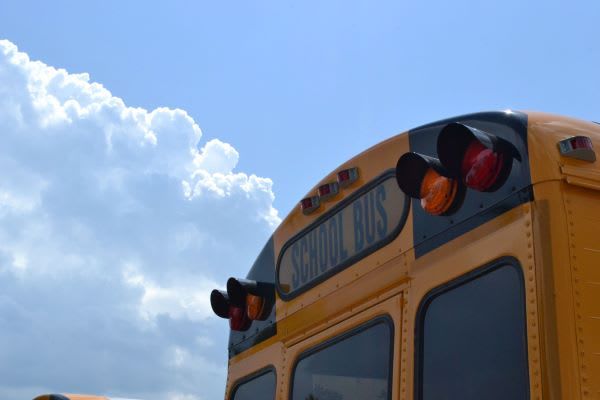
Two national pupil transportation associations issued a statement in response to the federal mask requirement for all U.S. public transportation system passengers, clarifying some details related to student transportation and offering guidance.
File photo
4 min to read
Two of the major national pupil transportation associations have issued a statement in response to the federal mask requirement for all U.S. public transportation system passengers, clarifying some details and offering guidance to student transporters.
The statement from the National Association for Pupil Transportation (NAPT) and the National Association of State Directors of Pupil Transportation Services (NASDPTS) noted that President Joe Biden signed on Jan. 21 an executive order that requires masks to be worn on U.S. airplanes, trains, vehicles, vessels, as well as “other means of transport,” and at public transportation hubs. The U.S. Centers for Disease Control and Prevention (CDC) issued the order for public transportation and it went into effect as of Tuesday.
School buses, the statement pointed out, are not mentioned specifically in the order (EO 13998), and “appear to be legally exempted under Section 5302 of title 49, United States Code (see Section 14 – Public Transportation, Subsection B, item 4) which is referenced in the EO as “all forms of transportation as defined.”
However, the CDC has stated, the associations said, that school buses are included. To that end, NAPT and NASDPTS provided in the statement some guidance for school districts, charter schools, private schools, and school transportation contractors, to consider.
See the considerations, which are listed in the statement from the associations, below:
• Consistent with our longstanding safety culture, school transportation operations and school bus providers should continue to participate — voluntarily or under federal, state, and local orders — in the national effort to control the COVID-19 pandemic. Wearing of masks by all school-related personnel and students, except when contradictory medical or special needs of individuals apply, is part of the prevention protocols that provide school bus drivers and other school personnel with protection they need and expect in doing their jobs.
The protocols also protect students and provide parents confidence in the health and safety of the school bus ride. This is the premise of the CDC’s COVID-19 safety guidelines.
• Last week, in issuing its recommendations for reopening schools, a blueprint for action that we strongly support, the CDC outlined school-related safety stipulations for doing so, including use of masks by students and school personnel.
• Within the [Jan. 30 executive order to implement EO 13998], the CDC noted that essential transportation conveyances include “Buses (which) bring America’s teachers and children to school.” Jason McDonald, CDC spokesperson, added: “School buses are included because the order applies to state and local conveyance operators (public schools), and passengers onboard such conveyances. The order also applies to private school buses because these are conveyances operated for a non-personal, commercial use.”
• The Transportation Security Administration clarified this week that its Security Directive implementing EO 13998 does not apply to school buses.
The associations added in the statement that they “strongly urge” all school systems to mandate the wearing of masks by all students and drivers for health and safety.
The statement also acknowledged that this is a practice most pupil transporters have already had in place since they began offering any type of bus service during the pandemic.
“We recognize that nearly all school bus operations that have resumed service transporting students have already been requiring mask wearing and other health protocols,” the statement said. “We are aware of and applaud these practices and the shared sacrifice of the nation’s dedicated student transportation professionals before, during, and after the pandemic.”
“School bus drivers are in direct line of exposure to children when they board and depart the school buses and sometimes to parents who come to the door of the school bus with their children,” Rick Grisham, NAPT’s president-elect, said in the statement. “Requiring all student riders to wear face masks is critical to driver safety and the safety of the children.”
“Millions of children ride the yellow bus to school and back home every day. We need every school bus driver to be healthy and able to drive their school bus to ensure that can happen,” added Patrick McManamon, president of NASDPTS. “Our associations and our members urge our nation’s leaders to remember these essential workers in their decision-making about resource allocation.”
Topics:Safety
More Safety

Geotab Expands Fleet Safety Tools With Video Coaching, Risk Insights
New safety and video capabilities aim to help fleet managers assess risk, support drivers, and take targeted action through video coaching, red-light violation detection, and more.
Read More →
How to Build a Better School Bus Driver Training Program
Is it time to strengthen your driver training? Here’s how to pick the right talent and improve recruitment, retention, and safety. This video is brought to you by IC Bus.
Read More →
Recent School Bus Accidents Leave 2 Dead, 2 Injured
Four school bus crashes in Florida, Illinois, and Georgia highlight risks in transportation lots, at bus stops, and during student loading and unloading.
Read More →

Sponsored•September 8, 2026
When Every Second Matters, Clarity Keeps Routes Moving
From routine delays to urgent incidents, strong communication practices help drivers, dispatchers, schools, and families respond with confidence.
Read More →
What Happens When a School Bus Catches Fire — and What Can Help
School bus fires are rare but can be devastating. Learn how advances in fire suppression and asset protection help fleets detect fires earlier, reduce damage, and improve safety.
Read More →
Geotab Launches Tool to Help Fleets Investigate Road Incidents
Geotab Investigations combines telematics data, video, documents, and other evidence to help fleets reconstruct incidents, resolve claims, and determine what happened.
Read More →
Texas Sixth Grader Wins 2026 National School Bus Safety Poster Contest
Sai Darshana Yekolu of Moseley Middle School in Prosper, Texas, was named the newest winner for her artwork, bringing the theme of “Safe Rides, Everyday Heroes” to life.
Read More →
Sponsored•August 27, 2026
Doing More With Less: How Transportation Directors Can Prioritize Safety Amid Budget Uncertainty
With diesel prices soaring and nearly one-third of transportation directors expecting budget cuts, maintaining student safety has never been more challenging. Download this guide to learn how leading districts are prioritizing risk, funding critical safety technology, and building stronger budget cases with data.
Read More →
Walton County Schools Adds Gatekeeper Stop-Arm Enforcement System
The Florida district will deploy Gatekeeper’s updated Student Protector technology, which now incorporates AI to improve video evidence.
Read More →
How To Build a More Secure School Bus Yard During and After Hours
As thefts and overnight security threats continue, school transportation leaders are combining stronger operational practices with AI-enabled surveillance to better protect buses, facilities, and staff.
Read More →