




Related: 7 Steps to Successfully Adopt an Electric School Bus
Canadian Dealer Marks First Order of IC Electric School Buses
Western Canada Bus in British Columbia will be the first to order 18 of the manufacturer's electric buses.
by SBF Staff
September 9, 2020
The order for Western Canada Bus will include 18 electric buses from IC Bus for 14 school districts. Shown here is an IC Bus chargE electric bus.
File photo courtesy IC Bus
3 min to read
Western Canada Bus in British Columbia will be the first to order electric school buses from IC Bus.
The order, which will include a total of 18 Type C electric buses, will be operated by 14 British Columbia school districts and funded through the annual British Columbia Provincial School Bus Standing Offer, according to a news release from IC Bus.
The order is one the most significant electric school bus orders placed from a sole province in Canada and is the first in British Columbia, according to the manufacturer. British Columbia has reportedly mandated a 40% greenhouse gas reduction for public fleets by 2030.
“We are very happy to announce the first order of our electric CE school bus,” said Trish Reed, vice president and general manager of IC Bus. “Electric is an exciting opportunity for IC Bus and we look forward to expanding our presence following this initial purchase.”
Robyn Stephenson, manager of transportation services at School District No. 22 in Vernon, British Columbia, is looking forward to putting two of the electric buses into service next year. The acquisition, according to IC Bus, builds upon past sustainability actions such as fuel-efficient driving techniques and bus route design, which has already contributed to a 30% drop in fuel consumption.
Over the past 18 months, IC Bus and NEXT — Navistar’s eMobility business unit — have been consulting with a group of transportation supervisors in British Columbia to obtain real-world operational data, route-profiles, and climate data.
“The group of transportation supervisors offered us unique insight by sharing their operational wants and needs while keeping in perspective the very diverse climate they work in, which will serve as a model for most of North America,” said Joel Landry, account manager for Western Canada Bus. “From mountain ranges to the coastal rainforest and the Okanagan desert, British Columbia presented a perfect challenge for the engineers, which will benefit us moving forward.”
NEXT’s consultative four C’s process, touching many areas outside of the vehicle, was key to the order, according to IC Bus. Throughout the meetings in British Columbia, it became clear the school districts would require charging infrastructure guidance. As such, each of the school districts are being provided with complimentary site planning services by NEXT’s charging solutions team. Collectively, the team is covering consulting, constructing, charging, and connecting — each of the four C's.
“Western Canada Bus is proud to partner with IC Bus in this exciting new chapter of school transportation in British Columbia,” said Doug De Hoop, vice president and general manager of Western Canada Bus. “We look forward to continuing to support our many clients through our extensive service network.”
IC Bus will begin delivery of the electric buses in 2021.
More Alternative Fuels
Bipartisan Bill Seeks to Extend Clean School Bus Program Through 2031
The proposed legislation would renew federal support for cleaner school buses as districts navigate funding uncertainty, rising fuel and infrastructure costs, and fleet replacement needs.
Read More →
Alt-Fuel Moves: Electric Bus Rollouts, Bidirectional Charging & Propane Growth
See which fleets are adding electric and propane school buses as districts and operators invest in charging infrastructure, bidirectional technology, and alternative-fuel expansion.
Read More →
Nobody Told Diesel Prices They Were Supposed to Come Down
With diesel prices surging, school bus fleets have new reason to stress-test fuel costs, consider diversification, and calculate what each route really costs to operate.
Read More →
Why Gasoline School Buses Are Making a Comeback
Gasoline is gaining ground in full-size school buses. See how today’s options stack up against diesel on cost, maintenance, emissions, performance, and more.
Read More →
EPA Opens $180M DERA Funding Round for Diesel Upgrades
The 2026 Diesel Emissions Reduction Act program seeks applications from eligible organizations to accelerate the retirement of legacy diesel vehicles.
Read More →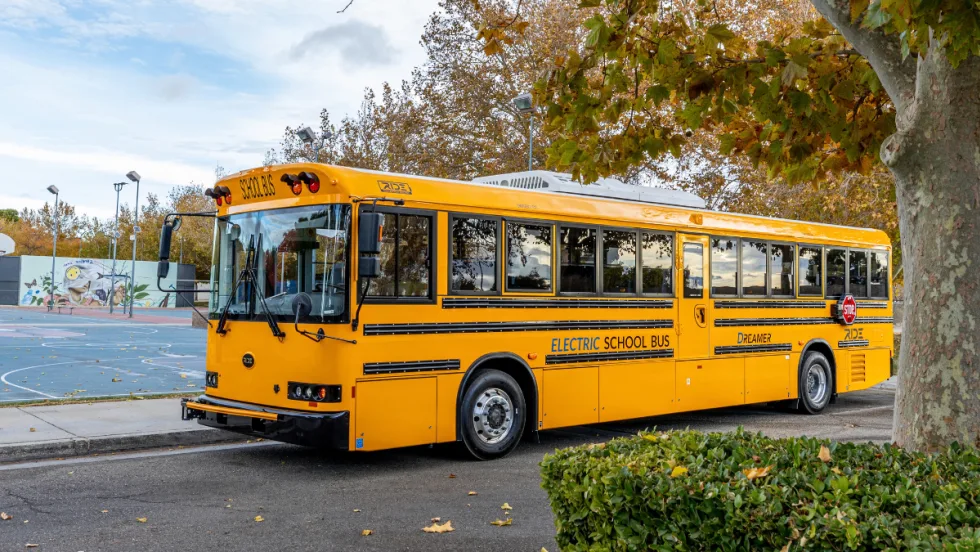
The Secret Life of an Electric School Bus Battery
Batteries change throughout years of daily routes, but degradation doesn’t necessarily mean the end. Here’s what operators should know about performance, safety, and second life.
Read More →
CALSTART and Forth Combine to Form Catalyst Mobility
The new name represents a renewed vision for the nonprofit focused on advancing clean, equitable, and affordable transportation solutions that move people and goods.
Read More →
Alt-Fuel Moves: New Buses, Charging Hubs & Real-World EV Testing
Propane and electric school bus deployments continue to grow as districts add new vehicles, expand charging infrastructure, and gather more real-world operating data.
Read More →
Fewer Electric School Bus Models Reshape the U.S. Market
WRI’s latest buyer’s guide points to a consolidating electric school bus market, but fewer options may reflect a maturing industry rather than fewer meaningful choices for school bus operators.
Read More →
The Fuel Budget You Can Actually Predict: How Propane Autogas Keeps Money in the Classroom
Learn how propane autogas helps school districts manage fuel costs with predictable pricing, lower maintenance, and reduced emissions from former transportation director Joel Stutheit.
Read More →