




Head Start: Ready — and waiting — for transportation rules
Despite the absence of clear-cut federal regulations, the landmark program for low-income children has been steadily improving its transportation safety at the local level
In 1995, Head Start — undeniably one of the federal government’s most successful and popular social-welfare programs — marked its 30th anniversary. Also in 1995, the federal government proposed detailed transportation standards for the program, which provides early education, health and nutrition services for low-income preschool children. It was the first time in the program’s history that the federal government had addressed transportation issues. In general terms, the proposal, published as a Notice of Proposed Rulemaking (NPRM) — a preliminary announcement and request for public comment — requires Head Start agencies to provide transportation comparable to the transportation services at the nation’s public schools. The NPRM essentially says, "Get rid of the 15-passenger vans, buy yellow school buses and get CDLs for your drivers," which is exactly what most Head Starts have been attempting for years.
How much will this cost?
But in some areas — seat belts, monitors and driver training, for example — the proposed standards go beyond public school transportation requirements. Local Head Start agencies viewed the NPRM with cautious optimism: The good news was that the federal government finally had offered clear standards for transporting Head Start children; the not-so-good news was that the standards being proposed were more than many Head Start agencies could afford. One example: The NPRM requires 40 hours of mandatory training for Head Start drivers; that’s more than most states require for their school bus drivers. As agencies funded entirely by grants and government subsidies, "that minimum of 40 hours will kill us," one Head Start transportation supervisor stated flatly. A letter to the national Head Start Bureau from the National Association of State Directors of Pupil Transportation Services also advised against the 40-hour training mandate as a potential budget-buster. "Local Head Starts’ basic response was, ‘Show me the money,’" says Ted Finlayson-Schueler, executive director of the Pupil Transportation Safety Institute in Syracuse, N.Y. "It’s pretty clear: If they’re going to be required to do a lot more for transportation, the money is going to have to come from the federal government. From what I've heard, the money will be there." That’s right, says Bill Wilson, program analyst for the Head Start Bureau, the federal agency that oversees the Head Start program. "We can’t require them to do what we can’t pay for." The NPRM, he added, contains a three-year phase-in period that begins only after the regulations are finalized. However, there is another catch: The government has no deadline for finalizing the regulations. Although most observers expected about a two-year wait between the NPRM and the Final Rule, it is now three years and still counting. "I've taken a believe-it-when-I- see-it attitude," says Finlayson-Schueler, whose organization offers school bus safety and training advice. "If you want to do something right, it takes time, but it's been frustrating for people in the field who hoped there really were going to be some guidelines." The delay, according to Wilson, is not due to government foot dragging. He explains that because local Head Start transportation is provided by such a wide range of public and private operators, the bureau has had to resolve the oversight concerns of several different government agencies. "There’s no point in forcing these issues down to the local level," he says. "We needed to resolve our differences here [at the federal level], so that we weren’t ignoring these issues and hoping the local communities would find a way to resolve them." Wilson says the bureau hopes to have a final draft of the regulations ready by October. In the interim, most Head Start operators are conforming to varying combinations of state school bus regulations, day-care licensing rules and federal motor vehicle safety standards. "At the state level, there's that broad spectrum - complete oversight to none at all," says Finlayson-Schueler. Many local agencies are using the NPRM as a blueprint, expecting that the Final Rule will be identical to the proposal.
[PAGEBREAK]
Collaboration is key
Local Head Starts haven’t been completely without federal guidance on transportation issues. The National Highway Traffic Safety Administration (NHTSA) has long considered Head Start vehicles to be "school buses," and NHTSA’s Highway Safety Program Guideline No. 17 has been the prevailing standard. In fact, Wilson says, Guideline 17, though lacking the force of law, was the basis for the NPRM. Although state regulations vary, the lack of definitive federal standards ironically is leading to a certain degree of uniformity, as Head Start agencies increasingly are networking to find the answers to their transportation questions. "This is the time to collaborate with the public schools," says Lil Edwards, a 26-year Head Start veteran and transportation director for Wabash Valley Human Services in Vincennes, Ind. "I do a lot of calling to transportation directors in the school corporations, asking for advice - and it has paid off." Schools have the most experience with school buses, Wabash reasons; why not tap into it? Julie Webster, assistant transportation coordinator at Family Development Services Inc. Head Start Program in Indianapolis, says her agency’s 40-bus fleet already is in compliance with the proposed regulations. Family Development Services — the nation’s oldest Head Start transportation system - has followed the most rigorous state regulations to ensure that, whatever regulations the federal government adopts, the agency will be in compliance. "We figured that out a long time ago," Webster says. "We have no regulations; we have no operating procedures; we’re going to have to create something, and the only thing available was the [state] Department of Transportation regulations. We were the first ones, and that’s the way we’ve always done it." Brenda Paradis, who supervises Head Start transportation in rural Mitchell, S.D., has tapped into a variety of outside resources. Although they cover only two Head Start routes, Paradis’ employees receive safety and first aid training at local hospitals, fire extinguisher training at the fire department and specialized driving instruction at the University of Milwaukee. Her agency, Palace Transportation, has also sought help from the state-level Dakota Transit Association. "We’re always on the phone with them because there aren’t a lot of providers in our state because it’s so rural," she says. "We have a very strong network." At the Warren County Head Start in upstate New York, Transportation Supervisor Mary Anne Schutz and Executive Director Mary Hafner have built a 16-bus fleet that, in terms of training and equipment, is virtually indistinguishable from those at the state’s public school districts. That’s because Schutz and Hafner believe the community should view Head Start as the first step in a natural progression through the school system: "These are your children. We've got them for one year, you'll have them for the next 13," Schutz explains. "Anything we can teach them now will make your job that much easier."
Greater accountability
Although local Head Starts are concerned about funding some of the NPRM’s equipment provisions, many agencies already were transforming their human resources in the direction of the NPRM. More agencies are requiring their drivers to have CDLs, as well as greater knowledge about their vehicles. "I don't expect the drivers to put on brake shoes, but I do expect them to be able to tell me where the exhaust system is and if it's leaking, if it needs a clamp or whatever," says Wabash Valley Human Services’ Edwards. "Our drivers are getting more training then the state requires, even what the regulations say," she adds. "I also require a defensive-driving class, CPR, first aid, maintenance of vehicles. I bring in mechanics, anyone I can find who deals with transportation and will do it on a freebie basis." Professionalism is increasing at local Head Start agencies. Many already have designated transportation directors, another change that the NPRM would mandate. And some local agencies are using fewer volunteers. Tami Cherry, transportation assistant at Snyder, Union, Mifflin Child Development Inc. in Mifflinburg, Penn., says her agency has stopped using volunteer monitors, in an effort at greater accountability. "We felt that if we were paying them we could ask more of them," she explains. Likewise, at Kids’ Corp. Inc., in Anchorage, Transportation Director Jose Balintona says volunteer monitors on the agency’s seven buses have been replaced by paid staff. "Only teachers and drivers ride our buses," he says. Balintona says his agency is doing everything it can to comply with the proposed regulations because "we know these things are coming down the pipeline."
Waiting: the hardest part
It’s ironic that transportation was not addressed when the Head Start program was created in 1965. Now, with more than 90 percent of the nearly 2,000 local Head Start agencies providing transportation services, and more than 10,000 Head Start vehicles on the road, the importance of the transportation component is undeniable. "We’re in desperate need of [the regulations], says Julie Schmitz, transportation coordinator at Community Services Inc. Head Start in Marysville, Mo. "It's something that's up in the air. You know that what they have in there is going to come down, but it's just having that definite yes or no."
More Safety
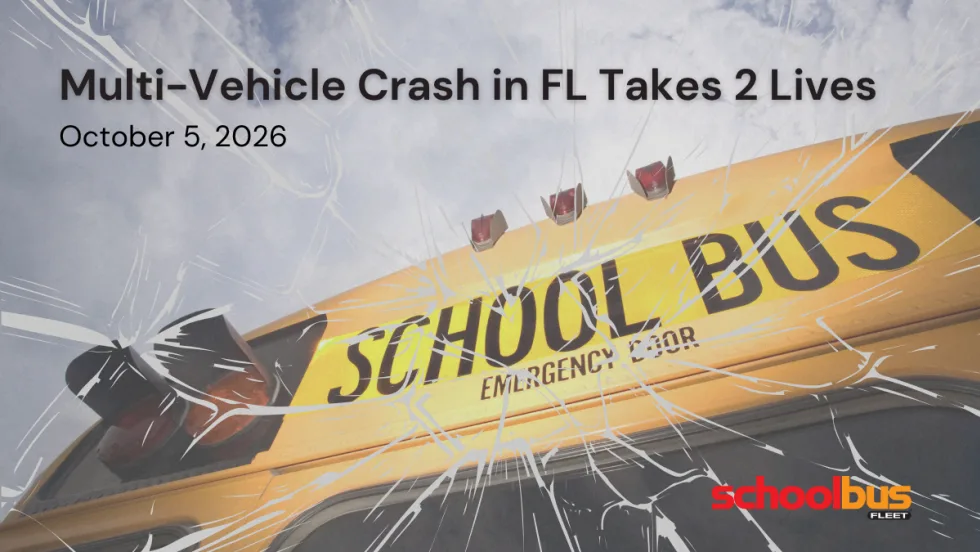
2 Killed, Dozens Injured in Florida School Bus Crash
A multi-vehicle collision caused a Polk County school bus carrying 37 students to overturn on its way to Winter Haven High School.
Read More →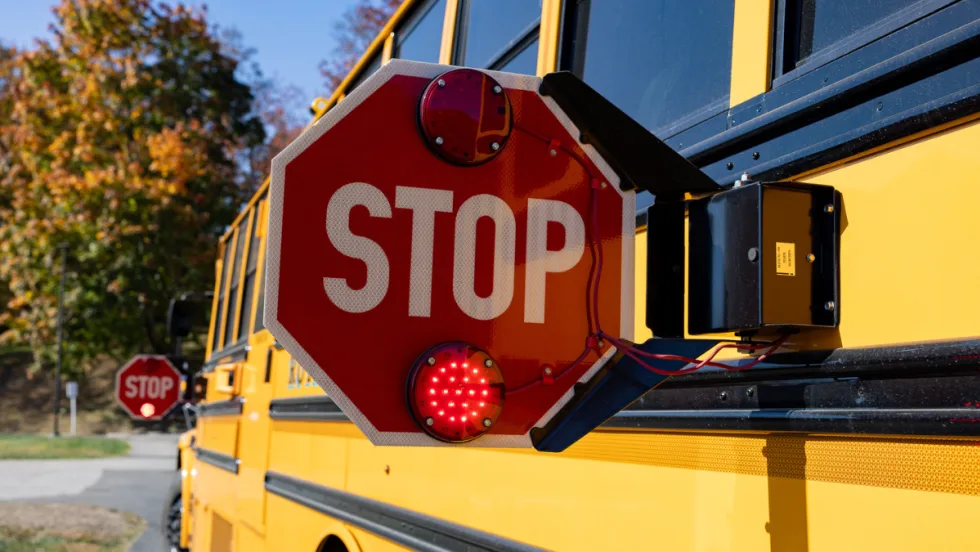
Illegal School Bus Passing Drops 24% in New York Districts
With fewer than 5% of citations involving repeat offenders, Westchester County officials said enforcement, education, and community partnerships are helping change driver behavior.
Read More →
School's Back. Here's What Happened to Traffic, Speeding & Distraction
What happens to traffic when school resumes? New data analysis examines changes in distracted driving, congestion, and speeding around schools.
Read More →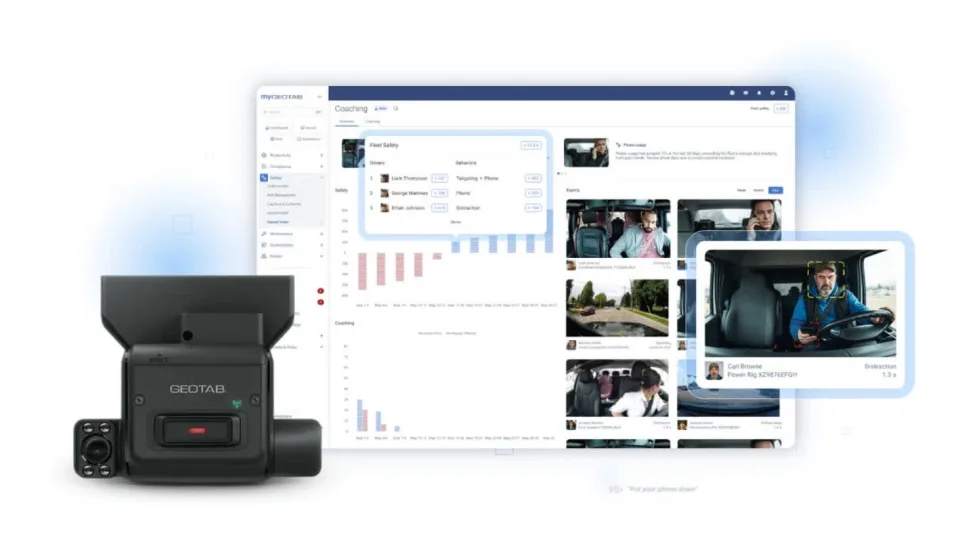
Geotab Expands Fleet Safety Tools With Video Coaching, Risk Insights
New safety and video capabilities aim to help fleet managers assess risk, support drivers, and take targeted action through video coaching, red-light violation detection, and more.
Read More →
How to Build a Better School Bus Driver Training Program
Is it time to strengthen your driver training? Here’s how to pick the right talent and improve recruitment, retention, and safety. This video is brought to you by IC Bus.
Read More →
Recent School Bus Accidents Leave 2 Dead, 2 Injured
Four school bus crashes in Florida, Illinois, and Georgia highlight risks in transportation lots, at bus stops, and during student loading and unloading.
Read More →
When Every Second Matters, Clarity Keeps Routes Moving
From routine delays to urgent incidents, strong communication practices help drivers, dispatchers, schools, and families respond with confidence.
Read More →
What Happens When a School Bus Catches Fire — and What Can Help
School bus fires are rare but can be devastating. Learn how advances in fire suppression and asset protection help fleets detect fires earlier, reduce damage, and improve safety.
Read More →
Geotab Launches Tool to Help Fleets Investigate Road Incidents
Geotab Investigations combines telematics data, video, documents, and other evidence to help fleets reconstruct incidents, resolve claims, and determine what happened.
Read More →
Texas Sixth Grader Wins 2026 National School Bus Safety Poster Contest
Sai Darshana Yekolu of Moseley Middle School in Prosper, Texas, was named the newest winner for her artwork, bringing the theme of “Safe Rides, Everyday Heroes” to life.
Read More →