




Taking Routing Data Beyond Routing
From key performance indicators to school redistricting to stop-arm violation tracking, there are many ways to benefit from the information in a computerized routing program.

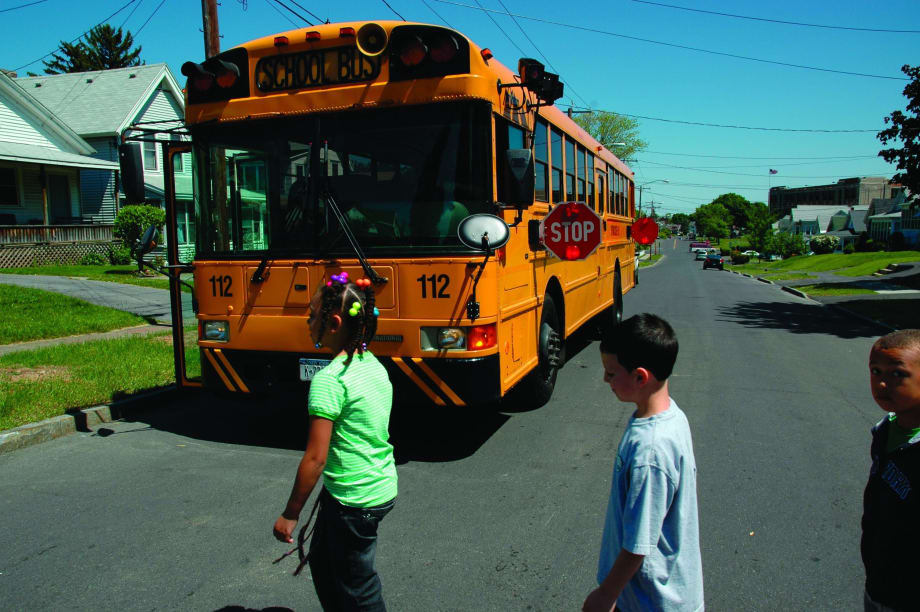
Make no mistake about it — providing school transportation is a business that demands not only service, but also efficiency. And the lion's share of the expense — driver salaries and fuel — is directly related to routing.
It is hard to imagine, at least in medium-to-large operations, that planning and analysis can take place without computerizing bus routes in some form or fashion. How can we demonstrate efficiency if we can't quantify it?
Street names, intersections, geographical locations, student names, addresses, school and grade along with bus stop locations and driving instructions: Once we accept that some electronic form of these transportation data is essential, then it's time to think out of the box and realize the multitude of uses for those data.
In a related article in the August 2011 issue, we discussed the importance of documenting route hazards, including information in the computer routing database that helps drivers be aware of potential dangers each time the bus is routed across a given road segment. Such documentation could have prevented the multiple-fatality Fox River Grove bus-train crash in 1995. It is essential that drivers be provided with the critical safety information needed to protect their student passengers.
Here, we will look at some other uses of the basic data needed to plan and manage school buses, ranging from data analysis to relatively new applications.
Key performance, service indicators
The Council of the Great City Schools published a self-initiated report titled "Managing for Results in America's Great City Schools 2009" (available at www.cgcs.org/publications/Managing_for_Results_1009.pdf). In this report, the council identified key performance indicators (KPIs) relevant to school transportation, recognizing that there is value in measuring performance over time and comparing performance with other school districts. Implicit in this recognition is the need for the school district to have the ability to generate the KPIs.
When Charlotte-Mecklenburg (N.C.) Schools, for instance, embarked on a project of consolidating bus stops to improve efficiency for 2009-10, a natural question was, "How much farther were students being asked to walk?" The answer, extracted from their computer routing system, was that the average home-to-stop distance increased by only .06 miles, while reducing buses operated by 87 and cutting stops by 10,000 — all without losing riders as a result of the change.
Because the district has tracked these data for years, doing a comparison following the implementation of a new policy was very straightforward. In fact, being able to project the impact of new policy decisions was a key factor in securing school board approval.
The North Carolina Department of Public Instruction has been publishing transportation service indicators for five years now. The publication — available at www.ncbussafety.org — allows school districts to gauge their own service from one year to the next and to compare with other districts in a given year. Average and longest school bus riding times, bus utilization and student distance from home to stop are among the data that are tracked.
The picture painted by these comparative data helps school superintendents, board members and transportation directors — not to mention the general public — truly understand the result of transportation plans and the policy decisions that drive those plans.
School redistricting
Lee Lindsay, transportation director for Lee County (Ala.) Schools, gave a related presentation to delegates at the 2011 Southeastern States Pupil Transportation Conference in Oklahoma City in June.

Lee Lindsay of Lee County (Ala.) Schools says he got into computer routing to make transportation as efficient as it could be, but other benefits quickly began to surface.
Lindsay explained that he got into computer routing because of doubts that the current system of transportation was as efficient as it could be. But other benefits quickly began to surface. The use of these key data as they related to school redistricting was invaluable as the school district underwent a major change in school/grade combinations.
Much the same, I was involved in convincing school superintendents to volunteer for North Carolina's computer routing program — before it became mandatory in 1992. While transportation directors easily recognized the importance of maintaining bus stops and routes electronically, the superintendents and local boards (who ultimately made the decision) were most attracted by the ability to graphically analyze the composition of students in various geographical regions of the district.
Locating sex offenders
A list of locations of convicted sex offenders is just as easy to geocode (address-match) as the list of students to be transported. Since this is of such concern to parents, it only makes sense to use those identified locations when establishing bus stops.
Several of today's routing systems include options to alert the routing specialist when a stop is created within a specified distance of a sex offender location, and they can even store specifics of the age and gender of the victims (e.g., "convicted of molesting females, ages 6 and 16").
Describing another side benefit of computer routing, Lindsay vividly recalls a conversation with a grandmother related to the bus stop to which her granddaughter would be assigned. "Thank you, thank you, thank you!" she said to him, after being made aware of the nearby location of a known sex offender.
Regardless of whether the bus stop can be moved or must be located nearby, the mere knowledge that the potential danger exists is important to parents and caregivers.
In light of a significantly mobile population in Lee County — exacerbated by the presence of a military base — there are many parents who are unaware that known sex offenders might be living nearby.
"Sharing this information is something that doesn't cost us extra money but is very, very much appreciated by parents," Lindsay says.
Stop-arm violations
The first national illegal stop-arm passing count, conducted by the National Association of State Directors of Pupil Transportation Services (NASDPTS), noted nearly 77,000 motorists illegally passing about 112,000 school buses participating in the project. This is a national problem that can be addressed locally.
By definition, stop-arm violations take place at bus stops. Routing systems maintain location information on bus stops, so the process of generating maps showing incidents reported by drivers is quite simple. These maps can then be passed along to local law enforcement agencies for their use in stepped-up enforcement, school bus ride-alongs, etc.
Knowing where the problems occur is step one. Sharing that information is a big step two.
Sharing information
In fact, there is so much information in a computer routing system that it seems a real shame to use it for a single purpose. There is a good deal of effort required to get a routing system up and running, calibrated and reliable. So why stop there?
The performance indicators, redistricting, sex offenders and illegal-passing examples described here are just a few applications where these basic — yet extensive — data can be used and shared for the overall benefit of transportation departments and the students they serve.
More Safety

How to Build a Better School Bus Driver Training Program
Is it time to strengthen your driver training? Here’s how to pick the right talent and improve recruitment, retention, and safety. This video is brought to you by IC Bus.
Read More →
Recent School Bus Accidents Leave 2 Dead, 2 Injured
Four school bus crashes in Florida, Illinois, and Georgia highlight risks in transportation lots, at bus stops, and during student loading and unloading.
Read More →
When Every Second Matters, Clarity Keeps Routes Moving
From routine delays to urgent incidents, strong communication practices help drivers, dispatchers, schools, and families respond with confidence.
Read More →

What Happens When a School Bus Catches Fire — and What Can Help
School bus fires are rare but can be devastating. Learn how advances in fire suppression and asset protection help fleets detect fires earlier, reduce damage, and improve safety.
Read More →
Geotab Launches Tool to Help Fleets Investigate Road Incidents
Geotab Investigations combines telematics data, video, documents, and other evidence to help fleets reconstruct incidents, resolve claims, and determine what happened.
Read More →
Texas Sixth Grader Wins 2026 National School Bus Safety Poster Contest
Sai Darshana Yekolu of Moseley Middle School in Prosper, Texas, was named the newest winner for her artwork, bringing the theme of “Safe Rides, Everyday Heroes” to life.
Read More →
Doing More With Less: How Transportation Directors Can Prioritize Safety Amid Budget Uncertainty
With diesel prices soaring and nearly one-third of transportation directors expecting budget cuts, maintaining student safety has never been more challenging. Download this guide to learn how leading districts are prioritizing risk, funding critical safety technology, and building stronger budget cases with data.
Read More →
Walton County Schools Adds Gatekeeper Stop-Arm Enforcement System
The Florida district will deploy Gatekeeper’s updated Student Protector technology, which now incorporates AI to improve video evidence.
Read More →
How To Build a More Secure School Bus Yard During and After Hours
As thefts and overnight security threats continue, school transportation leaders are combining stronger operational practices with AI-enabled surveillance to better protect buses, facilities, and staff.
Read More →
FMCSA Names New Chief Safety Officer: What School Bus Operators Should Know
Steve Dowling is set to lead the federal agency's efforts to advance commercial motor vehicle safety and reduce crashes, fatalities, and injuries on the nation's roadways.
Read More →