




Wagner SprayTech Announces Disinfectant Sprayer Series
Each model creates a pattern that effectively distributes the spray at the appropriate cover rate to kill bacteria, helping business owners and cleaning professionals disinfect with confidence.
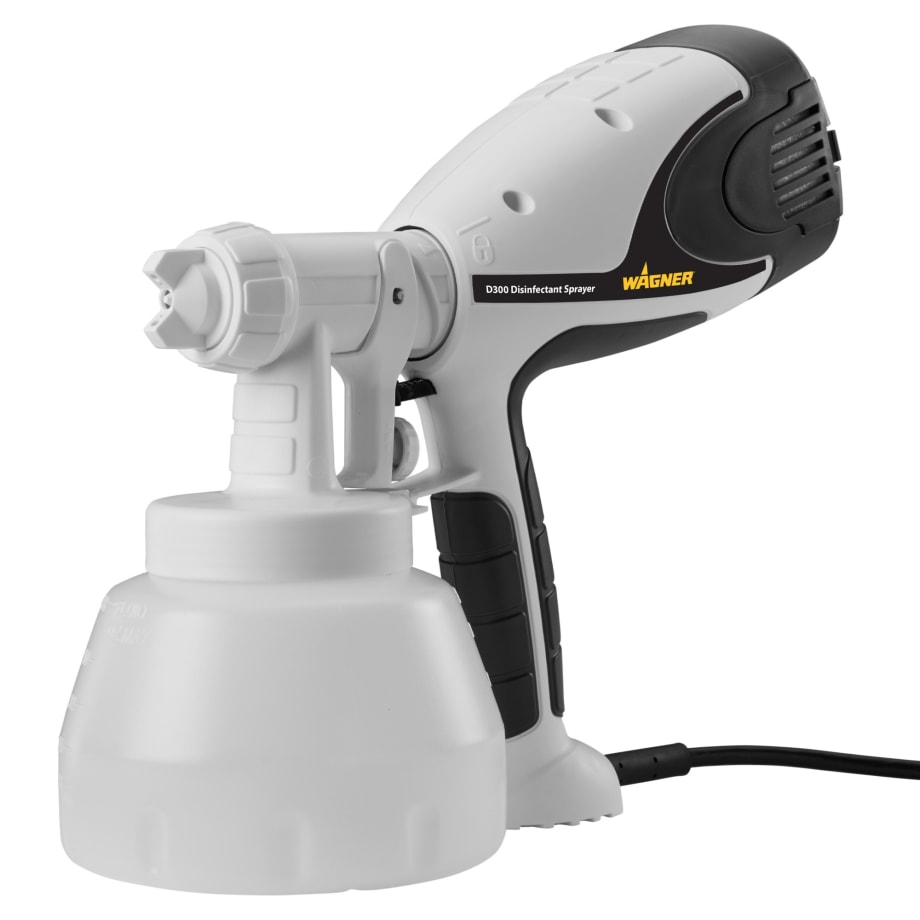
The series includes sprayers sized for a wide variety of applications and spaces ranging from small to large.
Wagner
Wagner SprayTech released a new series of four disinfectant sprayers, designed to quickly and effectively apply water-based EPA List N disinfectants, sanitizers, and deodorizers, while ensuring consistent and complete coverage.
Each model creates a pattern that effectively distributes the spray at the appropriate cover rate to kill bacteria, helping business owners and cleaning professionals disinfect with confidence.
The series includes sprayers sized for a wide variety of applications and spaces ranging from small to large. Examples include restrooms, cubicles, auto interiors, waiting rooms, children’s play and learning areas, locker rooms, exercise rooms and gym spaces, bleachers, stadiums and arenas, movie theaters, public transportation, and other public areas.
D300 Handheld Disinfectant Sprayer
For small- to medium-sized spaces
Sprays up to 200 ml (6.5 oz) per minute; two cup sizes to match project size needs
MSRP $149
D500 Stationary Disinfectant Sprayer
For medium-sized spaces
Sprays up to 200 ml (6.5 oz) per minute; two cup sizes to match project size needs
Turbine sits on the ground to reduce user fatigue
15-foot hose for 30-foot working radius
MSRP $249
D700 High Efficiency Airless Disinfectant Sprayer
For medium- to large-sized spaces
Sprays up to .29 gallons per minute pulling from a one- or five-gallon bucket
50-foot hose for 100-foot working area
High Efficiency Airless™ technology for advanced control and reduced material waste
MSRP $449
D800 High Efficiency Airless Disinfectant Sprayer
For large-sized spaces
Sprays up to .29 gallons per minute pulling from a one- or five-gallon bucket
50-foot hose for 100-foot working area
High Efficiency Airless™ technology for advanced control and reduced material waste
Portable cart design makes it easy to wheel to different locations
MSRP $549
The disinfectant sprayers are available through online retailers.
Originally posted on Metro
More Safety

2 Killed, Dozens Injured in Florida School Bus Crash
A multi-vehicle collision caused a Polk County school bus carrying 37 students to overturn on its way to Winter Haven High School.
Read More →
Illegal School Bus Passing Drops 24% in New York Districts
With fewer than 5% of citations involving repeat offenders, Westchester County officials said enforcement, education, and community partnerships are helping change driver behavior.
Read More →
School's Back. Here's What Happened to Traffic, Speeding & Distraction
What happens to traffic when school resumes? New data analysis examines changes in distracted driving, congestion, and speeding around schools.
Read More →
Geotab Expands Fleet Safety Tools With Video Coaching, Risk Insights
New safety and video capabilities aim to help fleet managers assess risk, support drivers, and take targeted action through video coaching, red-light violation detection, and more.
Read More →
How to Build a Better School Bus Driver Training Program
Is it time to strengthen your driver training? Here’s how to pick the right talent and improve recruitment, retention, and safety. This video is brought to you by IC Bus.
Read More →
Recent School Bus Accidents Leave 2 Dead, 2 Injured
Four school bus crashes in Florida, Illinois, and Georgia highlight risks in transportation lots, at bus stops, and during student loading and unloading.
Read More →
When Every Second Matters, Clarity Keeps Routes Moving
From routine delays to urgent incidents, strong communication practices help drivers, dispatchers, schools, and families respond with confidence.
Read More →
What Happens When a School Bus Catches Fire — and What Can Help
School bus fires are rare but can be devastating. Learn how advances in fire suppression and asset protection help fleets detect fires earlier, reduce damage, and improve safety.
Read More →
Geotab Launches Tool to Help Fleets Investigate Road Incidents
Geotab Investigations combines telematics data, video, documents, and other evidence to help fleets reconstruct incidents, resolve claims, and determine what happened.
Read More →
Texas Sixth Grader Wins 2026 National School Bus Safety Poster Contest
Sai Darshana Yekolu of Moseley Middle School in Prosper, Texas, was named the newest winner for her artwork, bringing the theme of “Safe Rides, Everyday Heroes” to life.
Read More →