




Future Proof Your Electric Bus Charging with Vehicle-to-Grid
V2G Hub Planned for Blue Bird Factory
The 125kW vehicle-to-grid stations will form what is described as a "first-of-its-kind V2G hub" at Blue Bird's facility in Fort Valley, Ga.
by SBF Staff
November 10, 2021
Nuvve plans to install up to 200 V2G DC fast-charging stations to charge and discharge Blue Bird electric buses coming off the production line in Georgia.
Photo: Blue Bird
3 min to read
Clean-tech company Nuuve plans to install and commission as many as 200 fast-charging stations with dual dispensers at Blue Bird Corporation's delivery facility in Fort Valley, Ga.
The 125kW vehicle-to-grid stations will form what is described as a"first of its kind V2G hub" that's expected to optimize the use of electric buses and allow them to act as energy storage assets while they wait to be transported around the country. Hubs like this help fulfill Nuuve's goal to provide storage solutions and capacity for local grids.
This hub will be created in the ready-for-delivery lot where electric buses are stored after leaving the production line. Blue Bird Vision Type C and All American Type D buses currently come standard with Nuuve V2G integration for bidirectional charging. The buses will be plugged in as they come off the line and await pickup for delivery to dealerships and fleet customers. Rather than leaving electric buses idle at or near full battery capacity or almost empty - factors that can degrade battery storage potential - Nuuve's V2G software platform will charge and discharge energy rates optimal for battery health, and will charge the buses when energy rates are low to minimize utility bills.
"This is another exciting step for Blue Bird and our partner, Nuvve, as we lead the journey of school bus fleet electrification while also optimizing how that fleet integrates with the grid to efficiently use energy and enhance the resiliency of the country's electricity supply," said Trevor Rudderham, senior vice president for electrification at Blue Bird. "Blue Bird is already at the forefront of V2G and this makes further use of the standard bidirectional capability on every EV we sell."
Additionally, Nuvve's system will enable the buses to store energy and aggregate multiple, parked buses in a virtual power plant (VPP) to create capacity of up to 25 MW. This will provide power back to the grid at critical times that could help reduce the peak consumption of more than 10,000 homes.
"This V2G hub will serve as a blueprint for large-scale school bus fleet deployments across the country," said Gregory Poilasne, chairman and CEO of Nuvve. "In order to meet climate challenges, we must introduce electric vehicles to the grid in a smart, integrated way and our intelligent energy platform allows us to do that by transforming these vehicles into energy storage assets. We are grateful for electrification partners like Blue Bird who see the benefits V2G can provide to fleet owners and communities."
Nuvve plans to execute agreements with local utilities to take advantage of what V2G offers including ratepayer benefits from peak demand reduction, portfolio flexibility, and system efficiencies from the capacity provided by the Blue Bird buses.
Site development is planned to begin before the end of the year.
More Alternative Fuels
Bipartisan Bill Seeks to Extend Clean School Bus Program Through 2031
The proposed legislation would renew federal support for cleaner school buses as districts navigate funding uncertainty, rising fuel and infrastructure costs, and fleet replacement needs.
Read More →
Alt-Fuel Moves: Electric Bus Rollouts, Bidirectional Charging & Propane Growth
See which fleets are adding electric and propane school buses as districts and operators invest in charging infrastructure, bidirectional technology, and alternative-fuel expansion.
Read More →
Nobody Told Diesel Prices They Were Supposed to Come Down
With diesel prices surging, school bus fleets have new reason to stress-test fuel costs, consider diversification, and calculate what each route really costs to operate.
Read More →
Why Gasoline School Buses Are Making a Comeback
Gasoline is gaining ground in full-size school buses. See how today’s options stack up against diesel on cost, maintenance, emissions, performance, and more.
Read More →
EPA Opens $180M DERA Funding Round for Diesel Upgrades
The 2026 Diesel Emissions Reduction Act program seeks applications from eligible organizations to accelerate the retirement of legacy diesel vehicles.
Read More →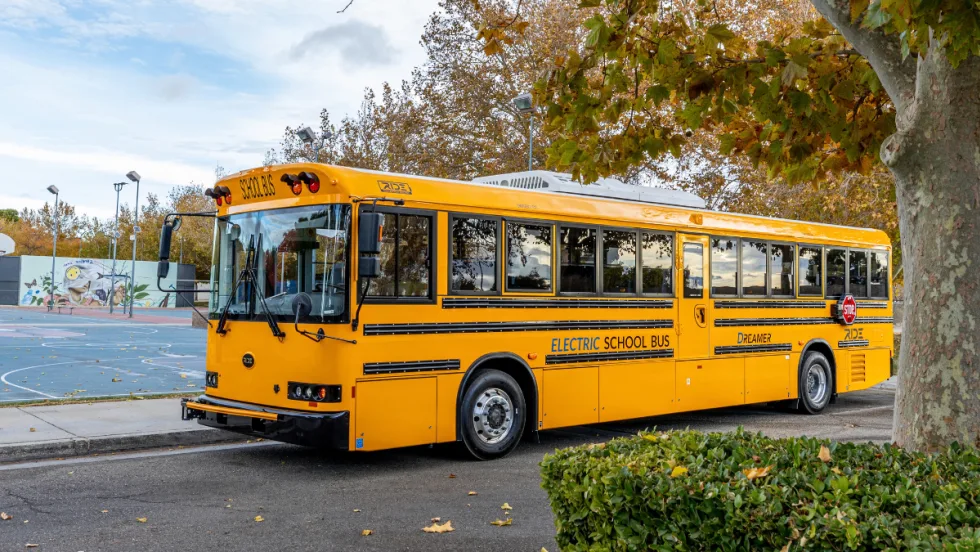
The Secret Life of an Electric School Bus Battery
Batteries change throughout years of daily routes, but degradation doesn’t necessarily mean the end. Here’s what operators should know about performance, safety, and second life.
Read More →
CALSTART and Forth Combine to Form Catalyst Mobility
The new name represents a renewed vision for the nonprofit focused on advancing clean, equitable, and affordable transportation solutions that move people and goods.
Read More →
Alt-Fuel Moves: New Buses, Charging Hubs & Real-World EV Testing
Propane and electric school bus deployments continue to grow as districts add new vehicles, expand charging infrastructure, and gather more real-world operating data.
Read More →
Fewer Electric School Bus Models Reshape the U.S. Market
WRI’s latest buyer’s guide points to a consolidating electric school bus market, but fewer options may reflect a maturing industry rather than fewer meaningful choices for school bus operators.
Read More →
The Fuel Budget You Can Actually Predict: How Propane Autogas Keeps Money in the Classroom
Learn how propane autogas helps school districts manage fuel costs with predictable pricing, lower maintenance, and reduced emissions from former transportation director Joel Stutheit.
Read More →