




Using NHTSA Funding to Boost School Bus Safety Projects
Under the agency's Highway Safety Program Section 402, each state receives grant funding for projects related to their annual highway safety plan, which could include school bus safety projects.

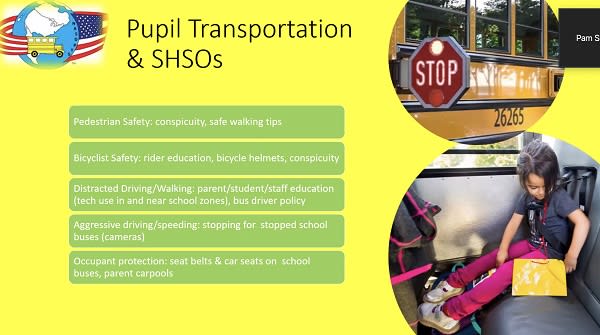
Pupil transportation leaders can work with their state highway safety offices (SHSOs) to fund projects related to school bus safety.
Screenshot taken from virtual workshop held by National Association of State Directors of Pupil Transportation Services
Every year the National Highway Traffic Safety Administration (NHTSA) administers funding to states for their annual highway safety plans; however, only a portion of those funds are allocated to projects dedicated to improving school bus safety.
On Tuesday, during a National Association of State Directors of Pupil Transportation Services virtual workshop, two industry representatives shared how pupil transportation leaders could change that — citing strategies for building connections with state highway safety offices (SHSOs) and assessing the ways in which funding opportunities could be used.
Derek Graham, a consultant and former state director of pupil transportation in North Carolina, focused on the importance of attendees fostering a relationship with their SHSO, as it is often the division who oversees the distribution of funding received from NHTSA’s Highway Safety Program Section 402.
Section 402, which provides grants for each state’s annual highway safety plan, according to Graham, has highlighted significant gaps in funding between school transportation and the rest of highway safety in most states from 2017 to 2020.
During that period, approximately five to six states received annual funding for school bus safety-related projects. Those projects included safety education resources, stop-arm enforcement programs, and various training initiatives.
“It’s not just about grabbing some money, but being able to do some things that you aren’t normally funded to do where you can focus on safety,” Graham said. “Very rarely would the highway safety office approach any of us, even if they know that someone is in charge of school transportation."
He added that that is one of the reasons why state pupil transportation directors need to get involved.
Pam Shadel Fischer, senior director of external engagement for the Governors Highway Safety Association, echoed similar sentiments, providing background on how pupil transporters can know if their safety project is eligible for grant funding.
Based on a diagram she used during a grant training presentation for the Nevada Office of Traffic Highway Safety last year, Fischer detailed a three-step grant eligibility test:
As the former director of New Jersey’s Division of Highway Traffic Safety, Fischer concluded the workshop by highlighting some of the program areas that she has seen/sees potential for pupil transportation in working with SHSOs. Those program areas included:
Pedestrian Safety: conspicuity, safe walking tips.
Bicyclist Safety: rider education, bicycle helmets, conspicuity.
Distracted Driving/walking: parent/student/staff education (tech use in and near school zones), bus driver policy.
Aggressive driving/speeding: stopping for stopped school buses (stop-arm cameras).
Occupant protection: seat belts and car seats on buses, parent carpools.
The underlying factor for all these program areas is “You’ve got to have relevant data, crash data, citation data, observational data such as video from school bus cameras or video surveillance in school zones, and surveys of parents and students,” Fischer explained. “You need these elements to really back up the funding you’re asking for.”
For FY2020, a total of $279.6 million in funding was available for NHTSA's Highway Traffic Safety Program Section 402, authorized by the Fixing America’s Surface Transportation Act, also known as the FAST Act.
While the current FAST Act expired on Sept. 30, President Donald Trump signed a continuation resolution on Oct. 1 that would extend the legislation (and funding) for one more year, according to Fischer. She added that Congress is currently working on the next reauthorization to determine future highway safety funding opportunities, both at the state and local level.
More Safety
2 Killed, Dozens Injured in Florida School Bus Crash
A multi-vehicle collision caused a Polk County school bus carrying 37 students to overturn on its way to Winter Haven High School.
Read More →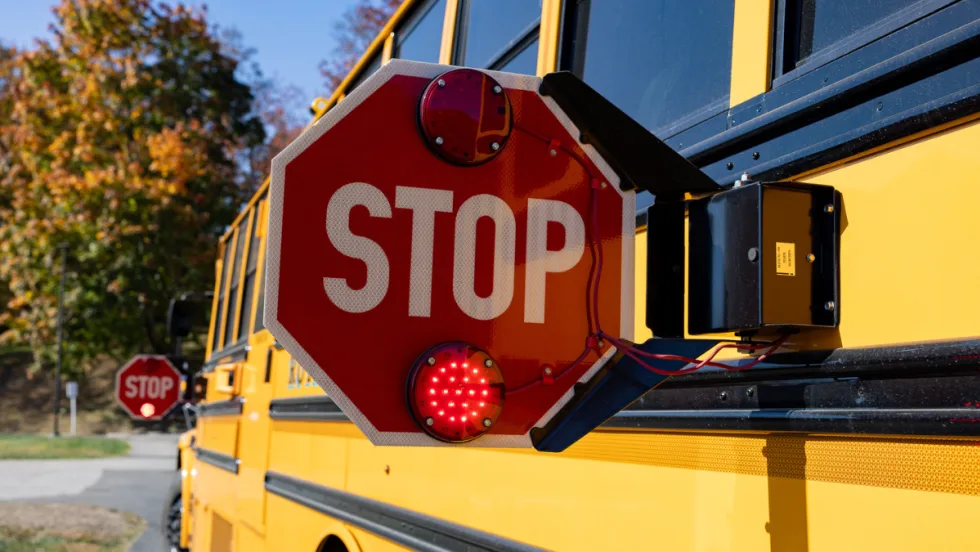
Illegal School Bus Passing Drops 24% in New York Districts
With fewer than 5% of citations involving repeat offenders, Westchester County officials said enforcement, education, and community partnerships are helping change driver behavior.
Read More →
School's Back. Here's What Happened to Traffic, Speeding & Distraction
What happens to traffic when school resumes? New data analysis examines changes in distracted driving, congestion, and speeding around schools.
Read More →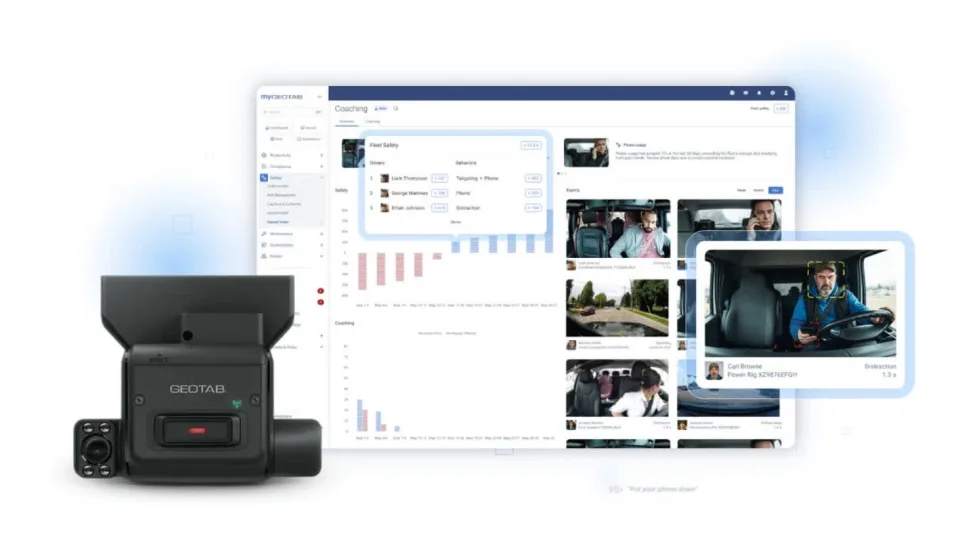
Geotab Expands Fleet Safety Tools With Video Coaching, Risk Insights
New safety and video capabilities aim to help fleet managers assess risk, support drivers, and take targeted action through video coaching, red-light violation detection, and more.
Read More →
How to Build a Better School Bus Driver Training Program
Is it time to strengthen your driver training? Here’s how to pick the right talent and improve recruitment, retention, and safety. This video is brought to you by IC Bus.
Read More →
Recent School Bus Accidents Leave 2 Dead, 2 Injured
Four school bus crashes in Florida, Illinois, and Georgia highlight risks in transportation lots, at bus stops, and during student loading and unloading.
Read More →
When Every Second Matters, Clarity Keeps Routes Moving
From routine delays to urgent incidents, strong communication practices help drivers, dispatchers, schools, and families respond with confidence.
Read More →
What Happens When a School Bus Catches Fire — and What Can Help
School bus fires are rare but can be devastating. Learn how advances in fire suppression and asset protection help fleets detect fires earlier, reduce damage, and improve safety.
Read More →
Geotab Launches Tool to Help Fleets Investigate Road Incidents
Geotab Investigations combines telematics data, video, documents, and other evidence to help fleets reconstruct incidents, resolve claims, and determine what happened.
Read More →
Texas Sixth Grader Wins 2026 National School Bus Safety Poster Contest
Sai Darshana Yekolu of Moseley Middle School in Prosper, Texas, was named the newest winner for her artwork, bringing the theme of “Safe Rides, Everyday Heroes” to life.
Read More →