





Other News: Thomas Built Buses Unveils Its First Electric Type D Bus
Thomas Built Buses to Increase Type A Minotour Production by 50%
The OEM's High Point, N.C. plant triples in space to accommodate the expansion of small school bus manufacturing.
December 8, 2025
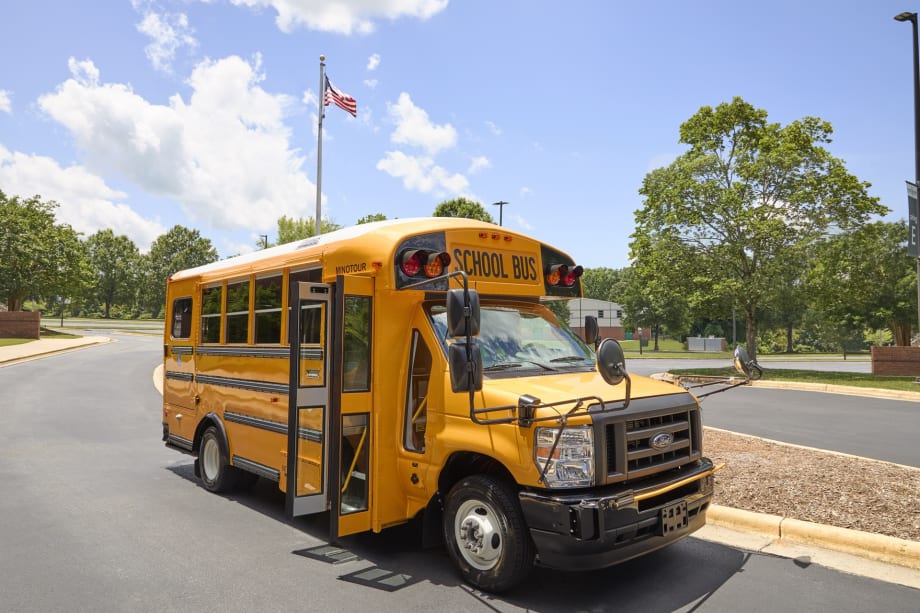
The Minotour gasoline bus features up to 30-passenger capacity, is built on a Ford or GM chassis, and comes equipped with Zonar telematics.
Photo: Thomas Built Buses
2 min to read

The company relocated its Saf-T-Liner plant earlier this year as part of a new manufacturing strategy.
Photo: Thomas Built Buses
Thomas Built Buses, a division of Daimler Truck Specialty Vehicles (DTSV), shared an update on the expansion of its Type A Minotour production capacity at its legacy manufacturing plant located at 1408 Courtesy Road.
The expansion of the Type A production footprint within the plant builds on Thomas Built’s legacy of innovation and craftsmanship in High Point, home to the company’s original facility dating back to 1916, where the company first produced streetcars before evolving to build Type C, Type D, and now Type A buses. It also reflects Thomas Built’s streamlined production strategy, following the relocation of Type D production to the Saf-T-Liner plant earlier this year.
Work on the Type A expansion began in late 2024 and is expected to be completed by 2026.
“By investing in our legacy facility, we’re honoring more than a century of craftsmanship in High Point while continuing to modernize for the future,” said T.J. Reed, president and CEO of DTSV. “This expansion gives our teams the capacity and tools they need to build even more Type A Minotours for customers across North America.”
The expansion includes a series of modernization efforts aimed at improving workflow, enhancing safety, and supporting long-term sustainability. The project will increase production capacity by more than 50%, strengthening Thomas Built's operational efficiency and supporting continued growth in North Carolina. Dedicated space for Minotour production has nearly tripled, now encompassing roughly 72,000 square feet of the building.
“As we expand our capacity, we’re doing so in a way that preserves what makes Thomas Built special — our people, our community and our commitment to building safe, reliable buses for students everywhere,” said Jeff Allen, senior vice president of operations and specialty vehicles at Daimler Truck North America. “By investing here in North Carolina, we’re strengthening our operations while ensuring we can serve more customers with greater efficiency, sustainability, and innovation.”
More Management

How to Build a Better Driver Training Program
Ready to boost up your school bus instructor training? Here’s how to pick the right talent and improve recruitment, retention, and safety.
Read More →
CALSTART and Forth Combine to Form Catalyst Mobility
The new name represents a renewed vision for the nonprofit focused on advancing clean, equitable, and affordable transportation solutions that move people and goods.
Read More →
What Makes a Great School Bus Driver Trainer?
Choosing the right school bus driver trainer takes more than experience. Learn six keys to selecting and developing trainers and evaluating program effectiveness.
Read More →


School Bus Contractors Expand Through New Deals, Acquisitions & Partnerships
STA's Canadian division acquires Ontario-based G&L Stevenson Transport while Durham School Services adds a new district contract in California, First Student adds a New Jersey contract, and Minnesota Coaches acquires Halo Transportation.
Read More →
Logan Bus Company Rolls Out AI Phone System for NYC School Bus Families
A summer pilot found that AI agents could handle most routine calls, freeing up time for customer service staff to focus on emergencies and complex family concerns.
Read More →
From Intent to Impact: What I Learned About Leadership from TAPT
A Texas transportation supervisor shares lessons on self-awareness, accountability, managing stress and building trust — and why investing in leadership development matters at every stage of your career.
Read More →
NAPT Names 2026 Award Recipients, Hall of Fame Inductee
Who earned national recognition for their work in student transportation? This year, NAPT named five recipients of its 2026 awards for service, safety, and leadership, plus its newest Hall of Famer.
Read More →
Sponsored•September 2, 2026
2026 State of Student Transportation Report
Driver shortages. Rising costs. Growing safety expectations. More data, but not enough time to act on it. The 2026 State of Student Transportation Report reveals what transportation leaders say is putting the most pressure on their operations—and where they’re investing next. See how your priorities compare.
Read More →
How to De-Escalate an Angry Person: 5 Steps for Handling Workplace Conflict
What makes emotions run high, and how should you handle an angry colleague or parent? Follow these steps for staying calm, listening, showing empathy, and resolving conflict.
Read More →
Sponsored•September 1, 2026
What Readiness Looks Like This School Year
Learn about the challenges shaping the 2026–2027 school year, from persistent driver shortages and budget pressure to technology and readiness gaps. See how school districts are responding and adapting in Zonar’s 2026 Back-to-School Readiness Report.
Read More →