




The benefits of aggressive claims collection for school bus businesses
For school bus contractors, maximizing claims collection after crashes recovers significant costs for repairs and loss-of-use. The extra revenue can help in increasing the client base and can even be put toward accident reduction initiatives.
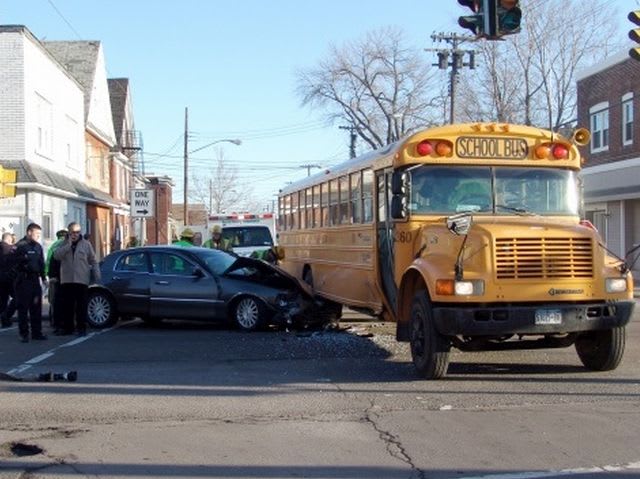
For school bus contractors, maximizing claims collection after crashes recovers significant costs for repairs and loss-of-use.
So your school bus took a rear end shot that dimpled your bumper. Nobody got hurt, and the police report says that the other guy was totally at fault.
Your estimate says you have about $3,000 worth of damage, and you have a $2,500 deductible on your insurance policy. So you don’t put in a claim with your insurance company.
Your shop supervisor says he has an extra bumper on the shelf, and his mechanic can swap it out in a couple of hours. He will slap on some touch-up paint, and the bus will be ready to roll in 48 hours. So you put a spare bus on the route for two days, and the whole thing didn’t cost you a dime. Right?
Absolutely incorrect. Why? Well, let’s step back for a minute.
Bidding process
A local district contract is coming up for bid. They have 25 routes, and you want to pick them up. Now we all know there’s plenty of planning, guessing and behind-the-scenes work that goes into coming up with that final figure.
But before all that fun stuff begins, you have to figure your fixed costs: brick and mortar, utilities, resources and salaries. Are you going to need another mechanic for preventive maintenance? Will you need extra buses, extra spares or extra parts? You have to factor in the cost of all of those things before you begin to calculate your margins.
Now let’s go back to the bumper bender. All the same factors apply. You pay your shop supervisor and your body mechanic a salary. Why? Because buses have accidents. The hours they spend on that bumper job is your actual labor cost.
And that bumper on the shelf wasn’t free. You paid for it. It may have been a long time ago, or it may have come as a package with the rest of the bus it rode on in a former life. Why did you keep it? Because buses have accidents. Where was it stored? Inside a parts shed? Out in the back lot with a dozen other derelict buses? In any case, that real estate has value, and you’re either paying rent on it or taxes on it. Either way, that’s a genuine cost factor.
Why do you keep the derelict buses? Because buses have accidents. If buses didn’t have accidents, you would never incur much of those costs.
Value
So that little repair job was far from cost-free. The quandary, of course, is how to allocate cost percentage to all of those fixed cost factors. The answer is that you can’t.
That is why the insurance laws in most states have adopted the reasonable rule. Because actual cost is illusive and because some smaller companies don’t have on-site repair, damaged parties are entitled to go after the other driver’s carrier for the reasonable value of comparable parts and the reasonable value of bus mechanic labor.
In our bumper scenario, that’s the $3,000 calculated by the appraiser. Are you collecting $3,000 from the other driver every time one of your buses gets rear-ended?
Loss of use
Insurance companies hate to pay loss of use, also known as “down-time,” but fleet owners are generally entitled to collect loss-of-use or down-time for the number of days it reasonably takes to effect repairs caused by the accident. All of this, of course, pre-supposes that the other guy was at least partially or, in some states, fully at fault.
Compensation, or the “daily rate,” for the loss of use can be determined in a variety of ways depending upon the fleet owner’s business model. But when you put in a claim, the first thing the adverse carrier will tell you is that you have to provide tax returns or other proofs of income. Not true!
The next thing they will tell you is that you are not entitled to loss-of-use damages if you had a spare bus to cover the route. Rarely true!
The fact is that most states are moving away from this “spare bus disqualifies loss of use” viewpoint. There is a growing body of case law nationwide that takes the more realistic viewpoint that the fleet owner has to maintain a cadre of spare buses in order to service the needs of the community. These laws recognize, as should the fleet owners, that there is a significant cost associated with maintaining the spare fleet, and part of that cost should be borne by the tortfeasor — i.e., the other guy who caused the damage.
Benefits of aggressive collection
Failure to pursue collection from the adverse vehicle owner results in unreimbursed costs both tangible and, as explained above, intangible. Anyway, who couldn’t use an additional revenue stream?
But more significantly, let’s go back to our bid scenario. If you were adding $100,000 or more to your bottom line annually, that could create the edge you need to drop your bid enough to win that contract. Even $25,000 could make the difference. Squeezing every dollar out of every accident could therefore translate into a substantial increase in your client base.
Furthermore, aggressive collection practices can lead to an overall reduction in “at-fault” accidents. This wasn’t my idea; I got this from a client who has given me permission to share his secret.
This particular client runs a large school bus company. This company’s annual auto claims are well into six figures. My progressive-thinking client deposits all of the checks we send him into a segregated account. From this account, he sponsors extraordinary employee incentives for safe driving and outstanding performance. He credits this program with a marked decrease in chargeable accidents, which positively impacts loss runs, and the savings multiply.
A word of caution: Consult your labor counsel before implementing any incentive programs. Good intentions may sometimes run afoul of union contracts.
Insurance companies
What is the best way for a transportation company to deal with insurance companies? The answer, in one word, is “don’t.” You are in the business of moving people, mostly children, from one place to another. That is a specialization.
Insurance claims collection is also a specialization. It requires a team of experts to keep abreast of changing laws and the diverse policies of the various insurance companies. You don’t need that on your plate, and you will not devote the resources necessary to maximize intake.
Outsourcing is the way to go; but be careful, all insurance claims collection services are not alike. Many do not know how to collect loss-of-use or diminished value.
And finally, stay away from law firms. Most law firms take on these claims to get at the client’s other work, like contracts and personal injuries. They will initiate litigation the minute the first denial letter comes in, and then they will settle as quickly as possible. Your litigation costs will be high, and your collections will be low.
I started in this business as an attorney, but I quickly switched to a corporate model in which litigation is always the very last resort. You will be far better served by contracting a solid subrogation company with a track record of success in the industry.
Kevin Lowry is an attorney who runs a company called TranSubro Inc. TranSubro stands for Transportation Subrogation and operates nationwide. Lowry has over 30 years of experience. He can be reached at (888) 659-2204 or by e-mail at claims@transubro.com. The company’s website is www.transubro.com.
More Management

EverDriven Launches Route Consolidation Calculator to Estimate Diesel Savings
As diesel prices hit record highs, the largest alternative transportation provider says a 10% route consolidation could save a 120-route district more than $78,000 a year in fuel alone.
Read More →
Zum Secures Continued Financing Support for School Bus Expansion
Generate Private Credit has financed approximately $75 million in school bus deployments across three states, supporting more than 500 buses as Zum expands across the county.
Read More →
Beyond Discipline: A Different Approach to Student Behavior on the Bus
After implementing a dean of students program in Oregon, North Clackamas is seeing positive improvements. Here’s how it worked. The Route is brought to you by IC Bus.
Read More →
A Dean of Transportation's Different Approach to Student Behavior on the School Bus
After implementing a dean of students program in Oregon, North Clackamas is seeing positive improvements on the bus. Here’s how it worked.
Read More →
Inside NAPT ACTS 2026: Highlights from Louisville
From federal updates and student behavior strategies to new school bus technology and industry awards, see highlights from NAPT ACTS 2026 in Louisville.
Read More →
Meet the 2025 School Bus Driver Hero Winner: Annette Brown
We caught up with Wa-Nee Community Schools' Annette Brown on site at SBFX, where she was named the 2026 School Bus Driver Hero Award winner. Hear about her reaction, what she loves most about being a school bus driver, and more!
Read More →
Predictability Is Like Ketchup (According to 6-Year-Olds)
To students, a different school bus can feel like a full-blown crisis. One driver reflects on why familiar routines, showing up on time, and being reliably boring matter more than we think.
Read More →
Samsara Launches Free Driver Rewards Program
The new Driver Perks program gives eligible professional drivers access to discounts and offers without adding a cost for participating fleets.
Read More →
How Tax-Exempt Municipal Leases Can Help Finance School Buses
Let’s explore school bus financing options, including municipal leases, vendor payable accounts, and balloon payments, and how they can help stretch fleet budgets.
Read More →
Nominate Rising School Transportation Pros Under 40!
We’re searching for the next generation of leaders making an impact across the K-12 student transportation industry to recognize as SBF’s 2027 Trailblazers. Nominations are open now!
Read More →