




Texas Passes Another School Bus Seat Belt Bill
The state’s governor approves a measure that requires lap-shoulder belts on new school buses, but districts can opt out due to financial constraints.

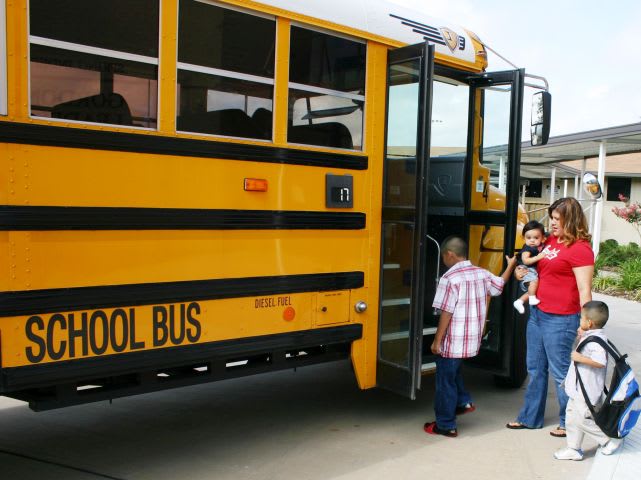
The governor of Texas approved a measure that requires lap-shoulder belts on new school buses, but districts can opt out due to financial constraints. File photo from Spring ISD

The governor of Texas approved a measure that requires lap-shoulder belts on new school buses, but districts can opt out due to financial constraints. File photo from Spring ISD
AUSTIN, Texas — A new bill signed into law last week requires lap-shoulder belts on new school buses in Texas, but school districts can opt out due to financial constraints.
Texas Gov. Greg Abbott approved the legislation, SB 693, on Thursday. The law goes into effect Sept. 1, with the three-point belt measure applying to new buses that transport students, beginning with model year 2018. In addition to school buses and school activity buses operated by districts and contractors, the measure covers multifunction school activity buses and school-chartered buses.
Ten years ago, Texas passed legislation that required three-point belts on school buses starting in 2010, but only if the state Legislature appropriated money to reimburse school districts for the cost of the restraint systems, which is typically around $7,000 to $10,000 for a full-size school bus. Since state funding is not being provided, school districts don’t have to comply. A few Texas districts, including Houston Independent School District (ISD) and Austin ISD, have begun voluntarily equipping their new buses with three-point belts.
The newly passed bill, authored by Texas Sen. Sylvia Garcia, is not contingent on funding from the Legislature. However, it allows school boards to vote to opt out if they determine “that the district's budget does not permit the district to purchase a bus that is equipped with the [three-point] seat belts required by this subsection.” That vote would have to be carried out in a public meeting.
On the seat belt subject, the Texas Association for Pupil Transportation (TAPT) published a position paper in September 2015 in which the group advocated for leaving lap-shoulder belt decisions up to local school districts.
Jim Abney, outgoing TAPT president and executive director of student safety and transportation for Alvin ISD, told SBF that the newly passed legislation addresses the local decision issue by including the opt-out provision.
“Our stance is still [that] it should be a district option,” Abney said, adding that TAPT supports the budgetary discretion that the measure provides for school boards.
Abney said that he expects a number of Texas districts to opt out of the seat belt requirement. Also, he noted that some districts will order their next round of new buses without belts before the law goes into effect in September.
“Then after Sept. 1, it will be a [school] board decision,” Abney said.
A press release from Garcia’s office described the opt-out provision as a way to ensure that the seat belt initiative is not an unfunded mandate. The senator also said that the bill was a response to school bus crashes in Texas that have caused fatalities and injuries.
“Safety experts, EMS professionals, and common sense tell us that children need to be buckled up. We've put this off for too long on our school buses,” Garcia said in the press release. “We need every Texas child to be safe on the way to and from school. This bill will make a big impact for child safety.”
More Management
Zum Reaches 19 States With New York Expansion
The addition of the Empire State to the student transportation company's roster marks a growing expansion in the Northeast as it scales its tech and school bus services.
Read More →
First Student Updates Its Parent App
First View connects both yellow bus and alternative transportation, giving families one platform to track student trips for the new school year, with 15 languages supported.
Read More →
The Back-to-School Checklist Every Director Should Complete Before the First Bell
Help your transportation team start the school year strong with these tips for contingency planning, communication, fleet visibility, technology, and trip management.
Read More →
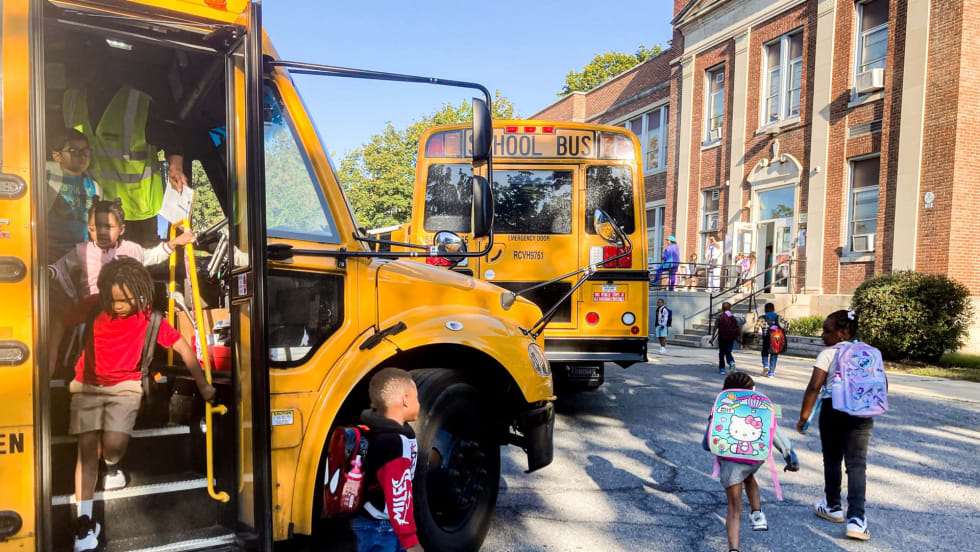
How a New York District Cut Nearly $1M in Transportation Costs While Expanding Bus Access
A data-driven overhaul with BusRight reduced Poughkeepsie City School District's planned routes from 26 to 17 while extending school bus service to about 1,200 additional students.
Read More →
Budgets Down, Enrollment Shifting: What the Data Says Districts Should Watch
School transportation departments face two converging challenges this year: tightening budgets and shifting enrollment. Most districts still address these issues separately, but the assumption that either trend will simplify operations is proving incorrect.
Read More →
These 8 School Transportation Companies Made the 2026 Inc. 5000 List
Find out which school transportation contractors, technology providers, and suppliers ranked among America’s fastest-growing private companies.
Read More →
The Link Between Emotional Intelligence and School Bus Safety
How can emotional intelligence help transportation pros navigate stress, manage change, and build stronger relationships? Listen to find out.
Read More →
What Emotional Intelligence Has to Do With School Bus Safety
In this video, discover how emotional intelligence can help transportation leaders and drivers navigate stress, manage change, and build stronger relationships. The Route is sponsored by IC Bus.
Read More →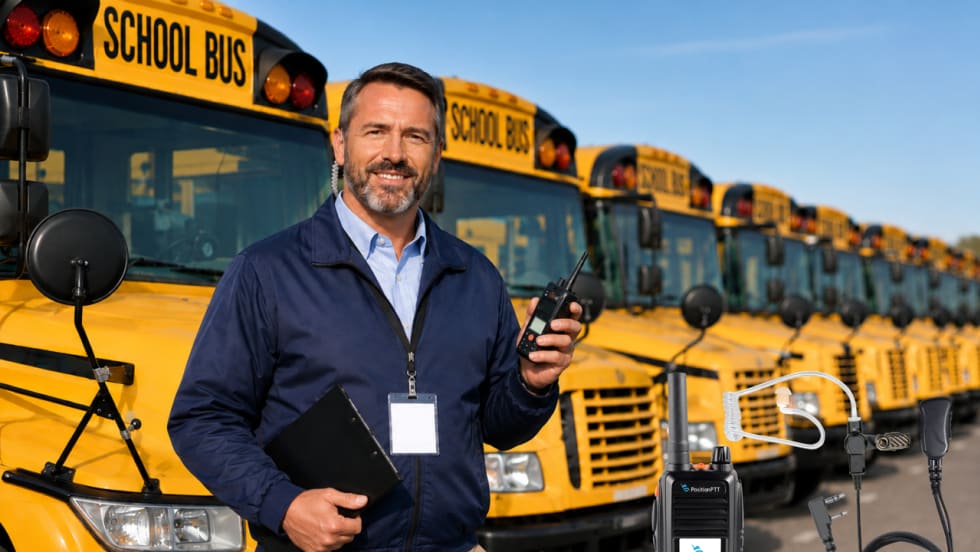
Beyond Two-Way Radios: School Bus Communications Evolve With Push-to-Talk Over Cellular
PRYME Radio and PositionPTT join forces to advance hands-free radio use and reduce distracted driving. See how PoC compares with traditional radios on range, cost, safety, and connectivity.
Read More →
Have School Districts Adapted to Bus Driver Shortages or Simply Accepted Less Service?
According to a recent report from HopSkipDrive, many districts appear to have recalibrated what "normal" transportation service looks like.
Read More →