




Study Shows Propane School Buses Reduce Harmful Emissions
In research conducted by West Virginia University’s Center for Alternative Fuels Engines and Emissions, distance-specific nitrogen oxide emissions measured from propane buses were about 95% less than those measured from diesel buses.

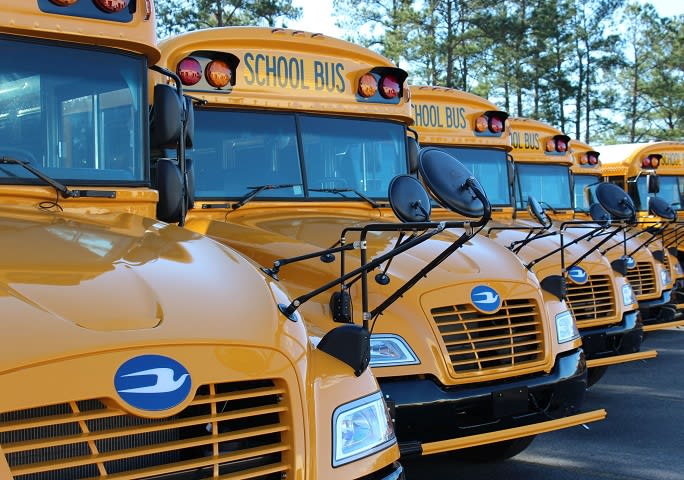
New research has found that nitrogen oxide emissions measured from propane school buses are about 95% less than those measured from diesel buses. Shown here are Blue Bird Vision propane school buses.
New research has found that nitrogen oxide emissions measured from propane school buses are about 95% less than those measured from diesel buses. Shown here are Blue Bird Vision propane school buses.
WASHINGTON, D.C. — New research has found that emissions measured from propane school buses are significantly lower than those from diesel-powered buses.
In a study commissioned by the Propane Education and Research Council (PERC), West Virginia University’s Center for Alternative Fuels Engines and Emissions (CAFEE) completed two types of tests at different times during 2018 on four Blue Bird school buses, according to a news release from PERC. Test routes included both city and highway roads, and a stop-and-go route similar to standard school bus operation. Researchers installed a portable emissions measurement system to measure the nitrogen oxide (NOx) emissions on each vehicle and performed test runs with both cold and hot starts, for a total of 36 test routes, according to PERC.
“This study is monumental from an emissions and health perspective for students, schools, and communities across the country,” said Tucker Perkins, president and CEO of PERC. “Children arriving to school in propane buses aren’t exposed to harmful NOx emissions; they feel better and are more prepared to learn.”
Results from the study demonstrated that distance-specific NOx emissions measured from the diesel bus were significantly higher than those measured from the propane bus. Specifically:
For the city route, which included city and highway roads, NOx emissions were 15 to 19 times higher for the diesel school bus. NOx was reduced by 95% with the propane bus.
For the stop-and-go route, NOx emissions were 34 times higher for the diesel school bus. NOx was reduced by 96% and carbon dioxide by 13% with a propane bus.
Subsequent testing performed in late 2018 with newer model year and lower mileage propane and diesel buses validated the previous testing results, according to PERC.
“In real-world applications, particularly those with significant low speed or low load operation, propane vehicles can provide dramatically lower NOx emissions, compared to similar diesel vehicles,” said Ross Ryskamp, Ph.D., associate director for testing and development at CAFEE. “These findings are significant due to the fact that NOx and ozone are major non-attainment concerns for many areas across the nation.”
Additionally, CAFEE conducted research that exposed the Volkswagen emissions violations in 2015 that resulted in a $14.7 billion settlement. Nearly $3 billion of that settlement has been set aside for funding transportation projects in each state that reduce NOx emissions, such as the adoption of propane school buses.
“We’re seeing the unmatched benefits of propane and how advanced this domestically produced fuel option is,” added Perkins. “On top of decreasing emissions, these reliable vehicles offer superior performance in cold weather and low total ownership costs.”
The full study, “In-Use Emissions and Performance Testing of Propane-Fueled Engines,” can be found here.
More Alternative Fuels

CALSTART and Forth Combine to Form Catalyst Mobility
The new name represents a renewed vision for the nonprofit focused on advancing clean, equitable, and affordable transportation solutions that move people and goods.
Read More →
Alt-Fuel Moves: New Buses, Charging Hubs & Real-World EV Testing
Propane and electric school bus deployments continue to grow as districts add new vehicles, expand charging infrastructure, and gather more real-world operating data.
Read More →
Fewer Electric School Bus Models Reshape the U.S. Market
WRI’s latest buyer’s guide points to a consolidating electric school bus market, but fewer options may reflect a maturing industry rather than fewer meaningful choices for school bus operators.
Read More →
The Fuel Budget You Can Actually Predict: How Propane Autogas Keeps Money in the Classroom
Learn how propane autogas helps school districts manage fuel costs with predictable pricing, lower maintenance, and reduced emissions from former transportation director Joel Stutheit.
Read More →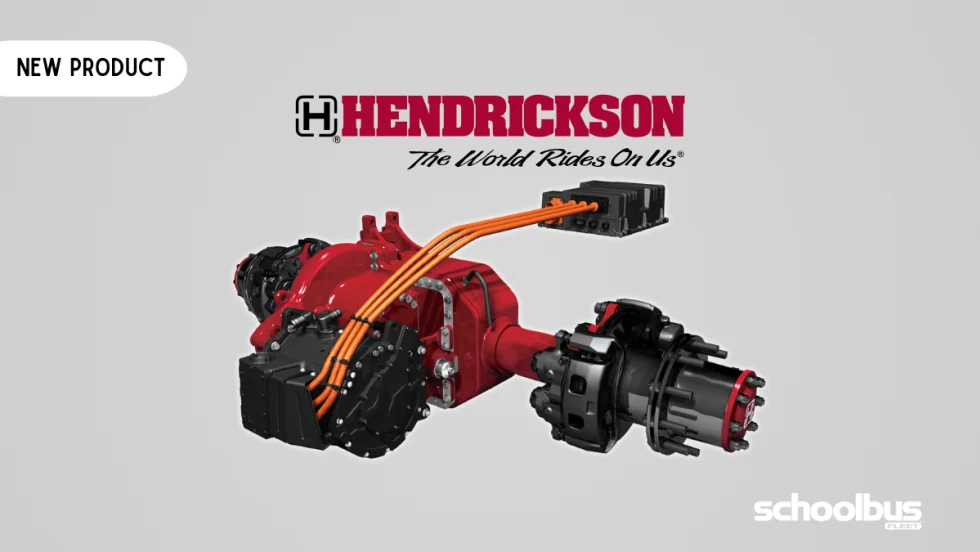
Hendrickson, Driventic Introduce New Electric Powertrain for School Buses
ELECTRAAX, the electrified, lightweight drive axle offers integrated ePowertrain efficiency and modular flexibility for Class 6–7 school bus use.
Read More →
The Mobility House Joins PowerFlex in Fleet Electrification Deal
The acquisition combines intelligent charging software, bidirectional charging expertise, and fleet electrification services to support the growing adoption of electric school buses across North America.
Read More →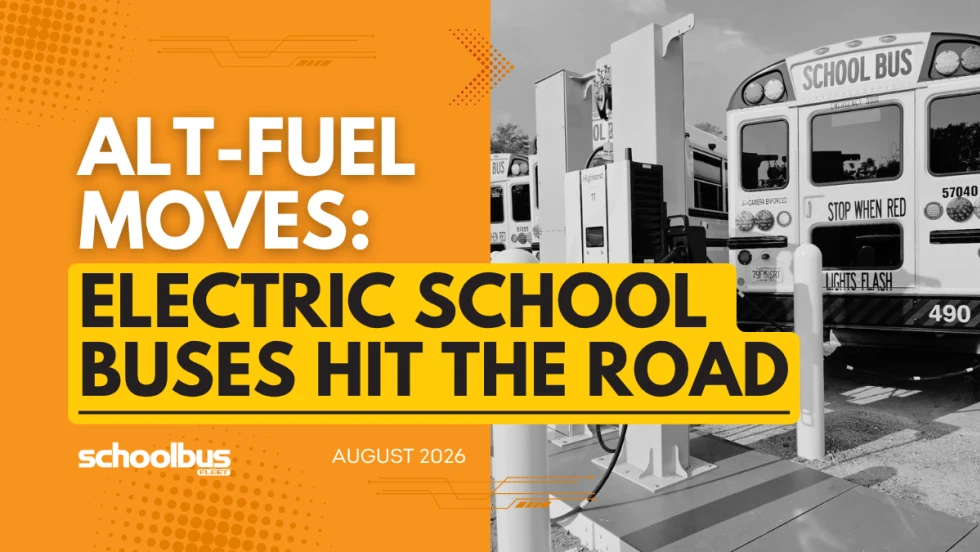
Alt-Fuel Moves: Electric School Bus Investments Hit the Road
See which districts across the U.S. are putting electric school buses into service, expanding charging infrastructure, and planning the next phase of fleet electrification.
Read More →
With Fuel Volatility Ahead, School Districts Turn to Propane
While diesel prices peaked above $5 this spring, districts with propane autogas-powered fleets paid under $2 per gallon, according to PERC.
Read More →
EPA Unveils Proposed Changes to 2027 Heavy-Duty Engine Rules
The federal agency has proposed changes to next year’s targets that would eliminate DEF derates, ease warranty requirements, and retain current NOx emissions standards.
Read More →
Alt-Fuel Moves: EV Charging & Infrastructure Projects Gain Momentum
The latest developments include new funding, charging infrastructure, utility investments, and fleet technologies designed to support the transition to electric school buses nationwide.
Read More →