





DID YOU MISS: The School Bus: Ensuring Student Safety, Accessibility, Community Building, and Education
School Buses Could Be Subject to New Federal Automatic Emergency Braking Standard
The new rule, proposed by the NHTSA and FMCSA, each year is projected to save 155 lives, stop 19,000 crashes, and prevent thousands of injuries.
June 22, 2023
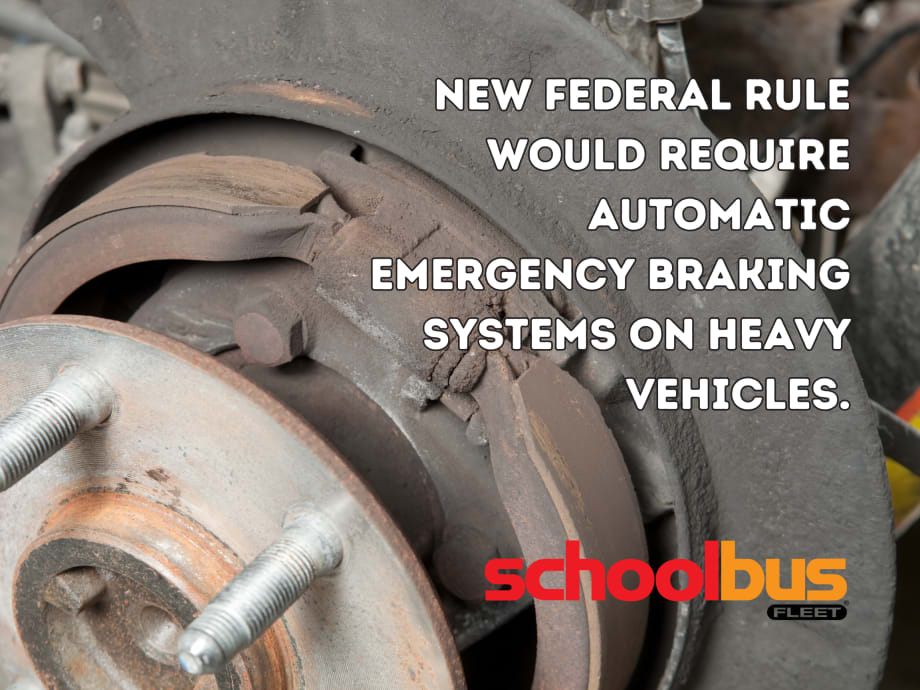
According to NHTSA statistics, there are about 60,000 rear-end crashes a year in which the heavy vehicle is the striking vehicle.
Image: Canva
2 min to read
The U.S. Department of Transportation’s National Highway Traffic Safety Administration (NHTSA) and Federal Motor Carrier Safety Administration (FMCSA) have proposed a new rule that would require heavy vehicles, such as school buses, to have automatic emergency braking systems that could mitigate the frequency and severity of rear-end crashes.
“Advanced driver assistance systems like AEB have the power to save lives,” said NHTSA Chief Counsel Ann Carlson. “Today’s announcement is an important step forward in improving safety on our nation’s roadways by reducing, and ultimately eliminating, preventable tragedies that harm Americans.”
How Does an AEB System Work?
An AEB system uses multiple sensor technologies that work together to detect a vehicle in a crash imminent situation. The system automatically applies the brakes if the driver has not done so, or, if needed, applies more braking force to supplement the driver’s braking. The proposed standard would require the technology to work at speeds ranging between low-speed (6 miles per hour) and high-speed (roughly 50 miles per hour) situations.
“Establishing AEB standards is a key component of the Department’s National Roadway Safety Strategy,” said FMCSA Administrator Robin Hutcheson. “This technology can enhance the effectiveness of commercial motor vehicle crash reduction strategies and reduce roadway fatalities.”
Evolution of the Proposed Rule
According to NHTSA statistics, there are about 60,000 rear-end crashes a year in which the heavy vehicle is the striking vehicle. Once implemented, NHTSA estimates the proposed rule will prevent 19,118 crashes, save 155 lives, and prevent 8,814 injuries annually.
NHTSA and FMCSA incorporated feedback from the safety advocacy community, industry representatives and other interested parties to address this critical safety need on America’s roads. The proposed rule, which fulfills a mandate under the Bipartisan Infrastructure Law, defines “heavy vehicles” as those having a gross vehicle weight greater than 10,000 pounds, such as heavy-duty trucks and buses. NHTSA proposed a similar rule that would require AEB systems in passenger vehicles and light trucks.
In January 2022, USDOT released the National Roadway Safety Strategy (NRSS), a roadmap to address the national crisis in motor vehicle fatalities and serious injuries.
DOT also launched the next phase of the NRSS, the Call to Action campaign, and released a one-year progress report with accompanying data visualizations that highlight the extent and magnitude of the U.S. roadway safety problem and ways to eventually bring the number of deaths on our roadways to zero.
Public comments on the proposed rule will be accepted for 60 days. Please click here to learn more about the rulemaking process.
More Safety

How to Build a Better School Bus Driver Training Program
Is it time to strengthen your driver training? Here’s how to pick the right talent and improve recruitment, retention, and safety. This video is brought to you by IC Bus.
Read More →
Recent School Bus Accidents Leave 2 Dead, 2 Injured
Four school bus crashes in Florida, Illinois, and Georgia highlight risks in transportation lots, at bus stops, and during student loading and unloading.
Read More →
Sponsored•September 8, 2026
When Every Second Matters, Clarity Keeps Routes Moving
From routine delays to urgent incidents, strong communication practices help drivers, dispatchers, schools, and families respond with confidence.
Read More →

What Happens When a School Bus Catches Fire — and What Can Help
School bus fires are rare but can be devastating. Learn how advances in fire suppression and asset protection help fleets detect fires earlier, reduce damage, and improve safety.
Read More →
Geotab Launches Tool to Help Fleets Investigate Road Incidents
Geotab Investigations combines telematics data, video, documents, and other evidence to help fleets reconstruct incidents, resolve claims, and determine what happened.
Read More →
Texas Sixth Grader Wins 2026 National School Bus Safety Poster Contest
Sai Darshana Yekolu of Moseley Middle School in Prosper, Texas, was named the newest winner for her artwork, bringing the theme of “Safe Rides, Everyday Heroes” to life.
Read More →
Sponsored•August 27, 2026
Doing More With Less: How Transportation Directors Can Prioritize Safety Amid Budget Uncertainty
With diesel prices soaring and nearly one-third of transportation directors expecting budget cuts, maintaining student safety has never been more challenging. Download this guide to learn how leading districts are prioritizing risk, funding critical safety technology, and building stronger budget cases with data.
Read More →
Walton County Schools Adds Gatekeeper Stop-Arm Enforcement System
The Florida district will deploy Gatekeeper’s updated Student Protector technology, which now incorporates AI to improve video evidence.
Read More →
How To Build a More Secure School Bus Yard During and After Hours
As thefts and overnight security threats continue, school transportation leaders are combining stronger operational practices with AI-enabled surveillance to better protect buses, facilities, and staff.
Read More →
FMCSA Names New Chief Safety Officer: What School Bus Operators Should Know
Steve Dowling is set to lead the federal agency's efforts to advance commercial motor vehicle safety and reduce crashes, fatalities, and injuries on the nation's roadways.
Read More →